
Natural vs Synthetic Fragrance in Solid Perfume Formulations
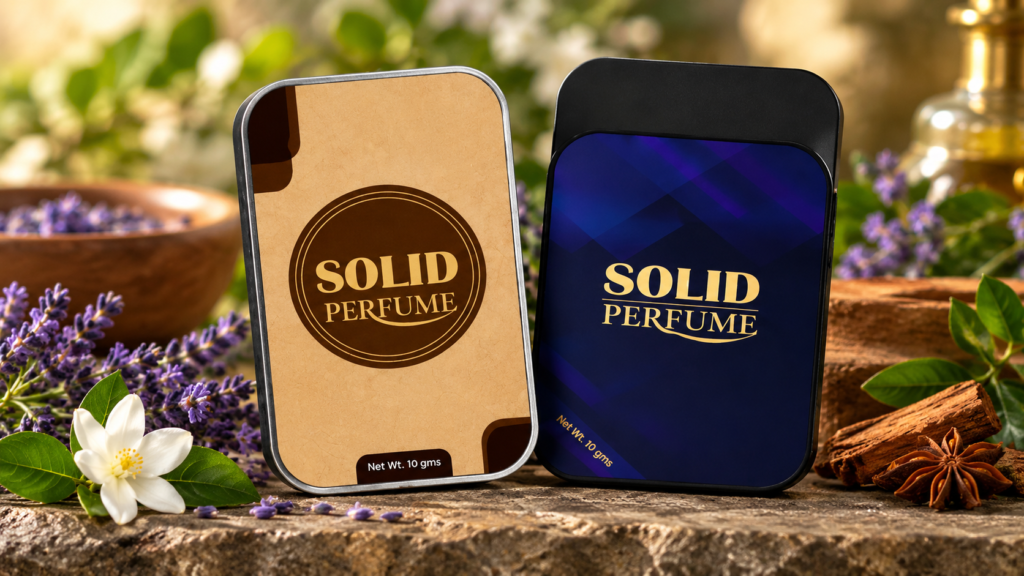
Solid perfume has become an attractive fragrance format for brands looking for convenient, portable and customizable fragrance products. Unlike traditional liquid perfumes, solid perfumes are usually made using a semi-solid base combined with fragrance materials. The fragrance composition plays an important role in the product’s aroma, sensory experience, stability, and overall positioning.
When developing a solid perfume formulation, one of the most important decisions is whether to use natural fragrance ingredients, synthetic fragrance materials, or a combination of both. Natural and synthetic fragrance materials each have their own characteristics, advantages, limitations, and formulation considerations.
For businesses planning to launch their own fragrance brand, understanding these differences can help them make better decisions regarding fragrance profile, product positioning, formulation, packaging and manufacturing requirements.
At UNICO Pharmaceuticals, with 35 years of industry expertise, we support businesses with fragrance and personal-care manufacturing requirements, including customized product development, private label manufacturing and packaging support. Our manufacturing approach focuses on developing products according to agreed formulation, fragrance, packaging and branding specifications.
What Is Solid Perfume?
Solid perfume is a fragrance product presented in a semi-solid form rather than a liquid spray. It is commonly packaged in tins, compact containers, jars or other portable formats.
A typical solid perfume may contain:
- Fragrance materials
- Waxes
- Oils or emollients
- Butters
- Structuring agents
- Antioxidants where appropriate
- Other formulation-supporting ingredients
The base provides the required texture and helps hold the fragrance composition within the product.
Unlike a spray perfume, solid perfume is generally applied directly to the skin using fingers or an applicator. This makes it particularly suitable for travel-friendly and compact fragrance products.
Understanding Natural Fragrance
Natural fragrance materials are obtained from natural sources such as plants and other botanical materials. Depending on the ingredient, extraction methods may include steam distillation, cold pressing, solvent extraction or other specialized processes.
Examples can include essential oils and naturally derived aromatic materials.
Some commonly used botanical fragrance materials include:
| Natural Material | Typical Fragrance Character |
|---|---|
| Lavender | Floral, fresh, herbal |
| Rose | Rich, floral, soft |
| Peppermint | Cool, fresh, minty |
| Lemon | Fresh, citrusy |
| Orange | Sweet, citrusy |
| Sandalwood | Woody, warm |
| Patchouli | Earthy, woody |
| Vetiver | Dry, earthy, woody |
However, “natural” does not automatically mean that an ingredient is suitable for every formulation or every skin type. Natural aromatic materials can also contain potent compounds that need to be evaluated for their intended application.
Understanding Synthetic Fragrance
Synthetic fragrance materials are aromatic compounds produced through controlled chemical processes. They can be designed to reproduce naturally occurring aroma molecules, create new scent characteristics, or improve certain performance characteristics of a fragrance composition.
Synthetic materials are widely used in modern perfumery because they allow perfumers to develop highly specific fragrance profiles.
They can provide:
- Consistent aroma
- Reproducible batches
- Wide fragrance possibilities
- Controlled performance
- Access to aroma profiles that may be difficult to obtain from natural materials
- Greater flexibility during fragrance development
Synthetic does not automatically mean unsafe or inferior. The suitability of any fragrance material depends on its identity, quality, concentration, intended use and compliance with applicable safety requirements.
Natural vs Synthetic Fragrance: Key Differences
The choice between natural and synthetic fragrance is not simply about which one is better. It depends on the product concept, target market, desired fragrance profile, cost considerations, stability requirements and manufacturing objectives.
| Factor | Natural Fragrance | Synthetic Fragrance |
|---|---|---|
| Source | Natural raw materials | Controlled chemical production |
| Aroma profile | Often botanical and complex | Can be highly specific and versatile |
| Batch consistency | May vary depending on raw material | Generally highly consistent |
| Availability | Some materials may be seasonal | Usually easier to standardize |
| Formulation flexibility | Depends on natural material | Very broad |
| Cost | Can be higher for certain materials | Varies depending on material |
| Sustainability | Depends on sourcing and cultivation | Depends on production and raw materials |
| Stability | Varies by ingredient | Varies by ingredient |
| Product positioning | Can support natural/botanical positioning | Can support modern fragrance concepts |
| Fragrance possibilities | Strong botanical character | Very wide range of aroma possibilities |
Therefore, fragrance selection should be based on the complete formulation and product objective rather than simply choosing “natural” or “synthetic.”
1. Fragrance Profile and Aroma Character
The first consideration is the fragrance profile.
Natural ingredients can provide recognizable botanical characteristics. For example, lavender oil can contribute a herbal-floral character, while citrus oils can provide bright and fresh notes.
Synthetic fragrance materials can provide much greater flexibility. They can be used to create floral, woody, musky, fruity, amber, aquatic and other fragrance profiles.
For a solid perfume brand, the desired fragrance identity should be decided before finalizing the formulation.
A brand targeting a botanical concept may prefer a formulation containing selected natural aromatic ingredients, while a contemporary fragrance brand may choose a carefully developed fragrance composition containing both natural and synthetic materials.
2. Consistency Between Batches
Consistency is an important factor in commercial fragrance manufacturing.
Natural raw materials can sometimes show variation due to factors such as:
- Geographic origin
- Climate
- Harvesting conditions
- Plant variety
- Extraction method
- Storage conditions
This means the aroma profile of some natural ingredients can vary from batch to batch.
Synthetic fragrance materials can often provide greater consistency because they are manufactured under controlled conditions.
For a commercial solid perfume brand, consistent fragrance quality is important because customers generally expect the same product to smell similar when they purchase it again.
3. Fragrance Stability in Solid Perfume
A fragrance needs to work effectively within the selected solid perfume base.
The interaction between fragrance materials and the base can affect:
- Aroma
- Texture
- Appearance
- Stability
- Fragrance release
- Overall product experience
Some fragrance materials may interact differently with waxes and oils than others.
Therefore, fragrance selection should not be done independently from the rest of the formulation. A fragrance that smells excellent in a blotter test may perform differently after being incorporated into a solid perfume base.
This is why formulation trials and stability evaluation are important during product development.
4. Natural Does Not Always Mean Better
The term “natural” is often associated with clean or botanical products, but it should not automatically be treated as a measure of overall product quality.
Natural aromatic materials can be highly concentrated. Some may also require specific usage considerations depending on their intended application.
A well-formulated product requires consideration of the complete ingredient system, including fragrance concentration, base ingredients, packaging and intended use.
For this reason, businesses should avoid choosing ingredients only because they are labeled natural. The final formulation should be evaluated for quality, stability and suitability.
5. Synthetic Does Not Automatically Mean Inferior
Synthetic fragrance materials are sometimes misunderstood because of the word “synthetic.”
In professional perfumery, synthetic aroma molecules can be valuable tools for developing precise and consistent fragrances.
Some synthetic materials can reproduce aroma molecules that also occur naturally. Others provide unique olfactory effects that may not be practical to obtain from botanical sources.
Synthetic materials can therefore be an important part of modern fragrance development.
The objective should be to select suitable fragrance materials based on the product requirements and applicable standards rather than judging them only by their source.
6. Cost Considerations
Cost is another important consideration for brands developing solid perfume products.
The price of natural aromatic ingredients can vary significantly. Some botanical materials require large amounts of raw material to produce relatively small quantities of aromatic extract.
Synthetic materials can offer different cost structures depending on their complexity, availability and production requirements.
However, fragrance cost should not be considered in isolation.
A commercial product budget may also include:
- Base ingredients
- Fragrance
- Packaging
- Labels
- Manufacturing
- Quality testing
- Filling
- Transportation
- Product development
A formulation should therefore be designed according to the intended product positioning and commercial requirements.
7. Sustainability Considerations
Sustainability is becoming increasingly relevant to fragrance and personal-care brands.
Natural ingredients are derived from biological resources, but their sustainability depends on factors such as cultivation, harvesting, land use, water consumption, extraction yield and sourcing practices.
Synthetic materials also have environmental considerations related to manufacturing processes, energy consumption and raw materials.
Therefore, neither category should automatically be considered sustainable simply because of its source.
Brands interested in sustainability should evaluate their complete supply chain and select responsibly sourced materials where possible.
8. Fragrance Longevity
The longevity of a solid perfume depends on several factors rather than simply whether the fragrance is natural or synthetic.
Important factors include:
- Fragrance composition
- Concentration
- Volatility of individual fragrance materials
- Base composition
- Application quantity
- Skin characteristics
- Storage conditions
- Packaging
Some synthetic aroma materials can contribute to longer-lasting fragrance profiles, while certain natural materials may provide distinctive top, middle or base-note characteristics.
A professional fragrance composition may combine different types of materials to create a balanced fragrance experience.
9. Why Fragrance Blending Matters
A finished fragrance is often more complex than a single ingredient.
Perfumers can combine different aromatic materials to develop:
Top notes:
Usually provide the initial impression of the fragrance.
Middle notes:
Help establish the main body and character.
Base notes:
Can contribute depth and a longer-lasting fragrance impression.
A solid perfume can therefore use a carefully balanced fragrance composition rather than relying on one natural or synthetic material.
This approach allows brands to create distinctive fragrance identities.
10. Natural and Synthetic Ingredients Can Be Combined
Natural versus synthetic does not always have to be an either-or decision.
A fragrance composition can contain selected natural materials alongside synthetic aroma molecules.
This approach can help formulators balance:
- Natural botanical character
- Aroma consistency
- Fragrance complexity
- Performance
- Cost
- Availability
- Product positioning
For example, a fragrance may use a botanical essential oil for a recognizable natural character while using other aroma materials to build depth and stability into the overall fragrance profile.
The final composition depends on the desired fragrance and product requirements.
How to Choose Fragrance for a Solid Perfume Brand
Before selecting a fragrance, businesses should consider the following questions:
1. What is the product positioning?
Is the product intended to be botanical, luxury, contemporary, minimalist, traditional or mass-market?
2. Who is the target customer?
Different customer groups may prefer different fragrance profiles.
3. What fragrance family is required?
Possible fragrance directions include:
- Floral
- Woody
- Fruity
- Citrus
- Fresh
- Oriental
- Musky
- Amber
- Herbal
4. What packaging will be used?
The fragrance and packaging should work together as part of the overall product concept.
5. What is the target price?
The formulation should be compatible with the intended commercial positioning.
6. What manufacturing requirements apply?
The fragrance should be suitable for incorporation into the selected solid perfume base and intended application.
Solid Perfume Formulation: Important Components
A solid perfume formulation generally needs a suitable balance between the structural base and fragrance composition.
Common formulation categories may include:
Waxes
Waxes can help provide structure and firmness to the product.
Oils and Emollients
Oils can contribute to spreadability and skin feel while also helping create the desired texture.
Fragrance
The fragrance composition provides the primary sensory identity of the product.
Antioxidant Support
Depending on the formulation, appropriate antioxidant support may be considered to help maintain product quality.
The exact formulation depends on the product requirements and should be developed through controlled formulation trials.
Why Packaging Matters for Solid Perfume
Packaging is particularly important for solid perfumes because the product is frequently carried in handbags, pockets or travel kits.
Suitable packaging can include:
- Metal tins
- Compact containers
- Small jars
- Custom-designed fragrance cases
Packaging should protect the product from environmental exposure and provide convenient application.
For private label brands, packaging also provides an opportunity to communicate the brand’s visual identity through:
- Logo
- Product name
- Label design
- Fragrance name
- Brand colors
- Product information
Private Label Solid Perfume Manufacturing
Businesses that want to launch their own fragrance products may consider private label solid perfume manufacturing.
In a private label model, the product is manufactured for a brand and marketed under that brand’s identity.
Depending on the agreed project requirements, support may include:
- Product concept discussion
- Fragrance selection
- Formulation requirements
- Base development
- Packaging selection
- Label requirements
- Manufacturing
- Filling and packing
- Finished-product preparation
This allows businesses to develop a fragrance product without establishing their own complete manufacturing infrastructure.
Solid Perfume Manufacturing at UNICO Pharmaceuticals
UNICO Pharmaceuticals provides manufacturing support for businesses looking to develop and market personal-care and fragrance products under their own brand.
With 35 years of industry expertise, UNICO works with businesses on product development and manufacturing requirements according to the agreed specifications.
For solid perfume projects, fragrance selection and formulation requirements can be discussed based on factors such as the desired fragrance profile, product positioning, packaging format and target market.
UNICO also provides private label and third-party manufacturing support, allowing businesses to develop products under their own branding.
The manufacturing process can be planned around the required product specifications, packaging requirements and finished-product expectations.
UNICO follows controlled manufacturing practices and is GMP certificated, with quality and manufacturing requirements considered throughout the production process.
Businesses can also discuss customized fragrance concepts, packaging requirements and branding specifications with the manufacturing team before finalizing the product.
Natural vs Synthetic: Which Should a Brand Choose?
There is no universal answer for every solid perfume product.
The decision depends on the brand’s requirements.
| Brand Requirement | Possible Consideration |
|---|---|
| Botanical positioning | Selected natural fragrance materials |
| Consistent fragrance | Standardized fragrance composition |
| Complex fragrance profile | Natural + synthetic combination |
| Luxury fragrance concept | Professionally developed fragrance blend |
| Specific aroma profile | Natural, synthetic or combination depending on availability |
| Cost-sensitive product | Evaluate complete formulation cost |
| Private label product | Develop according to brand specifications |
The important point is to evaluate the complete fragrance formulation rather than focusing only on whether individual materials are natural or synthetic.
Tips for Developing a Successful Solid Perfume
1. Start with the fragrance concept
Decide what the finished perfume should smell like before selecting individual ingredients.
2. Test fragrance in the actual base
A fragrance should be evaluated after incorporation into the intended solid perfume formulation.
3. Evaluate stability
The finished product should be assessed under appropriate conditions to understand changes in aroma, appearance and texture.
4. Consider packaging early
Packaging can influence product protection and user experience.
5. Maintain batch consistency
Commercial brands need consistent raw materials and controlled manufacturing processes.
6. Avoid unnecessary fragrance claims
Product communication should accurately represent the formulation and fragrance characteristics.
7. Work with an experienced manufacturer
A manufacturing partner can help coordinate formulation, fragrance, packaging and production requirements.
Conclusion
The choice between natural and synthetic fragrance in solid perfume formulations depends on the product concept, desired fragrance profile, formulation performance, consistency, cost, sourcing and target market.
Natural fragrance materials can provide distinctive botanical characteristics, while synthetic fragrance materials offer extensive flexibility and consistency. In many modern fragrance formulations, a combination of different fragrance materials can be used to achieve the desired sensory profile and product performance.
For businesses planning to launch their own solid perfume range, the focus should be on developing a balanced, stable and commercially suitable formulation rather than choosing ingredients solely according to whether they are natural or synthetic.
With 35 years of industry expertise, UNICO Pharmaceuticals supports businesses with private label and third-party manufacturing requirements for fragrance and personal-care products. From fragrance and formulation discussions to packaging and finished-product preparation, product development can be planned according to the agreed brand requirements.
If you are planning to launch a private label solid perfume, discuss your fragrance concept, packaging requirements and manufacturing specifications with UNICO Pharmaceuticals to develop a product aligned with your brand.
Frequently Asked Questions (FAQs)
1. What is the difference between natural and synthetic fragrance in solid perfume?
Natural fragrances are derived from natural aromatic sources, while synthetic fragrance materials are produced through controlled manufacturing processes. Both can be used in professional fragrance formulations.
2. Is natural fragrance better than synthetic fragrance?
Neither category is universally better. The appropriate choice depends on the desired fragrance profile, formulation requirements, consistency, cost and product positioning.
3. Can natural and synthetic fragrances be used together?
Yes. A fragrance composition can contain selected natural materials and synthetic aroma molecules to achieve a particular fragrance profile.
4. Are essential oils used in solid perfumes?
Essential oils can be used in some solid perfume formulations, depending on the intended application, formulation requirements and appropriate usage levels.
5. Does synthetic fragrance last longer?
Longevity depends on the complete fragrance composition, concentration, base, packaging and other formulation factors. It cannot be determined solely by whether the fragrance is synthetic.
6. What ingredients are used in solid perfume?
Solid perfumes may contain waxes, oils, emollients, fragrance materials and other formulation-supporting ingredients depending on the product design.
7. Can I develop my own solid perfume brand?
Yes. Businesses can work with private label or third-party manufacturers to develop solid perfume products under their own brand.
8. What packaging can be used for solid perfume?
Solid perfume can be packaged in tins, compact containers, jars and other suitable formats depending on the product concept and packaging requirements.
9. Does UNICO Pharmaceuticals manufacture solid perfume?
UNICO Pharmaceuticals provides manufacturing support for fragrance and personal-care products, including private label and third-party manufacturing requirements according to agreed product specifications.
10. Can I choose my own fragrance for private label solid perfume?
Fragrance requirements can be discussed during product development. The final fragrance selection depends on the agreed formulation, product requirements and manufacturing specifications.
11. Why is fragrance testing important?
Testing helps evaluate how the fragrance performs within the actual solid perfume base and can help identify changes in aroma, texture, appearance or stability during development.
12. What should I consider before selecting a solid perfume manufacturer?
Consider manufacturing experience, formulation capabilities, fragrance development support, packaging options, quality processes, customization capabilities and the manufacturer’s ability to meet your project requirements.
CTA – Start Your Solid Perfume Brand with UNICO
Looking for Private Label Solid Perfume Manufacturing?
Develop your own solid perfume range with customized fragrance, formulation, packaging and branding requirements.
UNICO Pharmaceuticals brings 35 years of industry expertise, GMP certificated manufacturing support and private label/third-party manufacturing solutions for businesses looking to build their fragrance products.
Discuss Your Solid Perfume Manufacturing Requirements Today.