
D-Tan Cream vs D-Tan Face Wash: What Is the Difference?
Choosing between D-Tan Cream and D-Tan Face Wash can be confusing when both products are positioned for tan-care skincare. Although they may appear similar in their intended purpose, their formulation formats, application methods and roles in a skincare routine are different. This guide explains the differences, how to choose the right format, what to check before use and how brands can explore cosmetic manufacturing with UNICO Pharmaceuticals.
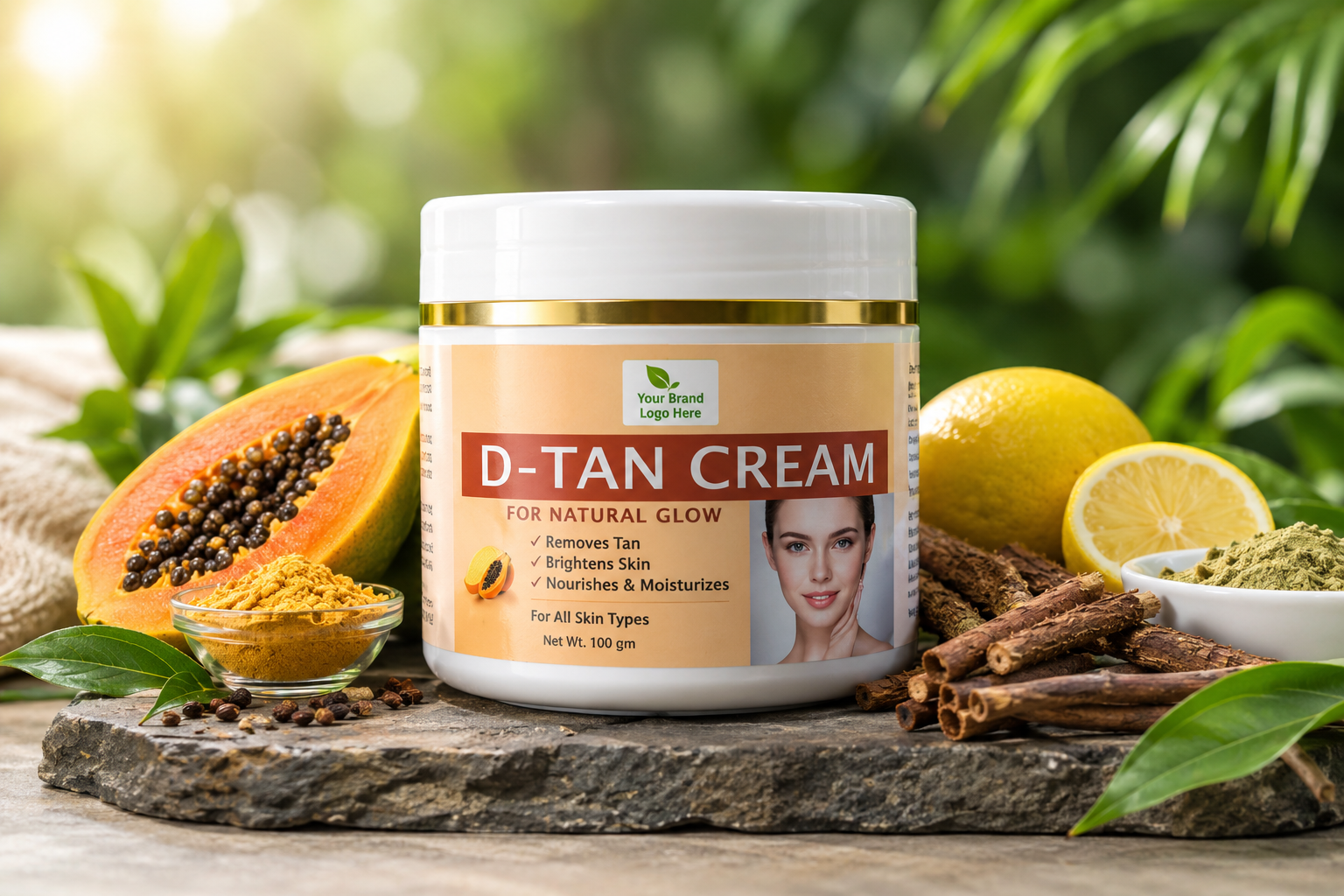
D-Tan Cream product visual. Product benefits and usage should always be confirmed from the actual product label.
Sun exposure, environmental impurities and everyday lifestyle factors can affect the appearance and feel of facial skin. As a result, many consumers look for skincare products that fit into a routine designed for cleansing, moisturising and caring for tanned-looking skin. Two product formats often considered are D-Tan Cream and D-Tan Face Wash.
The key distinction is simple: a face wash is generally a rinse-off cleansing product, while a cream is usually a leave-on skincare product. Neither format is automatically better for every person. The right choice depends on the product's formulation, intended use, individual skin needs and the directions provided by the manufacturer.
Quick answer: Choose a D-Tan Face Wash when your primary need is cleansing. Consider a D-Tan Cream when you want a leave-on tan-care product. They may be used as separate steps when their formulations are compatible and their instructions allow it.
1. What Is D-Tan Cream?
D-Tan Cream is a cream-format skincare product marketed for people who want to care for the appearance of tanned, dull or uneven-looking skin. Depending on the formulation, a product in this category may contain moisturising agents, skin-conditioning ingredients and other cosmetic ingredients selected for its intended use.
Unlike a face wash, a cream is generally designed to remain on the skin after application. This makes it a leave-on product rather than a cleansing step. Creams can differ considerably in texture, thickness, fragrance, ingredient composition and recommended frequency of use.
It is important not to assume that every D-Tan Cream has the same formula or provides identical results. The name alone does not tell you which ingredients are present, whether the product is suitable for sensitive skin or how frequently it should be applied. Always review the label and directions for the particular product you intend to use.
What role does a cream play in skincare?
Creams are commonly used after cleansing as part of a skincare routine. Depending on their composition, they may help condition the skin, support moisture retention or provide a specific cosmetic benefit. A tan-care cream may be positioned around the appearance of dullness or tanning, but actual performance depends on the complete formulation and the evidence supporting its claims.
For consumers, the practical question is whether the product fits their needs and skin tolerance. For brands, the same question becomes a formulation and product-development consideration: what texture, ingredient profile, packaging and directions are appropriate for the target market?
2. What Is D-Tan Face Wash?
D-Tan Face Wash is a facial cleanser positioned for consumers who want to cleanse the skin as part of a tan-care routine. A face wash is primarily intended to remove everyday surface impurities, such as sweat, excess oil, dirt and residue that can accumulate during the day.
Most face washes are rinse-off products. They are applied to the skin, gently massaged according to the instructions and removed with water. Their cleansing ingredients and overall formulation influence how they feel on the skin and how well they suit different skin types.
Some cleansers are formulated for oily skin, while others focus on a gentler cleansing experience or a particular cosmetic positioning. The term D-Tan does not guarantee that a face wash will remove all tanning or reverse the effects of ultraviolet exposure. Consumers should look at the actual ingredients, product claims and directions rather than relying on the name alone.
Why is cleansing an important step?
Cleansing helps remove material from the skin's surface before subsequent skincare products are applied. A cleanser that is too harsh for an individual's skin may leave it feeling dry or uncomfortable, so product selection matters. A suitable face wash should be used as directed and should leave the skin feeling appropriately clean without encouraging aggressive rubbing or excessive washing.
For businesses developing a cleanser, formulation considerations include cleansing performance, texture, rinseability, fragrance, packaging compatibility, stability and quality testing. UNICO Pharmaceuticals provides face wash manufacturing solutions for brands exploring their own skincare products.
3. D-Tan Cream vs D-Tan Face Wash: Key Differences
Although both products may be marketed for tan-care routines, they have different product formats and typical uses. This comparison summarises the main differences without assuming that every product in either category has the same formulation.
| Comparison Point | D-Tan Cream | D-Tan Face Wash |
|---|---|---|
| Product format | Cream or lotion-like leave-on product | Rinse-off facial cleanser |
| Primary role | Tan-care and skin conditioning, depending on formulation | Facial cleansing and removal of surface impurities |
| Application | Applied and left on as directed | Applied, gently massaged and rinsed |
| Contact time | Generally remains on the skin longer | Used for a short cleansing period |
| Routine position | Usually follows cleansing | Usually used at the cleansing stage |
| Water required | Not normally rinsed off immediately | Normally rinsed off with water |
| Texture | Creamy, rich or lightweight depending on formula | Gel, cream, foam or another cleanser texture |
| Frequency | Depends on the specific product directions | Depends on formula and individual cleansing needs |
| Selection criteria | Ingredient profile, skin tolerance and intended use | Cleansing needs, skin tolerance and formulation |
The most useful distinction is not simply which product is stronger. It is what each product is designed to do. A cleanser is intended to be washed away, while a leave-on cream is formulated for a different application experience. Comparing the two only by the D-Tan label can therefore lead to unrealistic expectations.
4. Differences in Purpose and Application
D-Tan Face Wash: the cleansing step
A face wash is generally used at the beginning of a skincare routine. Its role is to remove surface impurities and prepare the skin for any subsequent products. The user wets the face, applies the recommended quantity, massages gently and rinses thoroughly.
The product should not be left on the face longer than instructed in the hope of achieving better results. Prolonged or aggressive use of a cleanser can contribute to discomfort, particularly if the formula is not suitable for the user's skin.
D-Tan Cream: the leave-on step
A D-Tan Cream is generally applied after cleansing, provided its label instructs the user to leave it on. The recommended quantity, frequency and any special application instructions should come from the specific product packaging.
A cream should not automatically be treated like a facial mask or peel. If the label says to rinse after a defined period, follow that instruction. If it is a leave-on product, do not invent a different application method based on another brand's product.
Why contact time matters
A cleanser is designed for a relatively short contact period before rinsing. A leave-on cream remains on the skin for longer. This difference affects formulation requirements and how the products fit into a routine, but it does not prove that one format delivers better results than the other.
The performance of a cosmetic product depends on its ingredients, concentrations, formulation quality, intended use and appropriate application. Longer contact time alone is not evidence of superior performance.
5. Ingredients and Formulation Considerations
Ingredient selection is an important part of understanding any skincare product. Two D-Tan products may have different ingredient lists because a cream and a cleanser have different functions and formulation requirements.
Ingredients in a cream formulation
Cream formulations may include emollients, humectants, emulsifiers, preservatives and other ingredients required for product stability and performance. Some tan-care products may also include botanical extracts or cosmetic actives. The actual combination varies by manufacturer and product specification.
An ingredient being botanical or naturally derived does not automatically make it suitable for everyone. Fragrance components and certain plant extracts can cause reactions in some users. Ingredient claims should be accurate and supported by the actual formula.
Ingredients in a face wash
A cleanser may contain cleansing agents, water, humectants, thickeners, preservatives and other ingredients that support its intended properties. The selection and balance of cleansing agents influence the product's texture, foam, rinsing characteristics and skin feel.
A face wash designed for oily skin may have different formulation goals from a cleanser developed for dry or sensitive skin. Even within the same product category, the complete formulation matters more than a single ingredient highlighted on the front label.
How should consumers compare ingredient lists?
- Read the complete ingredient list rather than relying only on front-label claims.
- Check for ingredients that you already know your skin does not tolerate.
- Follow the product's recommended use and avoid combining products without considering compatibility.
- Do not assume that every D-Tan product contains papaya, vitamin C, kojic acid or any other particular ingredient.
- Seek professional advice if you have a persistent skin condition or a history of significant reactions.
Brands planning a new cosmetic product should also consider ingredient compatibility, stability, packaging interaction, fragrance preferences, consumer expectations and applicable regulatory requirements before finalising a formula.
6. Choosing the Right Product for Different Skin Types
Skin type can help guide product selection, but it should not be the only deciding factor. Two people who describe their skin in the same way may still react differently to a particular formula.
For dry skin
People with dry skin may prefer a gentle cleanser that does not leave the face feeling excessively tight. A suitable cream or moisturiser may be used afterward depending on the individual's routine. Check the product's intended use and avoid over-cleansing or rubbing the skin aggressively.
For oily skin
People with oily skin may prefer a cleanser that removes excess oil without leaving the skin feeling uncomfortable. A cream is not automatically unsuitable for oily skin; the texture and ingredients matter. Lightweight formulations may be preferred by some users, but individual tolerance should guide the final choice.
For combination skin
Combination skin may feel oilier in some areas and drier in others. A balanced routine can include an appropriate cleanser and selected leave-on products. Users may need to consider how their skin responds across different areas rather than relying on a single label.
For sensitive skin
People with sensitive skin should pay close attention to the complete ingredient list and usage directions. Consider testing a new product on a small area according to the product's instructions before broader use. Stop using the product if significant irritation develops.
For people with frequent sun exposure
A tan-care product should not replace sun protection. Sunscreen, protective clothing, shade and sensible exposure habits remain important. A cosmetic cream or face wash should not be assumed to prevent UV damage unless it is specifically formulated and labelled as a suitable sun-protection product.
7. How to Build a Tan-Care Skincare Routine
A simple, consistent routine is often easier to maintain than one that includes too many products. The exact steps depend on the products selected and their instructions, but the following sequence illustrates how a cleanser and leave-on product may fit together.
Step 1: Cleanse gently
Use a suitable face wash to remove everyday surface impurities. Apply it as directed, avoid harsh scrubbing and rinse thoroughly. Adjust cleansing frequency to your skin's needs and the product instructions.
Step 2: Pat the skin dry
Use a clean, soft towel and pat the face rather than rubbing it forcefully. Excessive friction can irritate the skin and is unnecessary after cleansing.
Step 3: Apply the appropriate leave-on product
If you use a D-Tan Cream or another leave-on skincare product, follow its label. Use the recommended amount and frequency. Avoid applying products to irritated or broken skin unless a qualified professional has advised otherwise.
Step 4: Use daytime sun protection
When going outdoors during the day, use a broad-spectrum sunscreen with SPF 30 or higher, following its directions. Reapply as instructed, particularly after swimming, sweating or towel drying. Hats, shade and protective clothing can also help reduce exposure.
Step 5: Monitor your skin's response
Pay attention to dryness, redness, itching, burning or other signs of irritation. If a product causes a reaction, discontinue it. Persistent or severe symptoms warrant advice from a qualified healthcare professional.
Remember: There is no universal schedule that works for every D-Tan Cream or face wash. Always use the specific product according to its own directions rather than following an assumed daily or weekly routine.
8. Common Mistakes to Avoid When Using D-Tan Products
Expecting instant or guaranteed results
Cosmetic outcomes vary according to formulation, skin condition, use and sun exposure. Avoid assuming that a product will remove all tanning after a single application or deliver identical results for every person. Product claims should be realistic and supported by appropriate evidence.
Using excessive quantities
Applying more product than directed does not necessarily improve performance. Excessive use may create discomfort or increase the chance of irritation. Follow the quantity and frequency stated on the label.
Leaving a cleanser on too long
A rinse-off face wash is not automatically a leave-on treatment. Leaving it on longer than directed can irritate the skin and does not guarantee better tan-care results.
Combining too many products at once
Adding multiple new products simultaneously can make it difficult to identify the cause if a reaction occurs. Introduce products carefully and consider ingredient compatibility, especially if your routine already includes exfoliants or other active ingredients.
Ignoring sunscreen
A tan-care cream or face wash does not remove the need for sun protection. Continued UV exposure can contribute to further tanning and other forms of skin damage. Build sun protection into your routine rather than relying only on cosmetic products.
Choosing a product based only on its name
Words such as brightening, glow and D-Tan do not reveal the full formulation or guarantee a particular result. Review the ingredient list, directions, manufacturer information and product suitability before making a choice.
9. What Should You Look for Before Buying a D-Tan Product?
Before choosing a product, consider the practical details that determine whether it fits your routine. The following checklist can help make the decision more informed.
- Purpose: Decide whether your immediate need is cleansing or a leave-on skincare step.
- Skin compatibility: Consider your skin type, known sensitivities and previous reactions.
- Ingredients: Read the complete ingredient list and check any relevant warnings.
- Instructions: Understand how much to apply, how long to leave it on and how frequently to use it.
- Packaging: Check that the container is intact and the product is within its stated shelf life.
- Claims: Be cautious of absolute promises or claims that sound medically unrealistic.
- Sun protection: Maintain appropriate protection independently of your D-Tan product.
Consumers should choose products based on their actual formulation and intended use. Brands should take the same approach when developing a new product: define the target consumer, product function, texture, packaging, testing needs and realistic claims before moving to production.
10. D-Tan Cream and Face Wash Manufacturing for Brands
D-Tan Cream and D-Tan Face Wash can represent different opportunities for skincare brands. A cream-based product and a rinse-off cleanser require distinct formulation approaches, packaging decisions and usage directions. Businesses considering either category should begin with a clear product brief and an understanding of their target market.
Startups, distributors, retailers and established brands may explore private label or third-party cosmetic manufacturing instead of building their own manufacturing infrastructure. Depending on the manufacturer and project, the process can include product development, formulation selection, sampling, manufacturing, quality checks, filling, packaging and labelling.
UNICO Pharmaceuticals has more than 35 years of industry experience and provides cosmetic manufacturing support for businesses developing skincare and personal care products. You can explore its cosmetic manufacturing solutions to understand the product categories and services offered.
Product concept and target market
The first step is to define the product's intended role. Is the brand planning a daily facial cleanser, a cream positioned for tan-care, or a coordinated skincare range? A clear concept helps determine the texture, packaging format, product claims and customer profile.
Formulation and sampling
The formulation should be developed around the product's intended use, ingredient compatibility, stability requirements and target consumer. Sampling provides an opportunity to review the product's appearance, texture, fragrance and other agreed specifications before production decisions are finalised.
Manufacturing and quality checks
Manufacturing requires appropriate production controls and quality procedures. Raw material checks, in-process monitoring, finished product testing and suitable packaging procedures help support consistency. The specific tests and documentation should be determined according to the product, manufacturing process and applicable requirements.
Packaging and private labelling
Packaging should suit the product's viscosity, dispensing requirements, intended market and brand identity. Creams and cleansers may need different packaging formats. Product labels should accurately communicate ingredients, directions, net quantity, manufacturer information and other required details.
Explore UNICO's manufacturing experience
Learn more about UNICO Pharmaceuticals and its 35+ years of industry experience. Businesses can also review the company's GMP, ISO and HACCP certificate information when evaluating its quality and manufacturing credentials.
For product-specific enquiries, explore tan removal cream manufacturing and face wash manufacturing. Final formulations, available services, minimum order quantities and packaging options should be confirmed directly with the manufacturer according to the project requirements.
11. Final Verdict: Which Product Should You Choose?
D-Tan Cream and D-Tan Face Wash have different roles in a skincare routine. A face wash is primarily a cleansing product used to remove everyday surface impurities. A D-Tan Cream is generally a leave-on product intended for tan-care and skin conditioning, depending on its actual formulation.
If you need a cleanser, start by selecting a face wash that suits your skin and cleansing needs. If you want a leave-on product, review the cream's ingredients, intended use and directions. Both products may be included in the same routine when their formulations are compatible, but neither should be expected to replace sun protection.
The most sensible choice is the one that meets your specific needs, fits your skin's tolerance and comes with clear, appropriate usage instructions. For brands planning to launch either product category, careful formulation planning and a suitable manufacturing partner are important parts of developing a reliable skincare range.
Planning Your Own D-Tan Skincare Brand?
Explore private label and third-party cosmetic manufacturing support for D-Tan Cream, Face Wash and other skincare products. Discuss your product concept, packaging preferences and production requirements with UNICO Pharmaceuticals.
Discuss Your Product Requirement →Frequently Asked Questions
Find answers to common questions about D-Tan Cream, D-Tan Face Wash, skincare routines and product manufacturing.
1. What is the main difference between D-Tan Cream and D-Tan Face Wash?
D-Tan Face Wash is primarily a rinse-off cleansing product. D-Tan Cream is generally a leave-on skincare product. They have different formats and uses, and the exact benefits depend on each product's formulation.
2. Can I use D-Tan Cream after D-Tan Face Wash?
They may be used as separate steps when their formulations are compatible and their instructions allow it. Cleanse first, then follow the directions for the leave-on product. Stop using a product if significant irritation develops.
3. Is D-Tan Face Wash a replacement for D-Tan Cream?
Not necessarily. A face wash cleanses the skin and is rinsed away, while a cream remains on the skin according to its instructions. Choose according to the role you need in your routine.
4. Can D-Tan Cream be used every day?
Frequency depends on the specific formulation and label directions. Do not assume every D-Tan Cream is intended for daily use. Follow the manufacturer's instructions and discontinue use if irritation occurs.
5. Is D-Tan Face Wash suitable for oily skin?
Suitability depends on the cleanser's formulation and your skin's tolerance. Consider the cleansing agents, product directions and overall skin feel. If a cleanser leaves your skin persistently irritated or uncomfortable, discontinue use and seek suitable advice.
6. Can people with dry skin use D-Tan products?
People with dry skin should look for products compatible with their skin needs and avoid excessive cleansing. A gentle cleanser and an appropriate moisturising product may be useful, but the actual ingredients and directions matter.
7. Does D-Tan Cream remove the need for sunscreen?
No. D-Tan Cream should not be treated as a replacement for sun protection. Use appropriate broad-spectrum sunscreen and follow its directions, alongside protective clothing and sensible sun-exposure habits.
8. How long does D-Tan Cream take to show results?
Results vary with the formulation, skin condition, usage and sun exposure. Avoid assuming that all products deliver instant results or a guaranteed outcome. Review the product's supported claims and use it only as directed.
9. What ingredients should I check in a D-Tan product?
Review the complete ingredient list, product purpose, usage directions and warnings. Formulations vary, so do not assume every D-Tan Cream or Face Wash contains the same botanical extracts or cosmetic actives.
10. Can UNICO Pharmaceuticals help manufacture D-Tan Cream?
UNICO Pharmaceuticals provides cosmetic manufacturing solutions, including support for tan removal cream products. Contact the company to confirm the formulation options, specifications, packaging, order quantities and services available for your project.
11. Does UNICO provide face wash manufacturing?
Yes. UNICO Pharmaceuticals offers face wash manufacturing solutions for businesses exploring their own skincare products. Requirements such as formulation, packaging, labelling and production quantity should be discussed with the manufacturing team.
12. What is private label cosmetic manufacturing?
Private label manufacturing allows a business to market a product under its own brand while working with a manufacturer for production. The scope may include formulation, sampling, packaging and labelling, depending on the agreed project.
13. How can I enquire about D-Tan product manufacturing?
Visit the UNICO Pharmaceuticals contact page and share your product category, target market, preferred packaging and approximate quantity. The team can advise on the next steps and project requirements.
Explore Related UNICO Pages
Learn more about cosmetic products, manufacturing capabilities and quality information.
UNICO Pharmaceuticals Cosmetic Manufacturing About UNICO Tan Removal Cream Manufacturer Face Wash Manufacturer Skin & Hair Care Products GMP, ISO & HACCP Certificates Contact UsThis article provides general cosmetic skincare information and is not medical advice. Product suitability, ingredients, usage and results vary by formulation and individual. Always follow the actual product label.