
Private Label Solid Perfume: How to Launch Your Own Perfume Brand
Private label solid perfume offers businesses an opportunity to introduce their own fragrance products without setting up a manufacturing facility. From selecting a fragrance profile and packaging style to developing a recognisable brand identity, businesses can work with an experienced manufacturing partner to plan their product range. This guide explains how private label solid perfume works, its benefits, formulation considerations, packaging options and the steps involved in launching your own perfume brand with UNICO Pharmaceuticals.
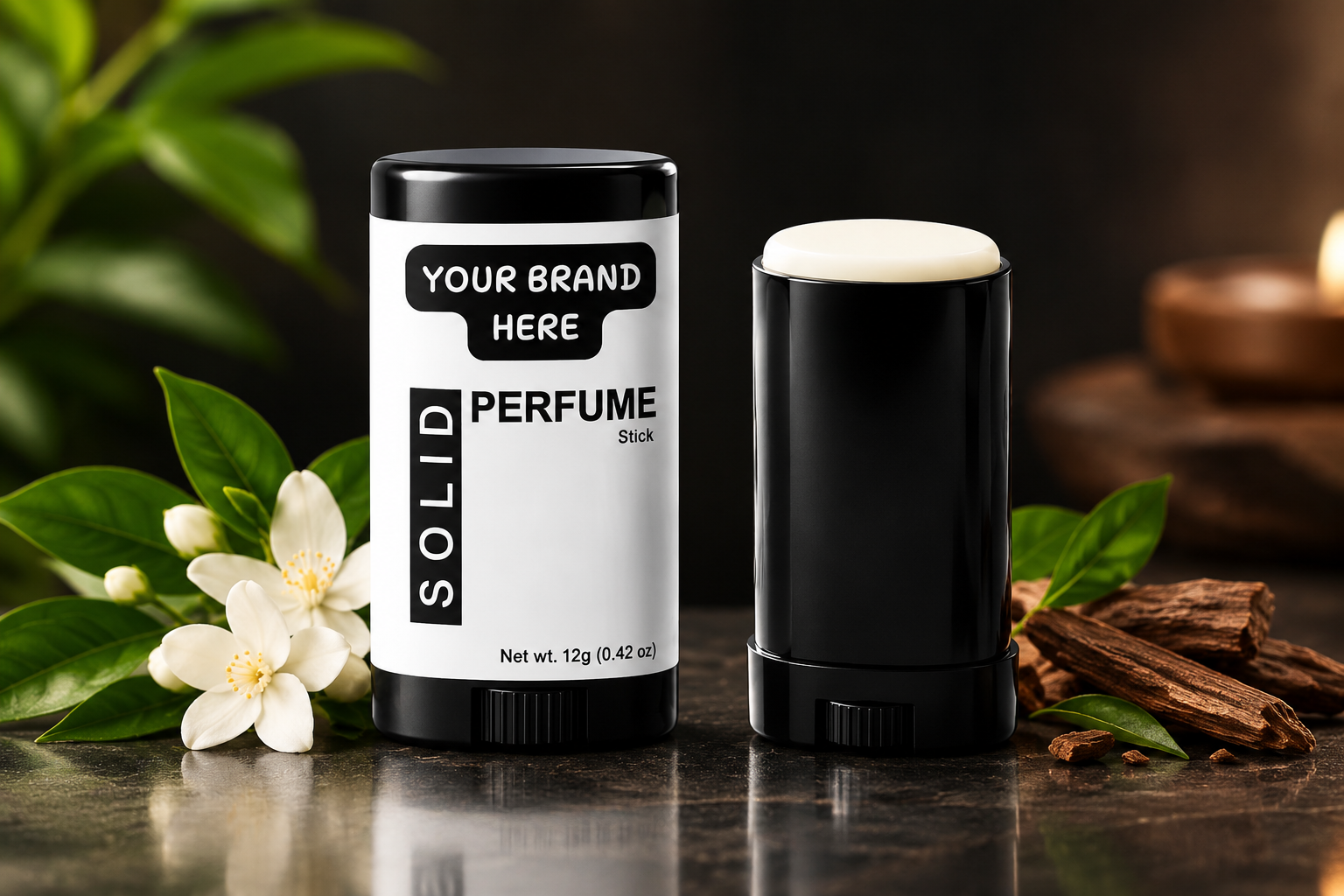
Solid perfume stick concept for private label branding, customised packaging and fragrance product development.
The fragrance market offers opportunities for established cosmetic businesses, retailers, distributors, online sellers and entrepreneurs who want to build a distinctive product range. While traditional liquid perfumes remain popular, solid perfume sticks provide another format for businesses exploring convenient and portable fragrance products.
A private label solid perfume is developed or manufactured for sale under a business's own brand name. Instead of investing in an independent production facility, a brand can collaborate with a suitable manufacturer to discuss product specifications, fragrance preferences, packaging, labelling and manufacturing requirements.
This model can help businesses focus on branding, distribution and customer acquisition while working with a manufacturing partner on production. However, the final product, available customisation, minimum order quantity, cost and development timeline depend on the manufacturer's capabilities and the agreed project specifications.
Quick answer: Private label solid perfume allows you to sell solid fragrance products under your own brand. Depending on the manufacturer's capabilities, the project may include formulation selection, fragrance customisation, packaging, labelling and bulk production. Contact UNICO Pharmaceuticals to discuss your specific requirements and confirm available options.
1. What Is Private Label Solid Perfume?
Private label solid perfume is a fragrance product manufactured or supplied for a business to market under its own brand name. The product generally comes in a compact container or twist-up stick rather than a conventional liquid perfume bottle. Its formulation is designed to provide a solid or balm-like consistency that can be applied according to the product's directions.
In a private label arrangement, the business builds its own product identity while working with a manufacturing partner. Depending on the agreement, the brand may select from available product options or discuss specific requirements for fragrance, texture, packaging and presentation. The scope of customisation should always be confirmed before placing an order.
For example, a skincare company might want to expand into fragrance products, while a retailer may want a compact perfume stick carrying its own brand name. A new business may also explore this format as part of a wider personal care collection. Private label manufacturing provides a potential route to market without requiring the business to establish its own production infrastructure.
How is a private label perfume different from a generic product?
A generic product is usually sold with standard product identification and limited brand differentiation. A private label product is positioned under the buyer's brand identity, subject to the manufacturing agreement. Branding can involve the product name, visual design, packaging artwork, label information and other agreed elements.
A branded appearance alone does not establish product quality. Businesses should also review the formulation specifications, manufacturing controls, quality documentation, packaging compatibility and applicable regulatory requirements. A successful product needs a clear identity as well as suitable production and compliance arrangements.
Who can consider private label solid perfume?
- Entrepreneurs planning to launch a fragrance brand.
- Cosmetic and personal care businesses expanding their existing product portfolio.
- Retailers and distributors interested in developing branded fragrance products.
- E-commerce sellers looking for compact fragrance formats.
- Established brands exploring additional product formats for their customers.
- Businesses seeking a manufacturing partner for an agreed bulk production requirement.
If you are exploring this category, start by reviewing UNICO's solid perfume manufacturing page. It is the most relevant starting point for discussing solid perfume production and your proposed brand requirements.
2. Why Choose Solid Perfume for Your Brand?
Solid perfume is an alternative to conventional liquid fragrance products. Its compact format can appeal to consumers who want a fragrance product that is convenient to carry and simple to apply. For businesses, it also creates an opportunity to explore a different presentation within the broader fragrance category.
Compact and portable product format
Solid perfume sticks can be designed for convenient storage in a handbag, travel kit, desk drawer or personal care pouch. Their compact form may appeal to customers who prefer carrying a small fragrance product during everyday activities. The actual portability depends on the container dimensions, product weight and packaging design.
A different fragrance application experience
Unlike spray perfumes, solid perfume is typically applied directly to the intended skin area using the product's applicator or surface. Some consumers prefer this format because it does not involve spraying a fragrance into the surrounding air. Application instructions should clearly explain where and how the finished product is intended to be used.
Scope for distinctive packaging
The stick or balm format offers opportunities to develop recognisable packaging. Businesses can discuss container colour, label artwork, brand placement, outer packaging and product presentation with their manufacturing partner. The available options depend on the container formats and customisation services offered.
Opportunity to build a focused product range
A business may choose to begin with one fragrance concept and later explore additional variants if customer demand and manufacturing capabilities support expansion. A clearly organised range can help customers understand the differences between available fragrance profiles without making the initial product selection unnecessarily complicated.
Solid perfume should not automatically be described as longer-lasting, safer or more sustainable than every liquid perfume. Performance, portability, packaging impact and consumer experience depend on the specific formulation and finished product. Brands should use evidence-based claims that accurately reflect their products.
3. Key Benefits of Private Label Solid Perfume for Businesses
Private label manufacturing can offer commercial advantages, particularly for businesses that want to focus on brand development rather than building their own manufacturing infrastructure. The actual benefits depend on the manufacturer's services, the product brief and the commercial agreement.
1. Develop your own brand identity
A private label arrangement gives a business the opportunity to present the product under its own brand name. Consistent typography, packaging artwork, product naming and fragrance descriptions can help establish a recognisable identity. Before approving the artwork, ensure that the proposed brand name and design can be used lawfully.
2. Explore fragrance customisation
Fragrance selection is central to product positioning. Depending on available capabilities, businesses may choose from existing fragrance options or discuss a custom fragrance brief. Important considerations include the intended audience, scent character, application experience, target price and compatibility with the proposed formulation.
3. Avoid setting up an independent production facility
Building a manufacturing operation involves investment in premises, equipment, personnel, quality systems and operational processes. Working with an external manufacturer can provide an alternative route, allowing the business to concentrate on product positioning, sales, customer service and distribution. It does not remove the need to evaluate the manufacturer's suitability or meet applicable obligations.
4. Plan production around business demand
The initial production quantity should be discussed before finalising the project. Businesses need to consider expected demand, storage space, available working capital, packaging quantities and the time needed to sell inventory. The manufacturer's minimum order quantity and production capacity will influence the launch plan.
5. Build a wider fragrance collection
Once the first product has been evaluated, a brand may consider introducing additional fragrance profiles, packaging variations or related products. Expansion should be guided by customer feedback, repeat purchases, commercial performance and the manufacturer's ability to support the proposed range.
6. Focus on distribution and customer acquisition
An external manufacturing arrangement can allow the business to devote more attention to building its website, marketplace listings, retail relationships and distribution network. However, private label manufacturing does not guarantee sales. Product-market fit, pricing, presentation, customer trust and consistent promotion remain important.
Business tip: Before committing to a large production quantity, clarify the product specifications, unit cost, packaging costs, order requirements, payment terms, quality documentation and expected production schedule. Base your launch decision on confirmed commercial details rather than assumptions.
4. Private Label Solid Perfume Manufacturing Process
Launching a private label solid perfume becomes easier when the project is divided into clear stages. Each stage helps the business and manufacturing partner confirm expectations before moving forward. The exact process varies according to whether the product uses an existing formulation or requires additional development.
Step 1: Define your target customer
Start by identifying who is most likely to purchase your product. Your target audience may include everyday fragrance users, gift buyers, travel-oriented consumers or customers who prefer compact personal care products. A clear audience helps guide decisions about fragrance style, packaging, price and product communication.
Step 2: Prepare a product brief
A product brief should explain what you want to launch and what matters most to your business. Include the intended product format, preferred fragrance profile, target market, packaging preference, approximate order quantity and expected price positioning. Mention any specific requirements relating to ingredients, fragrance standards or packaging materials.
Step 3: Discuss formulation and fragrance options
Speak with the manufacturer about available solid perfume formulations and fragrance choices. If a custom option is being considered, ask about development requirements, sampling, approval procedures and additional charges. Confirm that the selected fragrance and base are compatible and suitable for the intended use.
Step 4: Evaluate samples
When samples are available, evaluate the product against the agreed brief. Consider the consistency, ease of application, fragrance character, packaging usability and overall presentation. Establish a clear approval process so the final production specification reflects the version that the business has accepted.
Step 5: Finalise packaging and artwork
Choose the container and outer packaging according to the product's characteristics and intended market. Submit brand artwork, confirm label dimensions and review all product information before approval. Packaging should protect the product and provide adequate information without making unsupported performance claims.
Step 6: Confirm commercial and compliance requirements
Before production, confirm pricing, minimum order quantity, payment terms, lead time, responsibilities for packaging materials and applicable documentation. Review the labelling and regulatory requirements relevant to the product and market where it will be sold.
Step 7: Manufacture and perform quality checks
Production should follow the agreed specifications and the manufacturer's applicable quality procedures. Relevant checks may include raw material verification, batch documentation, appearance, consistency, packaging compatibility and finished product testing. The precise requirements depend on the formulation and applicable standards.
Step 8: Review finished goods and arrange dispatch
Before the goods are dispatched, confirm the agreed quantity, packaging, labelling and required documentation. Plan transportation and storage according to the product's requirements. Once inventory is received, maintain appropriate stock records and monitor customer feedback after launch.
| Manufacturing Stage | What the Business Should Confirm |
|---|---|
| Product planning | Target audience, product concept and price positioning |
| Formulation | Fragrance profile, base, texture and intended application |
| Sampling | Product acceptance criteria and approval process |
| Packaging | Container, label artwork and outer packaging |
| Commercial planning | MOQ, pricing, payment terms and lead time |
| Quality and compliance | Relevant testing, documentation and labelling requirements |
| Dispatch | Finished quantity, storage and delivery arrangements |
5. Ingredients and Formulation Options for Solid Perfume
Solid perfume formulations are designed to hold fragrance within a solid or semi-solid base. Depending on the formula, the base may contain waxes, oils, emollients, fragrance materials and other ingredients needed to achieve the required consistency, stability and application characteristics. The exact ingredient list varies by product.
Understanding the solid perfume base
The base determines important product characteristics, including firmness, glide, surface feel and behaviour under different storage conditions. A product that is too firm may be difficult to apply, while an unsuitable soft consistency may affect its performance during transport or storage. Formulation decisions should balance application, stability and the intended packaging format.
Fragrance profile and product positioning
Fragrance selection should match the brand's target market and product concept. Businesses may consider fresh, floral, woody, citrus-inspired, warm or other fragrance directions, subject to available options and formulation suitability. These descriptions are useful for communicating scent character, but the finished product should be evaluated before the brand finalises its claims.
Ingredient compatibility and product stability
Fragrance materials and the base must work together appropriately. Formulation development should consider ingredient compatibility, odour changes, physical consistency, packaging interaction and stability under relevant storage conditions. A manufacturer should advise on the appropriate checks for the particular formulation.
Skin compatibility and responsible claims
A product intended for application to skin should be developed and assessed according to its intended use and applicable requirements. Do not assume that natural ingredients are automatically non-irritating or that a particular fragrance suits everyone. Product descriptions should accurately reflect the formula and avoid unsupported therapeutic or safety claims.
Businesses that want to specify particular ingredient exclusions, fragrance requirements or packaging materials should communicate them at the beginning of the project. Confirm whether the requested specifications are feasible before finalising artwork, pricing or launch commitments.
6. Packaging and Custom Branding for Solid Perfume
Packaging plays an important role in how a fragrance product is presented, stored and used. For private label solid perfume, the container needs to suit the product's consistency and application method while providing sufficient space for the brand identity and required label information.
Choose the right container format
Depending on the manufacturer's available options, solid perfume may be presented in a twist-up stick, compact container or another suitable format. Evaluate the mechanism, closure, portability, ease of application and resistance to leakage or accidental opening. The chosen pack should be tested for compatibility with the actual formulation.
Build a consistent brand identity
A clear logo, readable product name, consistent typography and well-organised label design help customers identify the brand. Your packaging can communicate the fragrance name and product format without overcrowding the available space. Before printing, verify spelling, dimensions, ingredient information and all required declarations.
Consider secondary packaging
An outer carton or sleeve may provide additional space for product information, branding and retail presentation, if required. The choice depends on cost, distribution channel, protection requirements and the overall product concept. Ask the manufacturer which packaging formats and customisation options are available.
Check packaging quality before mass production
Review a sample of the intended pack and confirm that the product can be dispensed and used as expected. Check the closure, label adhesion, print quality, fit and finish. A packaging problem can affect the customer experience even when the fragrance itself meets the agreed specifications.
For businesses planning a wider cosmetic range, UNICO also provides information about its cosmetic manufacturing category. Discuss your specific product idea with the company to confirm which services and packaging arrangements are available for your project.
7. How to Choose the Right Private Label Solid Perfume Manufacturer
Choosing a manufacturing partner is an important business decision. A suitable partner should be able to explain its capabilities, communicate requirements clearly and provide relevant information about the production process. Do not base the decision on a website claim or quotation alone.
Review relevant manufacturing capabilities
Ask whether the manufacturer can produce the solid perfume format you require. Discuss formulation availability, sampling, production capacity, fragrance options and the types of packaging that can be supported. Confirm which services are performed directly and whether any part of the project involves another supplier.
Understand quality procedures and documentation
Request relevant details about quality control, batch records, raw material handling and finished product checks. Where certifications are claimed, verify the applicable certificate, scope, issuing organisation and validity. Certification information should be relevant to the actual facility and activities involved in the proposed project.
You can review UNICO Pharmaceuticals' certificate information as part of your supplier evaluation. Confirm the relevant documentation directly before making a purchasing decision.
Ask about minimum order quantity
The minimum order quantity can affect your initial investment, inventory levels and ability to test the market. Ask whether the MOQ differs by formulation, fragrance, packaging format or custom artwork. Make sure that the quoted quantity and commercial terms are clearly documented.
Compare quotations carefully
A lower quoted unit price does not necessarily represent the lowest total project cost. Check whether the quotation includes formulation, sampling, packaging, printing, testing, transport and other applicable charges. Compare equivalent specifications rather than comparing products that differ in packaging or service scope.
Evaluate communication and project management
A reliable business relationship requires clear responses, documented specifications and an agreed process for approvals and changes. Ask who will coordinate the project, how sample feedback will be handled and how production updates will be communicated.
Confirm compliance responsibilities
The responsibilities of the brand owner and manufacturer should be clear. Confirm which party handles formulation documentation, product testing, labelling, applicable regulatory requirements and any market-specific obligations. The precise responsibilities depend on the contract and relevant law.
Manufacturer evaluation checklist
- Experience relevant to the required product format.
- Clear formulation and sampling process.
- Documented product specifications and quality procedures.
- Suitable packaging and branding options.
- Transparent MOQ, pricing and payment terms.
- Clear production schedules and communication.
- Relevant compliance information and agreed responsibilities.
8. Private Label vs Third-Party Solid Perfume Manufacturing
The terms private label and third-party manufacturing are sometimes used interchangeably in the cosmetics and personal care industry. However, the exact service scope can differ between suppliers. Businesses should understand what is included in the proposed agreement instead of relying on the service name alone.
| Factor | Private Label | Third-Party Manufacturing |
|---|---|---|
| Brand identity | Product is marketed under the buyer's brand, as agreed. | Product can be made for the buyer's brand under the agreement. |
| Formulation | May use available formulations or agreed customisation. | May use an existing formula or a separately agreed development process. |
| Packaging | Options depend on the supplier and project. | Packaging responsibilities are defined in the manufacturing agreement. |
| Customisation | Depends on the available product and service scope. | Depends on technical capabilities and agreed specifications. |
| Production quantity | Subject to the applicable MOQ and order terms. | Subject to production capacity and agreed order terms. |
| Best next step | Confirm the product and branding options. | Confirm the specification, production and quality requirements. |
Neither model automatically guarantees a lower price, faster launch or greater product customisation. The appropriate choice depends on the product requirements, the supplier's capabilities, the commercial agreement and the business's long-term plans.
If you are comparing suppliers, explore UNICO's dedicated solid perfume manufacturers page and contact the team to discuss the precise services available.
9. Solid Perfume Manufacturing Cost, MOQ and Production Planning
The cost of launching a private label solid perfume varies according to formulation, fragrance materials, container type, packaging artwork, order quantity, testing requirements and other project-specific factors. There is no single price that applies to every product.
What affects the manufacturing cost?
- Formulation: The ingredients, technical requirements and development work involved.
- Fragrance: The selected fragrance materials and any customisation requirements.
- Packaging: Container design, material, decoration and outer packaging.
- Order quantity: The confirmed batch size and supplier's pricing structure.
- Testing: Applicable stability, compatibility and finished product checks.
- Labelling: Artwork preparation, printing and required product information.
- Logistics: Transport, storage and other applicable delivery expenses.
How should you plan your first order?
Start with a realistic sales estimate and an inventory budget. Consider your expected sales channels, marketing expenditure, storage capacity and the time required to sell the initial stock. A large order may reduce the quoted unit price in some cases, but it can also increase the amount of capital tied up in inventory.
Ask the manufacturer to confirm the MOQ for your selected formulation and packaging. If you want multiple fragrances, establish whether each variant requires a separate minimum quantity. Do not assume that the MOQ for one product automatically applies to every variation.
What should a manufacturing quotation include?
Request a written quotation covering the agreed product specification, quantity, unit price, packaging, applicable development or sampling charges, taxes, payment schedule, production lead time and delivery terms. Also confirm how changes to the formulation or artwork will affect the quotation.
Production timelines should be confirmed after the project requirements are understood. Sampling, custom packaging, artwork approval and material availability can influence the schedule. Avoid advertising a launch date until the important dependencies have been agreed.
10. How to Market Your Private Label Solid Perfume Brand
Manufacturing is only one part of launching a successful fragrance product. Your marketing strategy should communicate what makes the product relevant to the target customer, where it can be purchased and how it fits into the customer's lifestyle. Clear product information and consistent branding are useful starting points.
Define your product's positioning
Decide whether the product will be positioned around everyday convenience, a particular fragrance style, gifting or another relevant benefit. Use product features that can be verified, and avoid unsupported claims about fragrance longevity, ingredients or performance.
Create useful product pages
Your website should explain the product format, available fragrance variants, net quantity, application directions, ingredient information and packaging. Use original product photographs and clear descriptions. If the product is sold online, make pricing, delivery information and customer support easy to find.
Use search engine optimisation strategically
Build pages around relevant search intent, including solid perfume, solid perfume stick, private label solid perfume and solid perfume manufacturing. Use these terms naturally in headings, page titles, descriptions and body content where appropriate. Avoid repeating the same keyword unnaturally.
For a manufacturing business, the website should also make the B2B offering clear. A dedicated manufacturing page, informative FAQs, relevant internal links and a visible enquiry CTA can help prospective business buyers understand the available service.
Build a strong visual identity
Consistent product photography, packaging presentation and brand colours can make your range easier to recognise. Show the actual product clearly, ensure label information is readable and use visuals that reflect the finished item accurately.
Develop appropriate sales channels
Depending on your business model, you may explore direct website sales, retail distribution, online marketplaces or wholesale relationships. Each channel has different pricing, fulfilment and customer service requirements. Select channels that match your target audience and operating capabilities.
Measure results and improve the offer
Track product-page visits, qualified enquiries, conversion rates, customer feedback, repeat purchases and stock movement. For a B2B manufacturing business, measure qualified business enquiries rather than relying only on traffic or impressions. Use these findings to improve your product pages and sales process.
11. Why Consider UNICO Pharmaceuticals for Solid Perfume Manufacturing?
Selecting a manufacturing partner requires an understanding of its experience, available services and ability to support your specific project. UNICO Pharmaceuticals has more than 35 years of industry experience. Businesses interested in launching their own solid perfume product can use the company's dedicated manufacturing page to begin discussing their requirements.
UNICO's website also provides information about its company background and experience, along with its broader cosmetic manufacturing category. These resources can help prospective clients understand the business before making a direct enquiry.
Discuss your product requirements
Before contacting a manufacturer, prepare the key details of your planned product. Explain whether you want an existing solid perfume option or need to discuss customisation. Share your preferred fragrance profile, packaging concept, approximate order quantity and intended sales market.
You should also ask which formulations, packaging options, testing arrangements and documentation are available for the proposed product. This allows both parties to evaluate whether the project fits the manufacturer's capabilities.
Review relevant company information
Businesses evaluating suppliers can review the available information on UNICO's certificates page and confirm the relevant scope and documentation directly. Product-specific manufacturing capabilities, minimum quantities, prices and lead times should also be confirmed with the company rather than assumed.
Start with a clear brief
A concise product brief can make the first discussion more productive. Include the proposed brand, target customer, product format, fragrance direction, packaging preferences and approximate order quantity. If you have reference images or artwork, share them for evaluation.
To begin, visit the UNICO solid perfume manufacturing page or use the contact page to submit your enquiry. The team can clarify which options and next steps are available for your specific requirement.
12. Final Thoughts: Is Private Label Solid Perfume Right for Your Brand?
Private label solid perfume can be an option for businesses that want to explore a compact fragrance format under their own brand identity. It offers an opportunity to plan product presentation, fragrance selection and packaging while working with an external manufacturing partner. However, the commercial suitability of the product depends on demand, formulation, price, production requirements and the intended market.
Before moving forward, define your target customer, evaluate the product concept, confirm available customisation and request a detailed quotation. Review the manufacturing process, quality documentation, packaging compatibility and applicable regulatory requirements. These steps can help you make a more informed decision about the product and supplier.
For businesses exploring solid perfume manufacturing, UNICO Pharmaceuticals provides a starting point for discussing the proposed product and its production requirements. Contact the company with your brief to confirm the available options and determine the next steps.
Ready to Launch Your Own Solid Perfume Brand?
Discuss your private label solid perfume concept, fragrance preferences, packaging requirements and proposed production quantity with UNICO Pharmaceuticals. Contact the team to confirm available manufacturing options and project details.
Discuss Your Product Requirement →Frequently Asked Questions About Private Label Solid Perfume
Find answers to common questions about private label solid perfume, manufacturing, custom branding, formulation, packaging and bulk production.
1. What is private label solid perfume?
Private label solid perfume is a fragrance product sold under a business's own brand name and manufactured or supplied through a manufacturing partner. Depending on the agreement, the service may include formulation selection, fragrance options, packaging and labelling.
2. Can I launch my own solid perfume brand without a factory?
Yes, working with a suitable private label or third-party manufacturer can provide an alternative to establishing your own production facility. You should confirm the supplier's capabilities, commercial terms, quality procedures and regulatory responsibilities before starting the project.
3. What is the difference between solid perfume and liquid perfume?
Solid perfume is generally presented in a balm-like or stick format and applied directly according to its instructions. Liquid perfume is usually a liquid fragrance that may be applied using a spray or another dispensing method. Their ingredients, packaging, application and fragrance performance depend on the individual formulation.
4. Can I sell solid perfume under my own brand name?
Private label arrangements are designed to allow products to be marketed under the buyer's brand, subject to the agreement and applicable requirements. Confirm brand ownership, artwork approval, labelling responsibilities and other contractual details with the manufacturer.
5. Can I customise the fragrance of a private label solid perfume?
Customisation depends on the manufacturer's available fragrance options and development capabilities. Ask whether you can select from existing fragrances or request a custom option, and confirm any additional development costs, sampling requirements and minimum quantities.
6. What packaging options are available for solid perfume sticks?
Options depend on the manufacturer's available packaging range. A project may explore twist-up sticks, compact containers, labels and outer cartons where suitable. The final packaging should be compatible with the formulation and meet the requirements of the intended market.
7. What is the minimum order quantity for private label solid perfume?
The MOQ depends on the manufacturer, formulation, packaging format, customisation and order specifications. Contact the manufacturer with your proposed product and quantity to obtain the applicable MOQ and commercial terms.
8. How much does private label solid perfume manufacturing cost?
Costs vary according to the formulation, fragrance, packaging, order quantity, testing, artwork and other applicable charges. Request a written quotation that clearly identifies the included services, unit price, additional costs, taxes and delivery terms.
9. How long does it take to launch a private label solid perfume?
The timeline depends on formulation availability, sampling, packaging, artwork approvals, material availability and production scheduling. Ask the manufacturer for a project-specific estimate after your product requirements have been reviewed.
10. What ingredients are used in solid perfume?
Solid perfume formulations may contain waxes, oils, emollients, fragrance materials and other ingredients required for the product's consistency and stability. The actual ingredient list varies by formulation. Request the relevant product specifications and ingredient information before finalising your product.
11. Is solid perfume suitable for travel?
Its compact format can make solid perfume convenient to carry. However, packaging durability, temperature sensitivity and transport requirements depend on the finished product. Check the product's storage instructions and the rules applicable to your particular mode of travel.
12. What should I check before choosing a solid perfume manufacturer?
Review the manufacturer's relevant capabilities, formulation options, sample approval process, quality procedures, packaging choices, MOQ, pricing, lead time and documentation. Also confirm the responsibilities of both parties for labelling and applicable regulatory requirements.
13. What is the difference between private label and third-party manufacturing?
Private label generally describes selling a product under your own brand, while third-party manufacturing describes production by an external manufacturer. The terms can overlap. The actual services, ownership arrangements, formulation options and responsibilities depend on the supplier's agreement.
14. Does UNICO Pharmaceuticals manufacture solid perfume?
UNICO Pharmaceuticals has a dedicated solid perfume manufacturing page. Contact the company to confirm current product options, manufacturing capabilities, customisation, packaging, MOQ and other project-specific details.
15. How can I enquire about private label solid perfume with UNICO?
Visit the UNICO Pharmaceuticals contact page or its solid perfume manufacturing page. Share your proposed fragrance product, branding requirements, packaging preferences and approximate order quantity so the team can understand your enquiry.
Explore Related UNICO Pharmaceuticals Pages
Explore relevant manufacturing services, company information and product categories.
UNICO Pharmaceuticals Solid Perfume Manufacturers Cosmetic Manufacturing About UNICO Pharmaceuticals Certificates and Quality Information Skin & Hair Care Products Contact UsThis article provides general information about private label fragrance product development. Manufacturing capabilities, formulations, packaging, minimum order quantities, prices and timelines vary by project and must be confirmed directly with the manufacturer. Product claims and labelling should comply with applicable requirements.