
Sulphate-Free Shampoo Manufacturer in India: Private Label & Bulk Manufacturing
Looking for a sulphate-free shampoo manufacturer in India? Learn how private label and bulk shampoo manufacturing works, what to consider when choosing a formula, how packaging and branding fit into the process, and which questions to ask before selecting a manufacturing partner for your hair care brand.
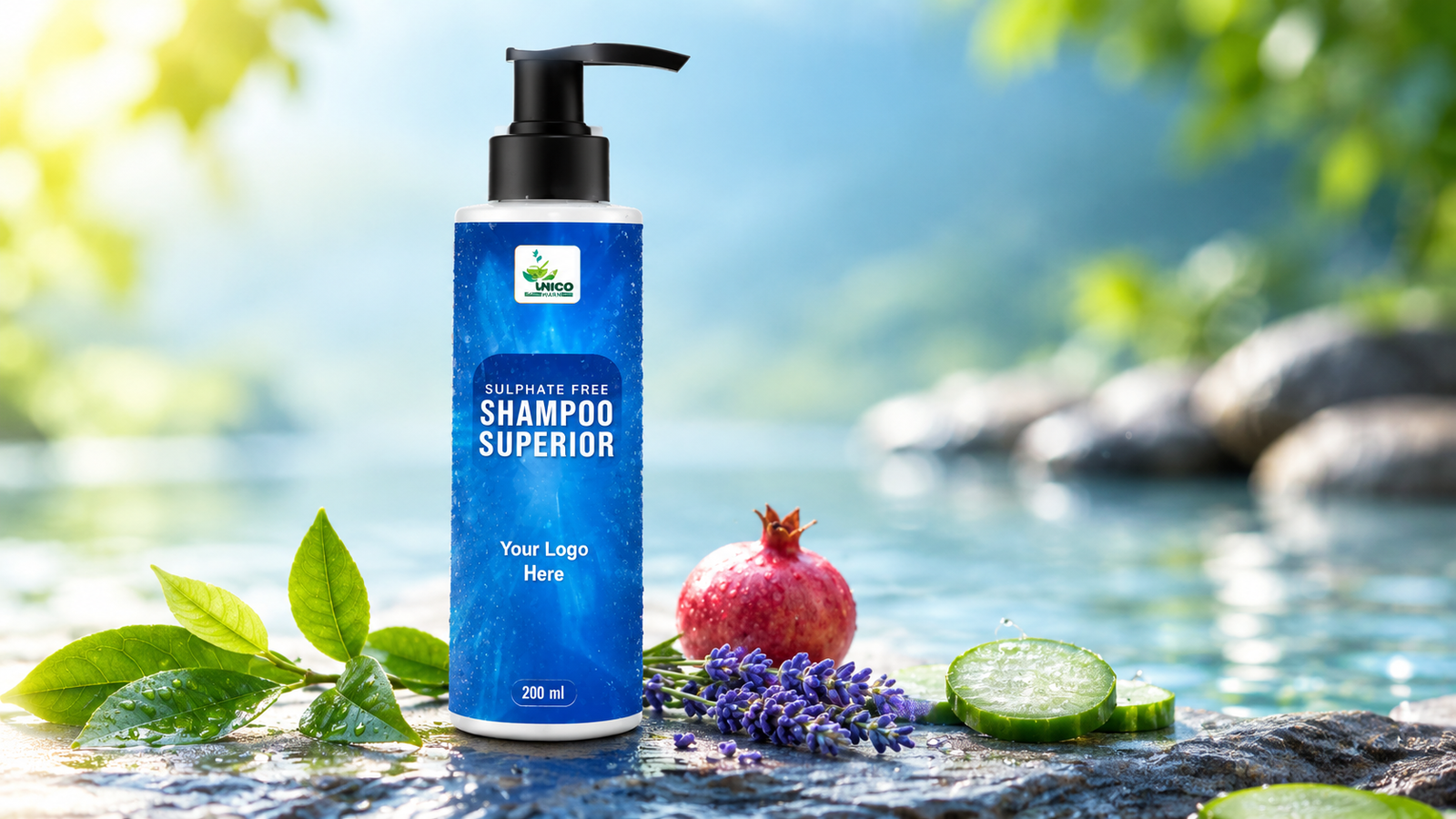
Shampoo is an important product in many hair care ranges, but customers do not all look for the same cleansing experience. Some prefer products designed for dry-feeling hair, some want a formula for regular washing, and others look specifically for a sulphate-free option. For businesses, this creates an opportunity to build a hair care range around clear customer needs, consistent product quality and useful product information.
Working with a sulphate-free shampoo manufacturer in India can be one route for businesses planning to launch a new shampoo, expand an existing cosmetics portfolio or develop a product under their own brand name. The right partner should be able to discuss the intended market, formulation requirements, packaging choices, product documentation and the practical steps needed to move from an initial brief to a finished product.
This guide is written for cosmetic brands, entrepreneurs, salon-focused businesses, distributors, wholesalers and companies exploring private label shampoo manufacturing. It explains the terminology, planning process and important checks to make before placing a bulk order. It also outlines how a business can prepare a clearer enquiry and evaluate whether a proposed shampoo product fits its target audience.
1. Understanding Sulphate-Free Shampoo Manufacturing
Sulphate-free shampoo manufacturing involves developing or producing shampoo formulas that do not use selected sulphate-based cleansing ingredients. The exact meaning should be checked against the product's ingredient list and formulation brief, because the term describes a formulation choice rather than one universal recipe. A product's performance also depends on the complete blend of cleansing agents, conditioning ingredients, viscosity modifiers, preservatives, fragrance and other components.
Manufacturing arrangements differ from one supplier to another. Some businesses need a ready-made formula that can be sold under their brand, while others want to discuss a customised product brief. A manufacturer may offer standard formulations, private label services, bulk supply or a combination of services. Always confirm the exact scope available for your project rather than assuming every supplier provides all options.
Who may need a sulphate-free shampoo manufacturer?
- New hair care brands: Businesses preparing to introduce their first shampoo product.
- Established cosmetic companies: Brands extending an existing range with another cleansing option.
- Salon and professional businesses: Companies exploring products suited to their customer base and retail model.
- Distributors and wholesalers: Buyers evaluating products for resale across suitable sales channels.
- E-commerce businesses: Brands planning online product listings, bundles or repeat-purchase ranges.
- Private label businesses: Companies that want a product marketed under their own brand identity.
Each business has different priorities. A startup may focus on initial investment and a manageable first order. An established brand may prioritise consistent repeat production, a specific formulation brief or packaging alignment across its product range. Writing down these priorities before contacting suppliers makes the discussion more productive.
2. What Does Sulphate-Free Shampoo Mean?
Sulphates are a group of ingredients used in some cleansing products. In shampoo, cleansing agents help remove oil, soil and product residue from the hair and scalp. A sulphate-free shampoo is generally formulated without selected sulphate-based surfactants, but the phrase does not mean that the product contains no cleansing agents. Other surfactants may be used to achieve the intended cleansing performance.
It is important not to assume that every sulphate-free shampoo will feel or perform the same. The formula, concentration and combination of ingredients influence foam, rinse feel, cleansing strength, viscosity and how the hair feels after washing. Two products with the same broad positioning can still deliver different experiences.
What brands should verify
- Which specific cleansing ingredients are included or excluded in the formula.
- Whether the ingredient list matches the intended product positioning.
- How the product is intended to be used and for which customer group.
- What product testing or supporting documentation is available.
- Whether claims used on packaging and advertising are accurate and appropriately supported.
Use the term sulphate-free only when the formulation supports that claim. Do not rely on a product name, supplier description or marketing phrase alone. Ask for the current ingredient information and review the proposed label before printing packaging or publishing product pages.
3. Potential Benefits and Customer Expectations
Many customers look for sulphate-free shampoo because they want to compare cleansing options and find a product that fits their hair-care routine. Some prefer a gentler-feeling wash, while others are interested in formulas designed for dry or chemically treated hair. However, results depend on the complete formulation and individual use. Avoid promising that a sulphate-free formula will work identically for every person or solve every hair concern.
Why customers may consider it
Customer expectations should guide product development, but claims must remain realistic. For example, do not claim that a shampoo prevents hair loss, repairs every type of damage or is suitable for every scalp unless the claim is properly supported and permitted for the intended market. Focus on verifiable product attributes, usage directions and the formulation's actual purpose.
For B2B buyers, the commercial task is to translate customer preferences into a product brief. Define the intended audience, desired cleansing experience, preferred fragrance profile, packaging format and price positioning. Share these requirements with the manufacturer so that the proposed product can be evaluated against a clear objective.
4. Private Label Shampoo Manufacturing
Private label shampoo manufacturing allows a business to market a shampoo product under its own brand name. Depending on the supplier's model, the product may use an available standard formula or a formulation developed around an agreed brief. The brand owner generally needs to coordinate product positioning, label information, packaging artwork, commercial quantities and distribution plans.
Private label can be useful for businesses that want to build a branded hair-care range without establishing every part of the production operation themselves. However, the exact responsibilities of the manufacturer and brand owner must be agreed in advance. Ask which activities are included and which need to be arranged separately.
What may be discussed in a private label project?
- Product selection: Reviewing available shampoo types and deciding which option fits the target market.
- Formula brief: Confirming the required sulphate-free positioning and other formulation preferences.
- Brand identity: Applying the approved brand name, product name and visual identity.
- Packaging: Reviewing bottle size, closure, label layout and secondary packaging options.
- Documentation: Confirming ingredient information, product specifications and applicable label requirements.
- Commercial planning: Agreeing order quantity, pricing, lead time, delivery and repeat-order expectations.
Before committing, ask for a clear description of the available private label services. Confirm whether formula changes are possible, whether they affect minimum quantities or timelines, and how the final product will be approved. A written project brief helps reduce misunderstandings between the brand and the supplier.
Businesses exploring hair-care products can review Unico's private label hair care manufacturer page for relevant company information. Discuss the specific shampoo requirements directly to confirm which services and formulations are available for the intended project.
5. Bulk Shampoo Manufacturing
Bulk shampoo manufacturing refers to producing or supplying shampoo in commercial quantities. The phrase can mean different things in different supplier arrangements: a business may purchase finished retail-ready bottles, or it may be enquiring about bulk product intended for further filling or packaging. Make sure the quotation clearly describes what is being supplied.
Bulk purchasing may be relevant for distributors, established brands, businesses with repeat demand and companies preparing a planned launch. Yet a large order is not automatically the most economical choice. Storage, working capital, shelf life, packaging changes and realistic sales forecasts should all be considered before selecting a quantity.
Questions to clarify before a bulk order
- Is the quoted product supplied in finished retail packaging or another format?
- What quantity is available for the selected formula and packaging?
- Are the bottle, cap, label and outer carton included in the quoted price?
- What are the production and dispatch timelines?
- How are batch identification and product documentation handled?
- What quality checks are completed and what records can be provided?
- What are the terms for damaged goods or products that do not match the agreed specification?
For a first order, compare the supplier's proposal with your launch plan. Estimate how quickly stock may sell, whether you have suitable storage and whether you will need to change the design after customer feedback. A realistic quantity can help protect cash flow while giving the business a basis for evaluating demand.
6. Formulation and Ingredient Considerations
A shampoo is a blend of ingredients designed to work together. Cleansing agents contribute to removing oil and residue; conditioning ingredients can influence combing and feel; thickeners affect consistency; preservatives help protect the product where required; and fragrance and colour may contribute to the sensory experience. The precise ingredient selection depends on the formula and its intended purpose.
For a sulphate-free shampoo, the most important starting point is a clear ingredient brief. Explain which ingredients or ingredient categories are important to your brand, what product experience you want to create and which claims you intend to make. A supplier should confirm whether the proposed formulation meets those requirements and provide relevant product information for review.
Key points to discuss with the manufacturer
- Cleansing system: Ask which cleansing agents are used and how the sulphate-free claim is defined for the formula.
- Conditioning feel: Describe whether the product should rinse clean, leave a softer feel or fit another intended experience.
- Fragrance: Confirm available fragrance options, subject to formulation and supplier capabilities.
- Appearance and viscosity: Discuss the expected colour, thickness and visual consistency of the product.
- Preservation and stability: Ask what product safety, preservation and stability assessments are appropriate and available.
- Ingredient declarations: Review the ingredient list and the information needed for the intended market.
- Claims: Ensure marketing statements are consistent with the formulation and supporting evidence.
Do not select a shampoo based on a short ingredient trend alone. An ingredient may be popular in marketing, but its presence does not by itself establish product effectiveness. The overall formula, concentration, quality controls and intended use all matter. The brand should avoid making medical or guaranteed-result claims without appropriate support.
7. Choosing a Shampoo for the Target Hair Type
A product range is easier to explain when each shampoo has a defined audience and purpose. Instead of trying to make one product suitable for everyone, a brand can identify the needs it wants to serve and evaluate whether the formula supports that positioning. Any suitability statement should be based on the product's actual formulation and relevant assessment.
Possible product positioning directions
These are product-planning directions, not a guarantee that one formula will meet every need within a category. Ask the manufacturer to explain which available formulas match the brief and what evidence supports the intended claims. If a custom formula is proposed, agree on evaluation criteria before moving to production.
Businesses developing a wider portfolio may also want to coordinate shampoo with conditioner, hair masks or other hair-care products. Keep the branding consistent, but assess each product on its own formulation and purpose. Internal product-range planning can help customers understand how products relate without implying that they must all be used together.
8. Customisation, Branding and Packaging
Packaging affects product presentation, storage, customer convenience and shipping. The right format depends on the brand's price positioning, sales channel, target audience and available supply options. A visually attractive bottle is useful only when it also works with the product and the practical requirements of filling, closing, labelling and transport.
Bottle and closure selection
Review available bottle sizes, shapes, materials, dispensing closures and cap options. Check that the selected packaging is compatible with the shampoo formula and intended use. Ask for filled samples when possible, because a bottle's appearance alone does not confirm how it will perform in a real product.
Label and artwork planning
Branding may include the product name, logo, colour palette, directions and other required information. Keep text legible at the actual label size and ensure that the artwork fits the selected bottle. Review the final proof carefully before approval, including spelling, ingredient declarations, net quantity and any required warnings or business details for the target market.
Packaging for different sales channels
Products sold through retail, salons, distributors and e-commerce may face different handling conditions. Online orders may require packaging that protects the bottle from movement and leakage during transit. Retail shelves may put more emphasis on product visibility and a coordinated look across the range. Choose packaging based on the real distribution plan rather than appearance alone.
Ask the supplier which packaging and decoration options are actually available, what minimum quantities apply and whether any tooling or setup costs are involved. Confirm which components are included in the quotation and document the approved specifications for future orders.
9. Quality, Testing and Product Documentation
Quality planning should begin before bulk production. The brand and manufacturer need a shared understanding of the product specification, the checks that apply to it and the documentation available for review. Exact testing requirements depend on the formula, packaging, intended use and applicable market regulations.
Areas to review before approving a product
- Appearance: Check colour, odour, texture and visible consistency against the agreed sample.
- Packaging compatibility: Confirm that the bottle, closure, label and formula work together.
- Stability: Ask what stability assessment is appropriate and what supporting information is available.
- Microbiological quality: Confirm the relevant quality and preservation controls for the product type.
- Batch consistency: Agree on the specifications used to review repeat production.
- Label review: Ensure that product information and claims are accurate for the intended market.
- Traceability: Clarify how batch details and relevant records are identified and retained.
- Transport readiness: Review packaging protection and handling requirements for the planned distribution method.
Ask which product documents can be shared and what each document actually covers. A general company certificate should not be treated as proof of every product claim or as a substitute for product-specific review. Similarly, do not publish statements such as dermatologically tested, clinically proven or suitable for all hair types unless they are accurate and appropriately supported.
Before the product is launched, have the final label and promotional content reviewed for the intended market. Requirements can differ by jurisdiction and product category, so the brand should confirm applicable rules rather than relying on a generic template.
10. The Shampoo Manufacturing Process
The exact process varies with the formula, facility, equipment and scope of the order. A typical project can nevertheless be organised into clear stages, helping both parties understand what information is needed and when decisions must be approved.
Step 1: Share the product brief
Describe the target customer, intended product positioning, sulphate-free requirement, preferred fragrance, packaging format, target price and estimated order quantity. Mention any ingredients or claims that are essential to your brand. A clear brief gives the supplier a practical starting point.
Step 2: Review available formulation options
Discuss whether a standard formula fits the brief or whether a customised development discussion is needed. Ask for the available ingredient information and confirm how the product's sulphate-free positioning is supported. Do not approve the formula based only on a proposed product name.
Step 3: Evaluate samples and specifications
Review the sample for the agreed characteristics, including appearance, fragrance, texture, packaging and intended user experience. Record the feedback and confirm which changes are possible. If changes affect the formula or packaging, ask whether additional evaluation, cost or time may be required.
Step 4: Finalise packaging and artwork
Select the bottle and closure, prepare the label and review the required product information. Confirm that the packaging is compatible with the product and that the artwork is correct at production size. Approve the final version in writing before it is printed or applied.
Step 5: Confirm the commercial quotation
Request a written quotation that clearly identifies the product, packaging, quantity, included services, applicable charges, payment terms and estimated timeline. Confirm what is not included, so that any additional work can be planned in advance.
Step 6: Agree on production and quality requirements
Before production begins, confirm the approved specification, quality checks, batch documentation and process for handling any deviation. Make sure the responsibilities of the brand and manufacturer are clear.
Step 7: Plan delivery and repeat orders
Confirm dispatch arrangements, delivery location, outer packaging and expected lead time. After receiving the order, check the delivered goods against the agreed specification. Keep the approved product details and artwork available for future repeat orders.
11. How to Choose a Sulphate-Free Shampoo Manufacturer in India
Choosing a manufacturing partner is not just a price comparison. The supplier should understand the product brief, explain the services it can provide and give clear information about formulation, packaging, quantities and timelines. The brand should also assess whether the supplier's actual capabilities match the requirements of the project.
Questions to ask before selecting a supplier
- Do you offer sulphate-free shampoo, and what formulation options are available?
- Can the product be supplied under my own brand name?
- Is a standard formula available, or can a customised brief be discussed?
- What is the minimum order quantity for the selected formula and packaging?
- Which bottle sizes, closures, labels and packaging options are available?
- What product information and quality documentation can be provided?
- What is included in the quoted price, and what may cost extra?
- What is the estimated timeline for samples, artwork approval and production?
- How are product specifications and repeat orders managed?
- Which responsibilities remain with my business as the brand owner?
Compare proposals using the same product brief and packaging requirements. A lower quoted price may exclude packaging components, artwork, testing or other services. A more complete quotation makes it easier to compare the real cost and the responsibilities each party will handle.
For Unico Pharmaceuticals company information, visit the About Us page. You can also review the company's published information on the Certificates page. Confirm the relevance and scope of any certification or service directly before using it as part of a purchasing decision.
12. MOQ, Cost and Order Planning
The cost of a private label or bulk shampoo project depends on several variables, so a reliable quote requires a clear specification. Formula requirements, packaging, order quantity, artwork, production arrangements and delivery can all influence the final price. Avoid making a decision based only on an estimated unit price without checking what it includes.
Factors that can affect cost
- Formula: Standard and customised requirements may involve different development or production considerations.
- Order quantity: Minimum quantities and unit prices vary by supplier, formula and packaging.
- Bottle and closure: Size, material, design and dispensing components affect packaging costs.
- Branding: Labels, printing, decoration and artwork preparation may add charges.
- Testing and documents: Requirements depend on the product and the scope agreed with the supplier.
- Secondary packaging: Cartons, protective materials and retail packaging may affect the finished cost.
- Freight and delivery: Destination, shipment size and handling conditions can change the total.
What to include in your quotation request
- Product type and sulphate-free formulation requirement.
- Whether you need a standard or customised formula discussion.
- Preferred bottle size, closure and packaging style.
- Branding and label requirements.
- Estimated first order and possible repeat-order quantity.
- Delivery destination and target launch date.
- Required product information or documentation.
Minimum order quantity should be confirmed directly with the supplier. It may vary by product, packaging, customisation and production requirements. Do not assume that a minimum quoted for one shampoo or bottle format will apply to another.
Plan your first order around realistic demand and available working capital. Consider how much stock you can store, how quickly you expect to sell it and whether the label or product range may change after launch. A measured launch plan can help you evaluate customer response before expanding quantities.
13. Launching and Marketing Your Shampoo Brand
A strong product launch needs more than an attractive bottle. The product page, label, sales materials and customer support should explain what the shampoo is, who it is designed for, how to use it and what makes its formulation relevant. Keep every claim consistent with the actual product and the evidence available.
Build a clear product page
Use a descriptive product name, a readable ingredient list where appropriate, clear directions and accurate packaging information. Explain the intended product positioning without promising guaranteed results. High-quality product photographs should show the actual packaging and should not remove or change important label details.
Use SEO to reach relevant buyers
For a B2B manufacturer or private label service page, content should address the questions businesses ask before enquiring: available formulations, branding options, packaging, order quantities, quality processes and the next steps. Relevant terms can include “sulphate-free shampoo manufacturer in India”, “private label shampoo manufacturer”, “bulk shampoo manufacturer” and “private label hair care manufacturer”. Use keyword research data to decide the final priorities; these examples are topic suggestions, not verified search-volume figures.
Make the enquiry process simple
Help prospective buyers send useful details in their first enquiry. A short form or contact section can ask for the business name, product requirement, expected quantity, packaging preference and target launch timeline. Avoid asking for unnecessary details at the first step. Follow up by confirming the exact product scope, availability and commercial terms.
Plan beyond the first product
If the shampoo performs well with your target audience, you may later explore complementary hair-care products. Keep the range logically organised and make sure each product has a clear purpose. Consistent branding can help the products look connected, while accurate descriptions help buyers understand their differences.
14. Explore Unico Pharmaceuticals
Unico Pharmaceuticals provides information about its hair-care manufacturing services on its website. Businesses planning a shampoo project can review the Private Label Hair Care Manufacturer page and contact the company to discuss the requirements of their intended product.
Before enquiring, prepare a short brief covering the shampoo type, sulphate-free requirement, intended customer, preferred packaging, branding needs and estimated quantity. This helps the team understand what you are looking for and clarify which options may be relevant. The exact availability of formulas, customisation, packaging and production quantities should be confirmed directly with Unico.
Unico Pharmaceuticals states that it has more than 35 years of manufacturing experience and a GMP-certified facility. You can read more about the company on the About Us page and review published information on the Certificates page. Check the relevant scope of any certification and confirm service details before making a product-specific decision.
Useful Unico Pharmaceuticals pages
- Unico Pharmaceuticals Homepage — Explore the main website.
- Private Label Hair Care Manufacturer — Review relevant hair-care service information.
- About Unico Pharmaceuticals — Learn about the company.
- Certificates and Quality Information — Review published certificate information.
- Contact Unico Pharmaceuticals — Discuss your business requirements.
Planning Your Own Sulphate-Free Shampoo Brand?
Share your hair-care product brief, packaging preferences and estimated order quantity with Unico Pharmaceuticals.
Enquire About Your Project15. Frequently Asked Questions
1. What does a sulphate-free shampoo manufacturer in India do?
Depending on the supplier, services may include supplying available shampoo formulas, private label production, packaging coordination or bulk manufacturing. Confirm the exact services, formulation options and commercial terms directly with the manufacturer.
2. What is sulphate-free shampoo?
Sulphate-free shampoo is generally formulated without selected sulphate-based cleansing ingredients. It still uses a cleansing system, and the overall performance depends on the complete formula rather than one ingredient category alone.
3. Can I sell shampoo under my own brand name?
Private label arrangements may allow a business to market a shampoo under its own brand. Confirm available services, label requirements, packaging options, minimum quantities and responsibilities with the supplier before proceeding.
4. What is private label shampoo manufacturing?
Private label shampoo manufacturing is an arrangement in which a product is supplied for sale under a brand's own identity. Depending on the supplier, a standard formula or a customised product brief may be considered.
5. What is the minimum order quantity for sulphate-free shampoo?
MOQ depends on the manufacturer, formulation, packaging and customisation requirements. Ask for the minimum quantity for the exact product and packaging combination you want to order.
6. Can I request a customised sulphate-free shampoo formula?
Customisation depends on the manufacturer's capabilities and the project requirements. Share your ingredient brief, target customer, desired product experience and intended claims, then confirm feasibility, cost and timelines directly.
7. What should I check before choosing a shampoo manufacturer?
Review formulation information, available packaging, product documentation, quality processes, minimum quantities, written pricing, lead times and communication. Confirm that the supplier's actual services match your project's requirements.
8. Is sulphate-free shampoo suitable for every hair type?
No single shampoo should be assumed to suit everyone. Suitability depends on the complete formula, hair and scalp needs, use pattern and individual preferences. Product claims should reflect the available evidence.
9. Can a sulphate-free shampoo produce foam?
Yes, a sulphate-free shampoo can use other cleansing ingredients that create foam. The amount and feel of foam depend on the formula and do not by themselves determine cleansing performance.
10. What affects the price of private label shampoo?
Price may depend on formulation, quantity, bottle and closure, labels, artwork, secondary packaging, documentation, testing requirements and delivery. Request a written quotation that identifies what is included.
11. Can I customise the shampoo bottle and label?
Packaging and branding options vary by supplier. Confirm bottle sizes, closures, label formats, printing options, minimum quantities and additional charges before approving the design.
12. What information should I send when requesting a quote?
Include the product type, sulphate-free requirement, standard or customised formula preference, packaging, estimated quantity, branding needs, delivery destination and expected timeline. This helps the supplier prepare a more relevant response.
13. Why are product testing and documentation important?
Appropriate checks and documentation help the brand understand product quality, packaging suitability and the support for claims. The specific requirements depend on the formula, intended use and market.
14. Can I order shampoo in bulk for distribution?
Bulk supply may be available depending on the supplier and product. Confirm whether the quote covers finished retail-ready units or another supply format, along with quantities, packaging, delivery and documentation.
15. How do I contact Unico Pharmaceuticals about hair-care manufacturing?
Visit the Contact Us page and share your product requirements. You can also review the Private Label Hair Care Manufacturer page for relevant information.
Disclaimer: This article provides general information about sulphate-free shampoo and private label or bulk manufacturing. Product availability, formulation options, minimum quantities, pricing, documentation and production timelines depend on the supplier and project. Verify all formulation details, product claims, applicable regulatory requirements and service availability directly before placing an order or publishing marketing materials.