
How to Choose the Right Solid Perfume Manufacturer for Your Brand
Solid perfume is a compact fragrance format that gives beauty businesses, retailers and fragrance brands another way to expand their product ranges. Its portable design, balm-like texture and different packaging possibilities make it an interesting option for brands looking beyond traditional liquid perfumes. However, choosing the right supplier involves more than comparing prices. You need to evaluate product quality, fragrance options, packaging, manufacturing capabilities, quality-control practices and communication. This guide explains how to select a solid perfume manufacturer, what questions to ask before placing an order and how to compare solid perfume manufacturers in India for a private-label project.
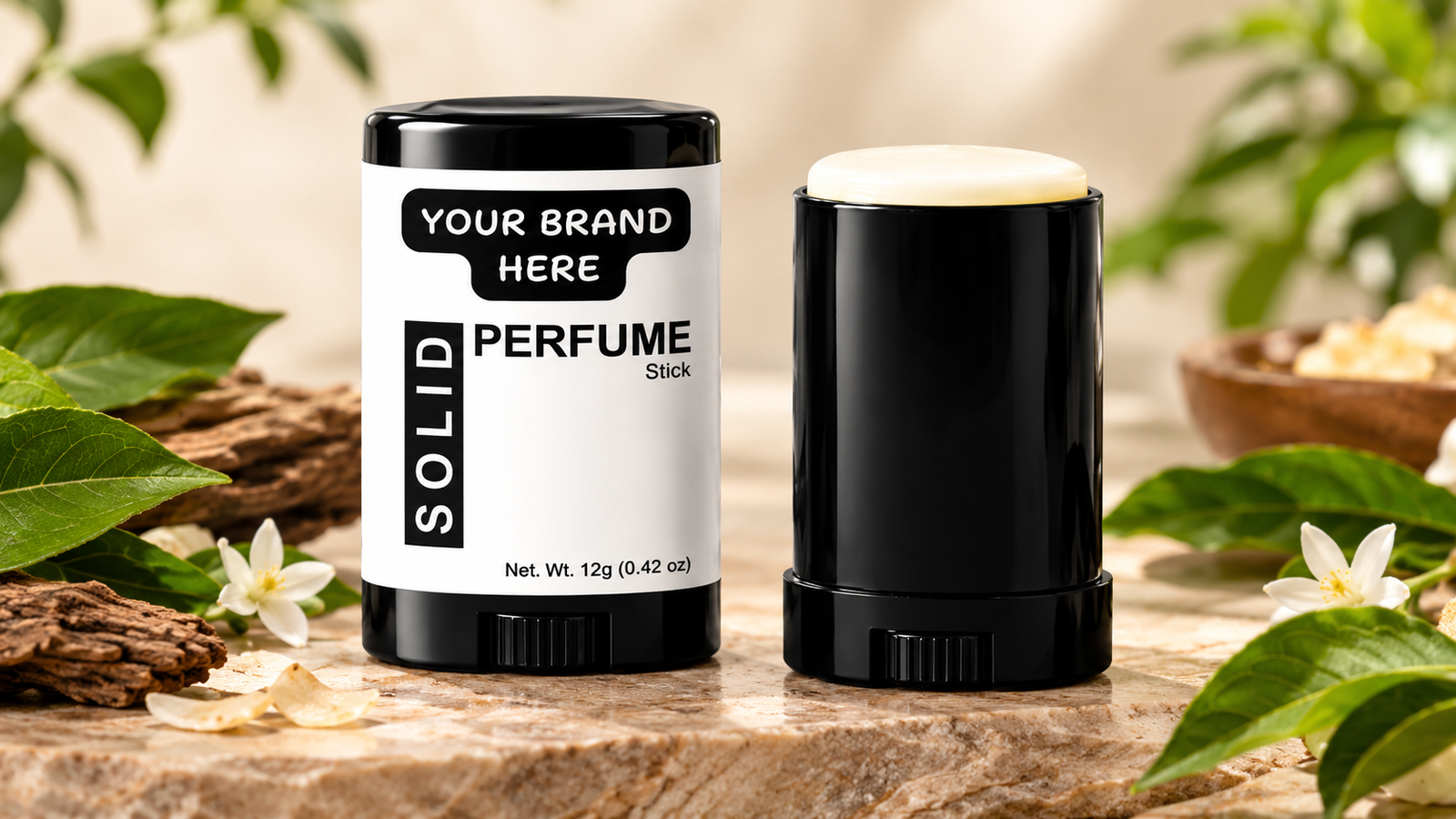
Solid perfume product presentation for businesses exploring fragrance manufacturing and private-label opportunities.
Launching a fragrance product requires careful planning. Your product should suit your target customers, match your brand identity and meet your commercial requirements. A suitable manufacturing partner can help you understand the available product options and the steps involved in production. A supplier that does not match your needs, on the other hand, may cause delays, unclear expectations or unexpected expenses.
Before contacting a solid perfume manufacturer, prepare a clear product brief. Define the product format, preferred fragrance direction, packaging style, estimated quantity and intended launch date. These details will help manufacturers understand your requirements and provide more useful information about their capabilities.
Quick answer: Choose a solid perfume manufacturer by checking product samples, formulation and fragrance options, packaging quality, quality-control practices, documentation, minimum order quantity, pricing and production timelines. For private-label projects, confirm the customisation options and get the product specifications and quotation in writing before approving production.
1. Understand Solid Perfume Before Choosing a Manufacturer
Solid perfume is a fragrance product presented in a solid or balm-like base instead of a conventional liquid spray. Depending on the design, it may come in a stick, compact, tin or another container. The format can be convenient for carrying and applying small amounts of fragrance, but the finished product still needs to meet your expectations for texture, fragrance, appearance and usability.
Start by deciding which type of solid perfume fits your brand. Think about how customers will use the product, where they may carry it and how it will be displayed. A twist-up stick may create a different user experience from a compact or tin. The packaging format can also affect product specifications, filling requirements, costs and minimum order quantities.
Understand your target audience
A fragrance product for everyday use may need a different presentation from a premium gift product. Consider your intended customer, preferred price range and the overall impression you want the product to create. This will help you discuss suitable fragrance directions, packaging and product sizes with the supplier.
Decide how the product fits your range
If you already sell perfumes or personal-care products, your solid perfume may need to match your existing brand identity. If you are starting a new business, you may want to focus on one product concept before introducing additional variants. A clear plan makes supplier discussions more focused and helps prevent unnecessary changes later.
2. Define Your Brand Requirements
Before requesting quotations, prepare a product brief that explains what you want to manufacture. You do not need to know every technical detail, but you should describe the product clearly enough for a manufacturer to understand the project.
Your product brief should cover the following points:
- Product format: Stick, compact, tin or another proposed format.
- Fragrance direction: Floral, woody, fresh, citrus, sweet or another preferred profile.
- Brand positioning: Everyday, premium, gift-oriented or travel-friendly.
- Packaging: Preferred size, colour, material and branding style.
- Order quantity: Estimated initial order and potential future demand.
- Launch timeline: Your target date and any important deadlines.
- Target market: The country or market where the product will be sold.
Separate essential requirements from optional features. For example, a specific package size may be necessary, while a customised outer box may be optional. This helps the manufacturer suggest practical alternatives if a requested feature affects cost or timing.
Providing reference images can also help communicate your ideas. Explain what you like about each reference and what you want to change. An image is a useful starting point, but the final design, product format and manufacturing feasibility should be confirmed with the supplier.
3. Check the Experience of the Solid Perfume Manufacturer
A manufacturer’s experience can help you understand its familiarity with fragrance products, packaging formats and production processes. However, years in business alone do not guarantee that a supplier is the right choice. Look for relevant experience and ask whether the company can support the particular solid perfume project you have in mind.
Review the company website, product information, business details and available manufacturing information. Ask for examples of relevant work where possible. A professional supplier should explain its capabilities clearly and identify requirements that need further discussion rather than making unsupported promises.
Ask about manufacturing capabilities
Find out whether the supplier can discuss product formulation, fragrance selection, filling, packaging and quality checks. Some companies may provide several services directly, while others may work with partners for particular stages. Ask who is responsible for each part of the process so that expectations are clear.
Check production capacity
Your chosen supplier should be able to discuss your expected order quantity and production schedule. A company suited to a small initial order may have different capabilities from one handling larger orders. Equally, a large supplier may have a minimum quantity that does not suit a new business.
Choose a manufacturer whose confirmed capabilities fit your current needs and realistic growth plans. Do not select a supplier based only on the size of its website or the number of products shown online.
4. Request and Evaluate Product Samples
Product samples help you evaluate the actual product rather than relying only on photographs or descriptions. Whenever samples are available, review the fragrance, texture, application, appearance and packaging before approving bulk production.
Check whether the fragrance matches your concept and whether the texture is suitable for the intended format. Examine the container, opening and closing mechanism, label readability and overall finish. Record your observations so you can provide specific feedback to the manufacturer.
Use a sample evaluation checklist
- Does the fragrance match the intended scent direction?
- Is the texture suitable for the proposed product format?
- Is the product easy to apply?
- Does the packaging feel appropriate for the target customer?
- Does the container open and close properly?
- Are the label and branding elements clear and readable?
- Can the manufacturer explain what changes are possible?
Ask whether sample revisions are available and whether additional development charges apply. Confirm how many revisions may be included and whether changes affect the production timeline.
A sample should not be treated as proof of shelf life or long-term stability. Ask the manufacturer what relevant testing or evaluation is available for the specific product and packaging combination. Before bulk production, confirm the approved product specification in writing.
5. Discuss Fragrance and Formulation Options
Fragrance is central to the customer experience, but the product base and overall formulation also influence how a solid perfume feels and performs. Discuss the available options with the manufacturer and ask which characteristics can realistically be adjusted for your project.
Describe your preferred scent direction as clearly as possible. Words such as fresh, luxurious or premium can mean different things to different people. You can explain the fragrance notes you prefer, the overall impression you want to create or the type of customer you are targeting.
Ask whether the manufacturer offers a selection of existing fragrance options or can discuss a customised fragrance project. Availability will depend on the supplier's capabilities, materials, quantity and development process.
Ask about formula and packaging compatibility
The product and its container should be considered together. Ask how the manufacturer evaluates compatibility between the formula and the chosen packaging, and what testing or product information can be shared. The final specification should reflect the intended format and storage conditions.
If formula ownership, confidentiality or exclusivity is important to your business, discuss it before placing an order. Do not assume that a formula is exclusive simply because the finished product is sold under your brand. Any relevant terms should be clearly documented in the agreement.
6. Review Quality Control and Documentation
Quality control is an important factor when selecting a solid perfume manufacturer. Ask how the supplier checks incoming materials, production stages, packaging and finished products. The exact procedures will vary by product and facility, so request information relevant to your proposed project.
Ask whether the manufacturer provides a product specification that records the agreed product format, fragrance, packaging and labelling. Find out how finished batches are identified and what checks are carried out before products are released. You should also understand whom to contact if a quality concern occurs after delivery.
Verify certifications and quality claims
If a supplier states that it holds a certification, ask for the relevant details and verify that the documentation is current and applicable to the facility or activity being discussed. A certification should not be treated as proof of every product claim or as a replacement for reviewing the product specification.
Depending on the product and destination market, your business may need product information, labelling details, batch-related records or other documentation. Ask which documents the manufacturer can provide and which responsibilities remain with your brand.
Avoid making safety, performance or regulatory claims unless they are supported by suitable evidence and are appropriate for the product and market.
7. Check Packaging and Branding Options
Packaging affects how a solid perfume looks, feels, travels and is displayed. It also contributes to your brand identity. Before choosing a supplier, ask which packaging formats are available and whether the company supports standard packaging, customised branding or both.
Review the container dimensions, material, closure, finish and suitability for the intended product. Check whether there is enough space for the required product information and whether your design will remain readable at the actual size.
Understand the available customisation
Customisation can include adding a logo to an existing container, selecting colours, printing labels, designing an outer box or developing a more distinctive package. These options are not the same for every manufacturer. Ask which features are available and whether they depend on a minimum order quantity.
Also confirm whether artwork preparation, printing, setup, moulds or special packaging will add to the total cost. Ask which file formats are required for your logo and design. Before production, review the final artwork carefully, including spelling, brand colours, product name and required product information.
Once the artwork is approved, changes may cause extra costs or delays. A clear approval process helps reduce avoidable errors.
8. Understand MOQ, Pricing and Lead Times
MOQ means minimum order quantity. It is the smallest quantity a supplier is willing to manufacture or supply under specified conditions. MOQ can vary according to the product format, packaging, fragrance options and degree of customisation.
Ask whether the minimum quantity applies to the whole order or separately to each fragrance, product variant or packaging design. This is especially important if you want to launch several versions of your solid perfume.
Do not compare suppliers on unit price alone. Request a written quotation that explains the product, quantity, packaging, customisation and services included in the offer.
| Item | Question to Ask | Why It Matters |
|---|---|---|
| MOQ | Does the minimum apply to each variant or the complete order? | Helps you plan a realistic launch quantity. |
| Unit price | What product and packaging elements are included? | Makes quotations easier to compare. |
| Samples | Are sample and revision charges applicable? | Clarifies development costs. |
| Customisation | Are printing, artwork or setup charged separately? | Helps prevent unexpected expenses. |
| Production time | When does the production timeline begin? | Supports launch planning. |
| Delivery | Are shipping and packing costs included? | Clarifies the total order cost. |
The total project cost may include sampling, packaging, artwork, taxes, shipping and other agreed services. Ask for the payment terms, currency and quotation validity period. Make sure you understand what is included before comparing one supplier with another.
Confirm the production timeline
Ask for a realistic schedule covering sampling, sample approval, artwork approval, production and dispatch. The schedule may change if materials are unavailable, the design is revised or the order quantity changes.
Document important milestones and responsibilities. Avoid announcing a firm launch date until the supplier has reviewed the requirements and confirmed a realistic production schedule.
9. How to Compare Solid Perfume Manufacturers in India
When researching solid perfume manufacturers in India, create a shortlist based on relevant experience, product information, manufacturing capabilities and communication. Do not select a supplier simply because it appears near the top of search results.
Review the supplier's website and contact information. Ask about its experience with fragrance products and the packaging format you need. If possible, discuss the project with the team and request relevant product information before moving to the sample stage.
Use the same questions for every shortlisted supplier. Ask about samples, fragrance options, packaging, MOQ, quality checks, documentation, pricing and production timelines. Keeping your questions consistent makes it easier to compare the answers.
Compare the complete offer
Location may influence communication, transport and coordination, but it should not be your only selection factor. Consider the total cost, product quality, relevance of the supplier's experience and ability to meet your product brief.
Verify important details, including where production takes place and which services are performed directly by the manufacturer. If any part of the project involves an external partner, ask who is responsible for that stage.
Watch for warning signs
Be cautious if a supplier will not explain what is included in a quotation, avoids providing written specifications or makes broad guarantees without supporting information. Unclear terms around ownership, customisation, quality expectations and delivery can create avoidable problems.
A professional supplier should be willing to discuss your questions and document the agreed requirements before production begins.
10. Choosing a Private Label Solid Perfume Manufacturer
A private label solid perfume manufacturer supplies products that a business sells under its own brand name according to an agreed arrangement. This model can help businesses expand their product ranges without managing every manufacturing step themselves.
However, private-label services vary between suppliers. Some manufacturers offer existing product options with branding, while others may support additional discussions about fragrance, packaging or product development. Confirm the exact services available for your project.
Clarify the customisation process
Ask whether you can select from existing fragrance options, choose packaging, add your logo or discuss other changes. Find out whether the product will use an existing formulation or require new development. Confirm what samples and approvals are needed before the final product specification is set.
Discuss brand and design ownership
Before ordering, document who owns your brand name, logo, artwork and any specially developed design or formula-related work. Ownership depends on the agreement and the work involved, so do not rely on assumptions or verbal assurances.
If confidentiality or exclusivity is important, ask whether suitable terms can be included in a written agreement. Clarify the limits of those terms before committing to the project.
Plan for repeat orders
If the first launch performs well, you may want to reorder the same product. Ask how approved specifications and artwork are recorded for future orders and how the manufacturer communicates changes to materials, packaging or production details.
Your product description and packaging should accurately represent the finished product. Review the applicable labelling requirements for your intended market and ensure that all marketing claims are accurate and supported.
11. Solid Perfume Manufacturer Evaluation Checklist
Use this checklist to compare potential suppliers and make a decision based on your business priorities.
Questions to Confirm Before Ordering
- Does the supplier understand your product requirements?
- Can it explain the available fragrance and formulation options?
- Are samples available for evaluation?
- Can packaging and branding requirements be discussed?
- Are quality-control practices explained clearly?
- Can the supplier provide relevant product information and documentation?
- Are MOQ and variant requirements confirmed?
- Does the quotation list included services and additional charges?
- Are sample, artwork, production and dispatch timelines clear?
- Are formula, artwork and confidentiality terms documented where needed?
- Is there a clear contact for approvals and updates?
- Is there a process for handling product issues?
After gathering the answers, compare each supplier against your most important requirements. A startup may prioritise manageable order quantities and a straightforward sampling process. An established business may focus more on production capacity, repeat-order consistency and packaging specifications.
The right supplier is not necessarily the cheapest or the largest. It is the manufacturer whose confirmed capabilities, commercial terms and process best fit your project.
12. Explore Solid Perfume Manufacturing with UNICO Pharmaceuticals
UNICO Pharmaceuticals provides information about its fragrance and product manufacturing categories through its website. If you are looking for a solid perfume manufacturer for a new brand or an existing product range, start with a clear brief explaining your product format, preferred fragrance direction, packaging requirements and expected quantity.
UNICO has more than 35 years of industry experience and operates a GMP-certified manufacturing facility. As with any manufacturing partner, confirm the specific product options, documentation, production capabilities and commercial terms relevant to your project before placing an order.
Visit the UNICO solid perfume manufacturing page to explore the category. You can also review the company background and certification information as part of your supplier research.
Prepare a clear manufacturing enquiry
Include the product format, estimated quantity, fragrance direction, packaging preferences and expected launch date in your enquiry. Mention whether you are interested in an existing product option or want to discuss a private-label project.
Ask for confirmation of the available options, sample process, minimum order quantity, quotation, production schedule and relevant documentation. These details may vary according to the project, so request written information before approving production.
For further discussion, visit the UNICO contact page. A clear product brief helps the team understand your requirements and respond with relevant information.
13. Final Thoughts: Choose a Manufacturer That Fits Your Brand
Choosing the right solid perfume supplier requires a balanced review of product quality, fragrance options, packaging, quality-control practices, MOQ, pricing, production timelines and communication. A manufacturer may look attractive online, but your decision should be based on relevant information, sample evaluation and clear written terms.
Start with a product brief, compare suppliers using the same questions and request samples where available. Confirm what is included in the quotation, how customisation works and which documents will be provided. For private-label projects, discuss artwork, formula-related terms, product specifications and repeat-order expectations before approving production.
Taking these steps can help you make an informed decision and build a practical foundation for launching or expanding your solid perfume range. Choose a supplier whose confirmed capabilities match your requirements and whose process provides clarity from the first discussion through to delivery.
Planning Your Solid Perfume Brand?
Discuss your solid perfume product brief, packaging preferences and private-label requirements with UNICO Pharmaceuticals. Share your expected quantity and launch plans to ask about suitable options.
Explore Solid Perfume Manufacturing →Frequently Asked Questions About Solid Perfume Manufacturers
Here are answers to common questions businesses ask when researching solid perfume manufacturers and private-label options.
1. How do I choose the right solid perfume manufacturer?
Review relevant experience, product samples, fragrance options, packaging, quality-control practices, documentation, MOQ, pricing and lead times. Request written specifications and confirm that the supplier can meet your requirements before ordering.
2. What should I check in a solid perfume sample?
Assess the fragrance, texture, application, appearance, container and closure. Compare the sample with your product brief and ask what changes are possible. Confirm whether the approved sample will serve as the reference for bulk production.
3. What does a private label solid perfume manufacturer do?
A private-label manufacturer supplies products that a business sells under its own brand name according to an agreed arrangement. Services may include product selection, fragrance options, packaging and labelling, but the exact scope must be confirmed with the supplier.
4. Can I customise fragrance and packaging?
Customisation depends on the manufacturer's capabilities, product format, quantity and packaging options. Ask which fragrance choices and branding methods are available and whether development or setup charges apply.
5. What is the MOQ for solid perfume manufacturing?
MOQ varies by supplier, product format, packaging and customisation. Confirm whether the minimum applies to the full order or separately to each fragrance, product variant or packaging design.
6. How can I compare solid perfume manufacturers in India?
Use the same criteria for every supplier: samples, product options, quality practices, documentation, MOQ, quotation details, production timeline and communication. Verify important claims and compare complete offers rather than unit prices alone.
7. Why should I request a written quotation?
A written quotation clarifies the product specification, quantity, packaging, customisation, included services, additional charges, payment terms and estimated schedule. It gives both parties a reference before the order is approved.
8. What documents should I ask the manufacturer for?
Ask which product specifications, labelling details, batch-related records or other documents are available and relevant to your market. Requirements depend on the product and sales destination.
9. How long does solid perfume manufacturing take?
Timing depends on sampling, approvals, materials, packaging, order quantity and the supplier's schedule. Ask for a project-specific timeline covering sampling, artwork approval, production and dispatch.
10. Can a startup work with a solid perfume manufacturer?
A startup can approach manufacturers with a clear product brief and realistic quantity estimate. Ask about product options, sample costs and MOQ to find a supplier whose process suits your launch stage.
11. What should I confirm for repeat orders?
Keep records of the approved product specification, fragrance, packaging, artwork and order terms. Ask how the supplier manages changes and maintains the agreed specifications for future orders.
12. How can I contact UNICO about solid perfume manufacturing?
Visit the UNICO solid perfume manufacturing page or use the contact page. Share your product format, expected quantity, fragrance direction, packaging needs and timeline.
Explore Related UNICO Pharmaceuticals Pages
Learn more about fragrance manufacturing and the company.
Solid Perfume ManufacturingAttar Manufacturing
Car Perfume Manufacturing
Cosmetic Manufacturing
About UNICO Pharmaceuticals
Certificates and Quality Information
Contact Us
This article provides general guidance for evaluating solid perfume manufacturing suppliers. Product availability, formulation options, fragrance choices, packaging, MOQ, pricing, documentation and production timelines vary by project and should be confirmed directly with the relevant manufacturer. Businesses should verify applicable requirements and ensure that product descriptions and marketing claims are accurate for their intended market.