
Why Skincare Brands Choose Third-Party Face Mask Manufacturing in India
The skincare industry offers growing opportunities for entrepreneurs, cosmetic brands, distributors and established personal care businesses looking to introduce their own product ranges. Face masks are an important category within skincare because they can be developed in different formats, including clay masks, herbal-inspired masks, cream-based masks and botanical formulations. However, developing and producing a cosmetic product requires suitable manufacturing infrastructure, formulation knowledge, packaging planning and quality evaluation. This is why many businesses explore third party cosmetic manufacturing instead of independently establishing a production facility. By partnering with a suitable private label skincare manufacturer, brands can discuss product concepts, custom skin care formulation, packaging and bulk production under their own brand identity. This guide explains how third-party face mask manufacturing in India works, its business advantages, formulation possibilities, manufacturing stages and the important factors to evaluate before choosing a cosmetic manufacturing partner.
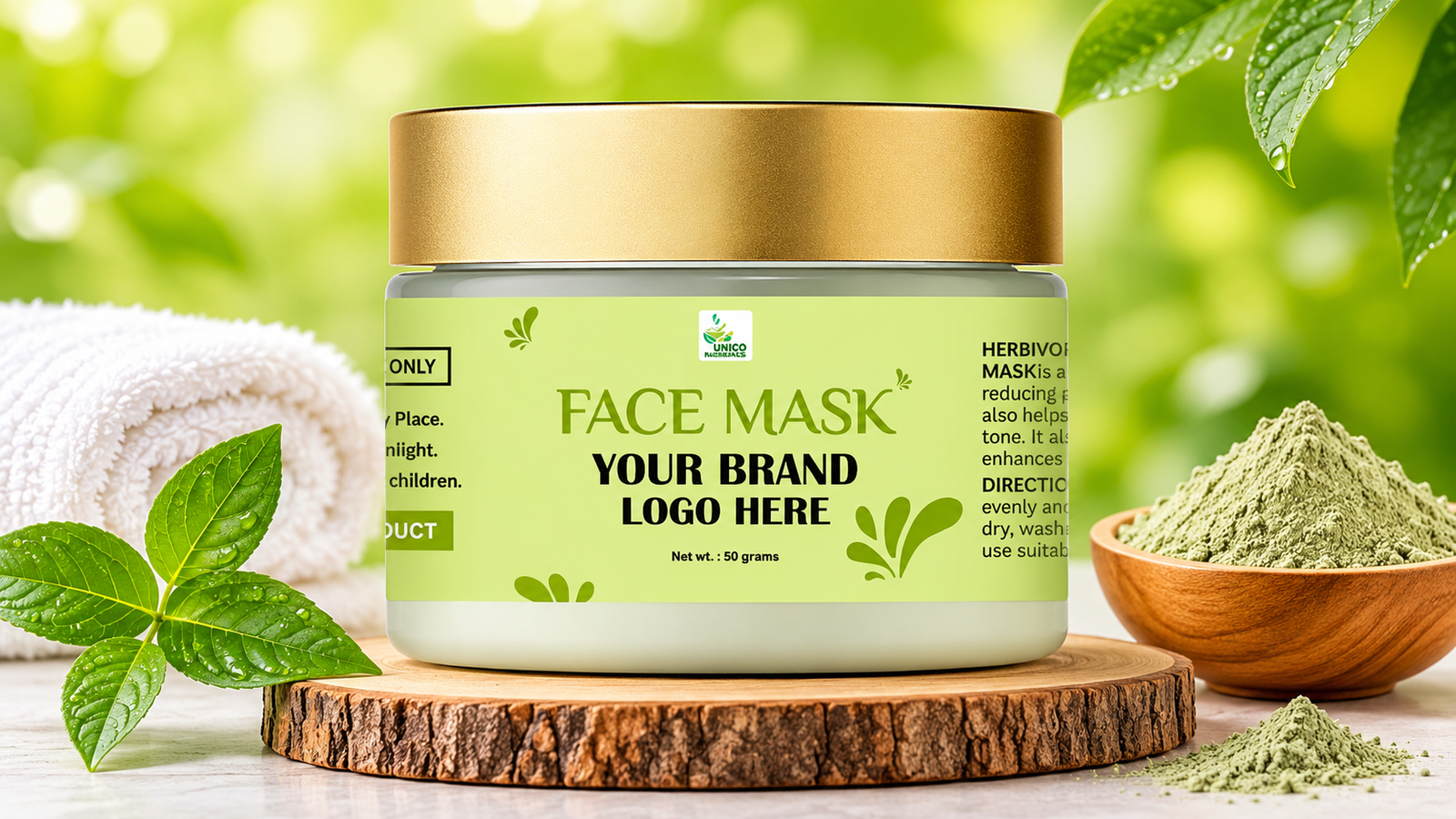
Green clay face mask product presentation representing private label skincare and third-party cosmetic manufacturing opportunities.
For a new skincare brand, launching a face mask involves more than selecting an attractive product name. Businesses need to consider the intended customer, formulation requirements, ingredient selection, product consistency, packaging design and applicable cosmetic regulations. An experienced manufacturing partner can help businesses understand these requirements and explore suitable production arrangements.
India has an established cosmetics and personal care manufacturing ecosystem, offering opportunities for brands to explore third-party production and private label arrangements. Whether a business wants to launch a single green clay face mask or develop a complete skincare collection, understanding the manufacturing process is an important first step.
Quick Answer: Third-party face mask manufacturing allows skincare businesses to work with an external cosmetic manufacturer for product development and production. Depending on the manufacturer's capabilities, services may include formulation discussions, ingredient selection, sample evaluation, packaging, labelling, private label branding and bulk manufacturing. Businesses should confirm product specifications, MOQ, pricing, quality documentation and production timelines before placing an order.
1. Understanding Third-Party Cosmetic Manufacturing
Third-party cosmetic manufacturing is a business arrangement in which a brand works with an external manufacturing company to produce cosmetic and personal care products. Instead of investing in its own manufacturing facility, machinery, production staff and complete infrastructure, the business uses the manufacturing partner's available facilities and services according to an agreed arrangement.
This approach is particularly relevant for startups, skincare entrepreneurs, retailers, distributors and established cosmetic companies that want to introduce additional products. The brand can focus on product positioning, customer research, sales, distribution and marketing while discussing production requirements with a suitable manufacturer.
What does a third-party cosmetic manufacturer do?
The responsibilities of a third-party manufacturer depend on the services offered and the agreement between both businesses. For a face mask project, the manufacturing partner may support several stages, including:
- Discussing the proposed face mask product concept.
- Explaining available formulation options.
- Evaluating ingredient preferences and product requirements.
- Discussing sample development and product approval.
- Providing information about suitable packaging formats.
- Handling agreed manufacturing and filling operations.
- Supporting applicable labelling and packaging arrangements.
- Conducting relevant production and quality checks.
A third-party manufacturing arrangement does not automatically include every service. Businesses should confirm the exact scope of work, product specifications, branding responsibilities and documentation before beginning a project.
Why is India an important manufacturing destination?
India has a broad cosmetics, herbal products and personal care manufacturing sector. Businesses can explore different types of manufacturing partnerships depending on their product category, order quantity and commercial requirements.
For brands planning a face mask range, working with an Indian cosmetic manufacturing company can provide an opportunity to discuss product development and production locally. The important consideration is to identify a manufacturing partner with relevant capabilities, transparent commercial terms and suitable quality practices.
Third-party manufacturing for different business sizes
The model can be considered by both new and established businesses. A startup may want to introduce its first cosmetic product, while an established skincare company may want to add a new face mask variant to an existing collection. Distributors may also explore branded products for their distribution channels.
The manufacturing requirements will differ according to the business model. A clear product brief helps the manufacturer understand what the buyer wants to develop and what options may be suitable.
2. Why Skincare Brands Choose Third-Party Manufacturing
Skincare brands choose third-party manufacturing for several business and operational reasons. Establishing a manufacturing facility requires investment in infrastructure, equipment, trained personnel, raw materials, quality systems and regulatory processes. A third-party arrangement offers another route for businesses that want to explore product development without independently managing every production activity.
1. Reduced investment in manufacturing infrastructure
Setting up an independent cosmetic manufacturing unit involves significant planning and investment. Businesses need to evaluate production equipment, suitable premises, storage arrangements, utilities, staff and applicable compliance requirements.
With third-party cosmetic manufacturing, a brand can discuss production through an existing manufacturing partner. This can reduce the need to establish its own complete production infrastructure, although product development, packaging, inventory and marketing still require investment.
2. Access to manufacturing capabilities
An established manufacturer may already have equipment and processes for handling selected cosmetic product categories. Depending on its capabilities, this may include mixing, formulation processing, filling, packaging and other production activities.
Brands can discuss whether the manufacturer has the required capabilities for their proposed face mask format. This is particularly useful when a business wants to explore different cosmetic product types without independently purchasing all the required machinery.
3. Opportunity to build your own brand
A private label arrangement allows businesses to explore selling a manufactured product under their own brand identity. This can include discussions around product naming, logo placement, label design, packaging selection and other agreed branding requirements.
For entrepreneurs entering the skincare category, this creates an opportunity to develop a distinct market identity while working with an external production partner.
4. Flexibility in product selection
Different customers may prefer different face mask formats. Some brands may focus on clay-based products, while others may explore cream masks or botanical-inspired formulations. Working with a suitable skin care contract manufacturer can help businesses understand which product options are available.
The available formulation and customisation possibilities depend on the manufacturer's technical capabilities, raw materials, product requirements and commercial conditions.
5. More attention to marketing and distribution
A skincare brand requires more than a manufactured product. It also needs a clear identity, product positioning, distribution strategy, customer communication and sales planning.
By using an external manufacturing arrangement, the brand may be able to direct more of its internal resources towards these business activities instead of independently operating a production facility.
6. Opportunities for bulk production
Third-party manufacturers can discuss bulk production requirements according to their available capacity and order terms. This may be useful for businesses supplying retail stores, distributors, online platforms or other sales channels.
However, the actual order quantity, production capacity and lead time should always be confirmed before a purchase commitment.
Business Insight: Third-party manufacturing can simplify the production side of launching a skincare brand, but it does not remove the need for product research, brand development, inventory planning, quality evaluation and regulatory compliance.
3. Understanding Face Mask Manufacturing
Face mask manufacturing involves developing and producing cosmetic products designed for application to the facial skin. Face masks are available in different product formats, and each format requires suitable formulation ingredients, processing methods and packaging considerations.
A brand planning a face mask product should first decide the type of product it wants to offer. This decision influences the formulation discussion, ingredient selection, consistency, packaging and overall product presentation.
What makes face mask manufacturing different?
Face masks may have different textures and formulation characteristics compared with everyday products such as face wash or moisturisers. A clay mask, for example, has different raw material and consistency considerations from a cream-based mask.
The manufacturer needs to evaluate the proposed product concept and determine the suitable formulation and processing requirements. Product stability, compatibility, preservation and packaging are also important considerations.
Face mask product development for skincare brands
A brand may begin with a basic product concept such as a green clay face mask. It can then discuss the preferred texture, colour, ingredient profile, fragrance, packaging and target product positioning with the manufacturer.
The product concept should be translated into clear specifications before bulk production. A sample review, where available, helps the business evaluate whether the proposed product matches its expectations.
Why product positioning matters
Two brands may sell face masks but target different customer groups. One may prefer a botanical-inspired product with minimal packaging, while another may want a premium-looking clay mask with distinctive jars and coordinated branding.
Product positioning helps determine the packaging direction, product description, brand identity and marketing approach. It should be considered during the initial manufacturing discussion rather than after production has been completed.
4. Different Types of Face Masks for Private Label Brands
One advantage of developing a skincare collection is the possibility of exploring different face mask formats. Each product type offers a different formulation and presentation direction. Businesses should choose products according to their intended customers, brand identity and manufacturing requirements.
1. Green Clay Face Mask
Green clay face masks are a popular product concept within clay-based skincare collections. Their characteristic appearance and clay-based formulation make them suitable for brands interested in mineral-inspired or spa-style product presentation.
A business planning a green clay mask should discuss the type and grade of clay, the complete formulation, product consistency and suitable packaging. The final product should be evaluated according to its specifications and intended cosmetic use.
2. Herbal Face Mask
Herbal-inspired face masks are developed around selected botanical ingredients and product concepts. Businesses may explore different botanical ingredient combinations depending on formulation compatibility and the intended product identity.
The term herbal should accurately reflect the actual formulation. Brands should not make unsupported claims about skin treatment, medical effects or guaranteed results.
3. Cream-Based Face Mask
Cream-based masks generally have a different texture and formulation structure from clay-based products. Their development may involve suitable emollients, moisturising components, emulsifying systems and other ingredients depending on the product specifications.
Brands interested in a cream mask should discuss the desired consistency, application experience, appearance and packaging compatibility with the manufacturer.
4. Botanical Face Mask
Botanical face masks use plant-inspired ingredients as part of their product concept. Depending on the formulation, brands may explore ingredients such as aloe vera, green tea or selected botanical extracts.
The actual ingredient grade, concentration, compatibility and product role should be evaluated during formulation development.
5. Charcoal Face Mask
Charcoal-inspired face masks are another product concept within the skincare category. Businesses may explore suitable formulations depending on their intended product positioning and manufacturing capabilities.
The manufacturer should assess the raw material specifications, product consistency, colour, packaging compatibility and relevant product testing requirements.
6. Premium Spa-Inspired Face Mask
Premium spa-inspired face masks may focus on a coordinated combination of formulation, product appearance and packaging. Brands can explore distinctive containers, label finishes, product naming and visual identity to create a consistent collection.
The final selection should balance appearance, product usability, manufacturing feasibility and commercial costs.
| Face Mask Type | Product Concept | Manufacturing Considerations |
|---|---|---|
| Green Clay Mask | Clay-based skincare product. | Clay grade, consistency and packaging. |
| Herbal Face Mask | Botanical-inspired product. | Ingredient selection and compatibility. |
| Cream Face Mask | Cream-textured skincare product. | Emulsion, texture and stability. |
| Botanical Face Mask | Plant-inspired formulation. | Extract specifications and formulation. |
| Charcoal Face Mask | Charcoal-inspired product concept. | Raw material quality and dispersion. |
| Premium Spa Mask | Premium product presentation. | Formulation, packaging and branding. |
5. Ingredients Used in Face Mask Formulations
Ingredient selection is an important part of face mask manufacturing. The ingredients influence the product's texture, appearance, consistency, application characteristics and overall formulation performance.
Businesses looking for custom face mask manufacturing should share their preferred ingredient direction with the manufacturer. The final selection depends on technical feasibility, ingredient specifications, compatibility, safety and the intended cosmetic product.
1. Green Clay
Green clay is used in different clay-based cosmetic product concepts. It can contribute to the characteristic appearance and texture of a green clay face mask. Its suitability depends on the grade, quality specifications and the complete formulation.
2. Kaolin Clay
Kaolin is a mineral-based ingredient used in various cosmetic formulations, including selected face masks. It can be considered when developing clay-based product concepts with particular texture and appearance requirements.
3. Aloe Vera
Aloe vera is a recognised botanical ingredient used in a wide range of personal care products. It may be considered in suitable face mask formulations depending on the desired product concept and formulation compatibility.
4. Green Tea Extract
Green tea extract is another botanical ingredient that may be considered in skincare product development. Businesses should discuss its specifications, quality and suitability with the manufacturer before finalising the formulation.
5. Glycerin
Glycerin is commonly used in cosmetic formulations as a humectant. Its inclusion and concentration depend on the intended formulation, product characteristics and compatibility with the other ingredients.
6. Conditioning and Emollient Ingredients
Selected conditioning and emollient ingredients may be considered in cream-based and other face mask formulations. They can influence the texture, application and after-use feel of the finished product.
7. Preservative Systems
Suitable preservation is an important consideration for many water-containing cosmetic formulations. The preservation system should be selected according to the formulation, product characteristics, applicable requirements and relevant testing.
| Ingredient Category | Role in Formulation | What Brands Should Confirm |
|---|---|---|
| Green Clay | Clay-based product component. | Grade, specifications and suitability. |
| Kaolin | Mineral-based cosmetic ingredient. | Quality and formulation compatibility. |
| Aloe Vera | Botanical ingredient. | Extract type and ingredient specifications. |
| Green Tea Extract | Botanical formulation component. | Quality, grade and intended role. |
| Glycerin | Humectant used in cosmetic formulations. | Concentration and compatibility. |
| Emollients | Influence texture and skin feel. | Formulation requirements. |
| Preservatives | Support appropriate product preservation. | Suitability and preservation testing. |
An ingredient list alone does not establish the effectiveness or safety of a finished cosmetic product. The complete formulation, ingredient quality, concentrations, manufacturing process and applicable evaluation procedures all matter.
6. Custom Skin Care Formulation and Product Development
Custom skin care formulation is an important consideration for brands that want a product aligned with their own concept. Rather than selecting a product only by its appearance, businesses should discuss the formulation characteristics they expect from the finished face mask.
Understanding your product requirements
The first step is to prepare a product brief. This document should explain the intended face mask type, target customer, preferred ingredients, texture, appearance, fragrance and packaging expectations.
If you have a reference product, its packaging or a sample description, sharing that information can help communicate your requirements. However, a reference product does not mean that an identical formulation can automatically be reproduced.
Texture and consistency development
Texture is one of the characteristics customers notice when applying a face mask. A clay-based mask may require a different consistency from a cream-based mask. The formulation should be developed according to the intended product type and application experience.
Fragrance and colour preferences
Some skincare brands prefer fragrance-free products, while others may explore suitable fragrance options. Colour can also be an important part of product presentation, particularly for clay-based and botanical-inspired masks.
Any fragrance or colour selection should be suitable for the cosmetic application and compatible with the complete formulation.
Sample development and approval
Where sample development is available, businesses should evaluate the proposed product before approving bulk manufacturing. The sample should be reviewed for consistency, appearance, fragrance, application characteristics and other agreed specifications.
Feedback should be specific. Instead of simply saying that a sample is not suitable, explain whether the texture, fragrance, colour or another characteristic needs to be reviewed.
Formulation Tip: Keep the approved product specifications in writing. Record the agreed formulation, ingredient requirements, appearance, packaging format and product size so that both the brand and manufacturer have a clear reference for production.
7. The Third-Party Face Mask Manufacturing Process
Third-party face mask manufacturing involves a sequence of planning, formulation, approval and production activities. The exact workflow depends on the manufacturer's services and the product requirements. Understanding the major stages helps businesses prepare for a more organised manufacturing partnership.
Step 1: Product Concept Planning
Decide which face mask you want to launch. It could be a green clay mask, herbal-inspired face mask, cream mask or another cosmetic product concept. Identify the target customer and the product positioning before contacting a manufacturer.
Step 2: Manufacturer Selection
Research cosmetic manufacturing companies that handle the relevant product category. Review their manufacturing capabilities, product categories, quality practices and available private label services.
Step 3: Product Requirement Discussion
Share the product concept, preferred ingredients, expected consistency, fragrance preferences, packaging ideas and approximate order quantity. The manufacturer can then discuss the available options according to its capabilities.
Step 4: Formulation Evaluation
Discuss whether an available formulation can meet the product requirements or whether additional development is needed. Confirm which changes are possible and whether any development charges or other commercial conditions apply.
Step 5: Sample Review
If samples are available, evaluate the product against the agreed requirements. Check the consistency, appearance, fragrance, application experience and other relevant characteristics.
Step 6: Packaging Selection
Choose a suitable container, jar, tube or other packaging format. Confirm the material, capacity, closure, label area and compatibility with the selected formulation.
Step 7: Branding and Artwork Approval
Prepare your logo, product name, label design, brand colours and product information. Review the artwork carefully before approving printing or packaging production.
Step 8: Commercial Approval and Order Confirmation
Confirm the MOQ, product specifications, quotation, packaging details, payment terms and expected production schedule. The agreed details should be documented before production begins.
Step 9: Bulk Manufacturing
The manufacturer proceeds with the agreed production activities according to the approved specifications and production plan. The process may involve raw material handling, formulation processing and other relevant manufacturing operations.
Step 10: Filling and Packaging
The finished face mask formulation is filled into the approved packaging format. Labelling, sealing and packing are carried out according to the agreed arrangement.
Step 11: Quality Evaluation and Dispatch
Applicable quality checks are conducted before the finished product is released. The order is then prepared for dispatch according to the agreed delivery and logistics arrangements.
8. Private Label Skincare Manufacturing Explained
Private label skincare manufacturing allows a business to sell cosmetic products under its own brand identity while using an external manufacturing partner for production. It is a relevant model for entrepreneurs who want to create a skincare brand without independently establishing an entire manufacturing facility.
A private label skincare manufacturer may provide different services depending on its capabilities. These can include existing product formulations, formulation discussions, packaging options, filling, labelling and other agreed production activities.
How does private label manufacturing work?
The business approaches the manufacturer with a product idea. Both parties discuss the product specifications, available formulations, customisation possibilities, packaging requirements and order quantity.
After the relevant sample and product details are approved, the brand provides its branding requirements and the manufacturing order proceeds according to the agreed commercial terms.
Private label cosmetic manufacturer in India: What to expect
Businesses searching for a private label cosmetic manufacturer in India should evaluate more than just the quoted price. The manufacturer should be able to explain the available product categories, formulation options, manufacturing process, quality procedures and packaging arrangements.
It is also important to clarify who is responsible for label artwork, regulatory declarations, product claims, packaging procurement and other project activities.
Benefits of private label skincare products
- Opportunity to develop products under your own brand name.
- Access to selected manufacturing capabilities.
- Possibility of discussing different product categories.
- Brand-focused packaging and label presentation.
- Less need to independently establish production infrastructure.
- Opportunity to expand an existing cosmetic product collection.
- Ability to focus on marketing, sales and distribution.
Building your own skincare identity
A successful private label product needs a consistent brand identity. The logo, product name, packaging design, label information and overall presentation should work together.
For example, a brand focused on botanical-inspired skincare may use coordinated packaging across its face masks, face washes and other personal care products. This helps create a recognisable visual identity across the product collection.
9. Face Mask Packaging and Branding
Packaging plays an important role in how customers recognise and interact with a cosmetic product. For private label face mask manufacturing, packaging decisions should be made alongside formulation planning rather than treated as a final step.
Face Mask Jars
Jars are commonly considered for different cream-based and clay-based face mask product concepts. They provide a broad surface for product labels and can be available in different sizes, materials and designs.
Cosmetic Tubes
Tubes offer another practical packaging option for selected face mask formulations. They can provide convenient dispensing and are available in different capacities and styles.
Premium Packaging
Premium product presentation may include distinctive container shapes, coordinated colour schemes, carefully designed labels and selected finishing options. Businesses should balance visual appeal with usability and manufacturing costs.
Minimal and Botanical Packaging
Brands that want a natural-inspired identity may explore green, neutral or earth-toned packaging with botanical illustrations and clean typography. The design should communicate the actual product concept without making unsupported claims.
Important packaging considerations
- Container material and product compatibility.
- Jar or tube capacity.
- Closure and sealing arrangement.
- Label dimensions and printing quality.
- Product dispensing and usability.
- Packaging availability and minimum quantities.
- Shipping and storage requirements.
| Packaging Type | Characteristics | What to Confirm |
|---|---|---|
| Cosmetic Jars | Suitable for selected mask formats. | Material, capacity and closure. |
| Cosmetic Tubes | Convenient dispensing format. | Tube material and filling compatibility. |
| Premium Containers | Distinctive brand presentation. | Availability and project cost. |
| Custom Labels | Brand-specific visual identity. | Artwork and printing specifications. |
| Outer Packaging | Additional product presentation. | Dimensions, printing and quantity. |
10. Bulk Face Mask Manufacturing and MOQ
Bulk face mask manufacturing is suitable for businesses that require larger production quantities for retail, distribution, online sales or their own product collections. A bulk order needs clear planning because formulation, packaging and branding requirements can influence the overall production arrangement.
What is MOQ in cosmetic manufacturing?
MOQ stands for Minimum Order Quantity. It refers to the minimum number of units a manufacturer accepts for a particular product or manufacturing arrangement.
MOQ is not necessarily the same for every cosmetic product. It may vary according to formulation, packaging, customisation, raw material procurement and production requirements.
Why MOQ is important for startups
A startup may have a limited initial inventory plan, while an established distributor may require a larger quantity. Understanding MOQ helps businesses estimate their investment, stock requirements and distribution capacity.
Questions to ask a bulk face mask manufacturer
- What is the minimum order quantity for the selected face mask?
- Does MOQ differ between clay-based and cream-based masks?
- Is the MOQ calculated separately for each product variant?
- Are customised formulations available?
- What packaging options can be used?
- Are samples available before bulk production?
- Are label printing and packaging costs included?
- What is the estimated production schedule?
- Which quality documents are available?
Businesses should request a project-specific quotation rather than assuming that the same price and MOQ will apply to every product. A clear quotation should identify the product specifications, quantity, packaging arrangement and services included.
11. Quality Control and Cosmetic Manufacturing Standards
Quality control is an important part of cosmetic manufacturing. A face mask should be evaluated according to its formulation, intended use, packaging and applicable quality requirements. Businesses should understand the quality procedures followed by the manufacturing partner before approving a bulk order.
Raw Material Evaluation
The quality of raw materials contributes to the overall formulation. Businesses can ask about ingredient specifications, sourcing information and relevant documentation available for the selected materials.
Formulation and Product Consistency
The product should be evaluated against its approved specifications. Relevant characteristics may include appearance, texture, consistency, fragrance and other product-specific parameters.
Microbiological and Stability Considerations
Depending on the formulation and product requirements, appropriate microbiological evaluation and stability testing may be necessary. The manufacturer should explain the relevant evaluation procedures and available documentation.
Packaging Compatibility
The selected packaging should be suitable for the finished formulation. Depending on the product, checks may involve container compatibility, closure performance, leakage evaluation and other relevant packaging considerations.
Batch and Product Documentation
Businesses should understand which batch-related records, product specifications and quality documents are available. These details can support product traceability and communication between the manufacturer and brand.
Regulatory and Labelling Requirements
Cosmetic products must comply with applicable manufacturing, safety and labelling requirements in the intended market. Businesses should review product names, ingredient declarations, manufacturer details, batch information, dates, usage instructions and other applicable label declarations.
Product claims should be accurate and supported by appropriate evidence. A face mask should not be promoted using unsupported medical or guaranteed-result claims.
12. How to Choose a Face Mask Manufacturer in India
Choosing the right face mask manufacturer in India is one of the most important decisions for a skincare business. A manufacturing partner should understand the proposed product, explain its capabilities and provide clear information about production, packaging and commercial requirements.
1. Check Relevant Manufacturing Experience
Look for a company with relevant experience in cosmetics and personal care products. Ask whether it handles the specific face mask category you want to develop and whether its manufacturing capabilities match your requirements.
2. Understand Formulation Capabilities
Discuss the ingredients, texture and product characteristics you want. Ask whether the manufacturer offers existing formulations, sample development or additional customisation services.
3. Evaluate Manufacturing Infrastructure
Understand the facility, production equipment, storage arrangements and manufacturing processes relevant to your product. Ask for details about the applicable quality systems and facility certifications.
4. Review Quality Procedures
Ask about the quality checks, raw material evaluation, finished product testing and documentation available for the selected face mask. Verify relevant certificates and their scope instead of relying only on general marketing statements.
5. Check Private Label Services
If you want to launch a product under your own brand, confirm whether the manufacturer supports private label production. Discuss logo placement, labels, packaging artwork and the responsibilities of each party.
6. Compare MOQ and Pricing
Request a detailed quotation that includes the product, formulation, packaging, branding and other applicable costs. Compare quotations based on the services provided rather than selecting a manufacturer only because it offers the lowest price.
7. Evaluate Communication and Support
Clear communication helps avoid confusion during product development, sample approval, packaging and bulk production. Choose a partner that explains the process and commercial requirements clearly.
8. Ask About Production Timelines
Production timelines can depend on raw material availability, formulation approval, packaging procurement, artwork finalisation and order quantity. Confirm the expected schedule before planning a product launch.
Businesses researching third party cosmetic manufacturers in India should compare these factors carefully. The best manufacturing partnership is one that matches the product requirements, quality expectations and commercial needs of the business.
13. Face Mask Manufacturing Cost Factors
The cost of face mask manufacturing depends on multiple factors. There is no single price that applies to every product because formulation, ingredients, packaging, order quantity and customisation requirements can vary considerably.
Formulation and Ingredients
The selected formulation and ingredient specifications can influence the overall manufacturing cost. Custom formulation requirements may also involve additional development work depending on the project.
Product Size and Quantity
The quantity filled into each jar or tube and the total number of units both influence production and packaging requirements. Larger orders may have a different cost structure from smaller orders.
Packaging Selection
The cost of a standard cosmetic jar may differ from a specialised or premium container. Labels, printing, closures and additional packaging can also affect the final quotation.
Branding and Artwork
Custom label designs, printing methods and other brand-specific packaging requirements should be considered while preparing the project budget.
Development and Testing
Sample development, formulation modifications and applicable testing may involve additional charges. Businesses should confirm these costs before proceeding.
Logistics and Dispatch
Transportation, packing and delivery arrangements can influence the final landed cost of the finished products.
| Cost Factor | What Influences It? | What to Confirm |
|---|---|---|
| Formulation | Product type and development needs. | Formulation charges and specifications. |
| Ingredients | Ingredient type and quality. | Material specifications. |
| Packaging | Jar, tube, cap and label. | Per-unit packaging cost. |
| MOQ | Total units and variants. | Minimum order quantity. |
| Development | Samples and modifications. | Applicable development charges. |
| Production | Manufacturing and filling. | Production quotation. |
| Logistics | Shipping and dispatch. | Delivery charges and terms. |
Before finalising the order, calculate the complete project investment, including product manufacturing, packaging, shipping, marketing and distribution expenses. This helps the business develop a more realistic product pricing strategy.
14. How to Start Your Own Face Mask Brand
Starting a face mask brand requires a combination of product planning, manufacturing discussions, branding and business development. Working with a third-party manufacturer can support the production side, but the business still needs a clear plan for introducing the product to its target market.
Step 1: Identify Your Target Customers
Understand who you want to sell your face mask products to. Your target market may include skincare consumers, beauty retailers, salons, online shoppers or other distribution channels.
Step 2: Select Your Product Category
Decide whether you want to introduce a green clay mask, herbal-inspired mask, cream-based mask or another face mask concept. Start with a clear product idea rather than trying to develop too many variants at once.
Step 3: Research Your Competition
Study existing skincare brands, their product presentation, packaging, pricing and positioning. This can help you understand the market and identify opportunities to differentiate your own brand.
Step 4: Find a Suitable Manufacturing Partner
Research a suitable private label skincare manufacturer and discuss your product requirements. Evaluate its capabilities, quality practices, available services and commercial terms.
Step 5: Finalise Formulation Requirements
Discuss the desired formulation, ingredients, texture and other product characteristics. Review available samples where applicable and confirm the specifications before bulk production.
Step 6: Create Your Brand Identity
Develop your brand name, logo, colour scheme and packaging design. Make sure the visual identity suits your target customers and remains consistent across your product range.
Step 7: Understand MOQ and Investment
Calculate the estimated cost of manufacturing, packaging, product inventory, shipping and marketing. Confirm the manufacturer's MOQ and commercial conditions.
Step 8: Approve Product and Packaging
Review the finished sample and packaging details. Check product information, label artwork and applicable declarations before giving final approval.
Step 9: Plan Your Marketing and Distribution
Prepare your website, product photography, product descriptions, online marketing and distribution strategy. Your marketing claims should accurately represent the finished cosmetic product.
Step 10: Plan Future Product Expansion
Once the initial product is established, you may consider adding complementary skincare products according to customer demand and your business strategy.
Startup Tip: A focused launch with clearly defined product requirements can be easier to manage than introducing multiple products without a proper budget, formulation plan or distribution strategy.
15. Third-Party Manufacturing vs In-House Manufacturing
Businesses planning a cosmetic product range may consider two broad production models: establishing their own manufacturing facility or working with a third-party manufacturer. Both approaches have different investment, operational and management requirements.
| Comparison Area | Third-Party Manufacturing | In-House Manufacturing |
|---|---|---|
| Infrastructure | Uses the manufacturing partner's facility. | Requires an independently established facility. |
| Initial Investment | Depends on order and project requirements. | Includes facility and equipment investment. |
| Production Management | Handled according to the manufacturing agreement. | Managed by the business itself. |
| Staffing | Production staff are provided by the manufacturer. | Requires recruitment and training. |
| Branding | Can be developed under the buyer's brand. | Managed directly by the business. |
| Quality Management | Depends on the manufacturer's systems and agreement. | Requires the business to establish suitable systems. |
| Operational Responsibility | Shared according to agreed responsibilities. | Greater direct production responsibility. |
For many businesses entering the skincare market, third-party manufacturing is an option worth evaluating because it avoids the need to independently establish every part of the production infrastructure. However, the right model depends on the company's long-term strategy, expected production volume, budget and operational capabilities.
16. Explore Cosmetic Manufacturing with UNICO Pharmaceuticals
UNICO Pharmaceuticals is an Indian pharmaceutical and cosmetic manufacturing company based in Ludhiana, Punjab. Businesses exploring cosmetic manufacturing can review the company's cosmetic product categories and discuss their specific product requirements.
Companies searching for a face mask manufacturer in India, a private label cosmetic manufacturer in India or a manufacturing partner for third-party cosmetic production can begin by preparing a clear product brief.
Discuss Your Face Mask Product Concept
Whether you are planning a green clay face mask, a herbal-inspired product or a cream-based skincare formulation, the first step is to identify your product requirements. Share the intended product type, preferred ingredients, texture, packaging preferences and estimated order quantity.
The green clay face mask product featured in this article represents a spa-inspired skincare product presentation. Businesses interested in developing a similar product concept can discuss the relevant formulation, packaging and manufacturing possibilities.
Explore Private Label Cosmetic Manufacturing
If you want to introduce a face mask under your own brand, discuss your logo, label artwork, container preferences and product information requirements. Confirm which private label services are available and whether any special packaging or customisation requirements affect the order quantity or cost.
Discuss Bulk Manufacturing Requirements
Businesses planning retail distribution, online sales or a larger skincare collection should share their expected order quantities and product variants. The manufacturing partner can then explain the available production arrangement and applicable commercial terms.
Why Evaluate UNICO Pharmaceuticals?
- More than 35 years of manufacturing experience, as stated in the company's existing profile.
- GMP-certified manufacturing facility, subject to the scope of applicable certification.
- Based in Ludhiana, Punjab, India.
- Cosmetic and personal care manufacturing category information.
- Business enquiry support for discussing manufacturing requirements.
Businesses can explore the UNICO Cosmetics Manufacturing page to learn more about the company's cosmetic product categories.
For company information, visit the About UNICO Pharmaceuticals page and review the Certificates section for relevant certification information.
Prepare Your B2B Manufacturing Enquiry
When contacting UNICO, explain whether you are a skincare startup, an established cosmetic brand, a distributor or a business planning to introduce a new product category. Share your face mask concept, formulation preferences, packaging requirements and approximate order quantity.
You can submit your business requirements through the UNICO Contact Us page. Confirm product availability, formulation options, private label services, MOQ, pricing, documentation and production timelines directly with the company before placing an order.
17. Final Thoughts: Build Your Own Skincare Brand with Third-Party Manufacturing
Third-party face mask manufacturing in India offers an opportunity for skincare businesses to explore product development and commercial production without independently establishing a complete manufacturing facility. From green clay masks and botanical-inspired products to cream-based formulations, businesses can discuss different product concepts with a suitable cosmetic manufacturing partner.
For startups, this approach can provide an alternative route to entering the skincare market. Established cosmetic brands can also consider third-party production when planning additional product categories or expanding their existing collections.
However, selecting a manufacturing partner requires careful evaluation. Businesses should review manufacturing capabilities, formulation options, sample approval procedures, packaging compatibility, quality practices, MOQ and commercial terms before confirming an order.
A successful private label skincare project begins with a clear product concept and well-defined specifications. The right combination of formulation planning, product presentation, quality evaluation and brand strategy can help businesses develop a more organised approach to launching their cosmetic products.
If you are searching for third party cosmetic manufacturing, a private label skincare manufacturer, a face mask manufacturer in India or a partner for third party manufacturing of cosmetics in India, start by preparing your product requirements and discussing the available manufacturing options.
Planning to Launch Your Own Face Mask Brand?
Explore cosmetic manufacturing with UNICO Pharmaceuticals. Discuss your face mask product concept, custom formulation requirements, private label branding, packaging and bulk manufacturing needs.
Explore Cosmetic Manufacturing →Frequently Asked Questions About Third-Party Face Mask Manufacturing
Here are answers to common questions businesses ask about third-party cosmetic manufacturing, private label skincare, face mask formulations, bulk production and choosing a manufacturing partner in India.
1. What is third-party face mask manufacturing?
Third-party face mask manufacturing is an arrangement in which a skincare brand works with an external cosmetic manufacturer to produce face mask products. Depending on the services offered, it may include formulation discussions, sample development, packaging, labelling and bulk production.
2. What is third-party cosmetic manufacturing?
Third-party cosmetic manufacturing involves outsourcing cosmetic product production to an external manufacturing company. The brand works with the manufacturer according to agreed product specifications and commercial terms instead of independently operating its own manufacturing facility.
3. Why do skincare brands choose third-party manufacturing?
Skincare brands choose third-party manufacturing to access external production capabilities without independently establishing a complete manufacturing facility. It can also help businesses focus on branding, sales, distribution and marketing while discussing production with a suitable manufacturing partner.
4. How can I find a face mask manufacturer in India?
Research cosmetic manufacturing companies that handle face mask products. Evaluate their relevant experience, formulation capabilities, manufacturing infrastructure, quality procedures, private label services, MOQ, pricing and communication before selecting a partner.
5. What is private label skincare manufacturing?
Private label skincare manufacturing allows a business to sell cosmetic products under its own brand identity while an external manufacturer handles the agreed production activities. Services may include formulation options, packaging, labelling and manufacturing.
6. Can I launch my own face mask brand without a factory?
Yes. Businesses can explore third-party or private label cosmetic manufacturing arrangements instead of independently establishing a manufacturing facility. They should discuss product requirements, MOQ, pricing, packaging and applicable compliance responsibilities with the manufacturing partner.
7. What types of face masks can be developed for private label brands?
Depending on the manufacturer's capabilities, product concepts may include green clay masks, herbal-inspired masks, cream-based masks, botanical face masks and charcoal-inspired products. Formulation availability should be confirmed directly with the manufacturer.
8. Can I customise the formulation of my face mask?
Custom formulation requirements can be discussed with the manufacturer. The available options depend on ingredient compatibility, technical capabilities, product specifications and commercial requirements. Sample evaluation is recommended before approving bulk production.
9. Which ingredients are used in green clay face masks?
Depending on the formulation, green clay face masks may include suitable clay materials, water-based components, humectants, conditioning ingredients and an appropriate preservation system. The final ingredient selection depends on the product specifications and formulation requirements.
10. What is a skin care contract manufacturer?
A skin care contract manufacturer is a company that produces skincare products for another business according to agreed specifications and manufacturing terms. The arrangement may cover selected production, formulation, filling and packaging services.
11. What is the MOQ for private label face masks?
MOQ means Minimum Order Quantity. It varies according to the manufacturer, product formulation, packaging, customisation and production requirements. Contact the manufacturer for a project-specific MOQ quotation.
12. What factors affect face mask manufacturing costs?
Manufacturing costs can depend on the formulation, ingredients, product size, container type, label printing, order quantity, development charges, testing and logistics. Request a detailed quotation to understand the complete project cost.
13. What packaging options are available for face masks?
Possible packaging options include cosmetic jars, tubes and other suitable containers. Availability depends on the manufacturer and packaging suppliers. Material, capacity, closure, compatibility and branding options should be confirmed before final approval.
14. Can startups approach third-party cosmetic manufacturers in India?
Yes. Startups can approach third-party cosmetic manufacturers to discuss their product concepts, estimated quantities and branding requirements. They should understand the minimum order requirements, development costs and commercial terms before making an investment decision.
15. How do I choose the best private label skincare manufacturers in India?
Evaluate relevant manufacturing experience, formulation capabilities, product categories, quality procedures, certifications, packaging support, MOQ, pricing and communication. Verify the applicable documentation and ensure that the manufacturer's capabilities match your product requirements.
16. What is the difference between private label and third-party manufacturing?
Third-party manufacturing refers to outsourcing product production to an external manufacturer. Private label refers to selling a manufactured product under the buyer's brand identity. A single project can involve both third-party manufacturing and private label branding.
17. Can I order face masks in bulk for my cosmetic brand?
Businesses can discuss bulk face mask production with manufacturers. The accepted order quantity depends on the formulation, packaging, production capacity and commercial terms. Confirm the MOQ and expected production schedule before placing an order.
18. What should I check before approving a face mask sample?
Evaluate the texture, consistency, appearance, fragrance, application characteristics and packaging compatibility. Compare the sample with the agreed product brief and confirm the final specifications in writing before bulk production.
19. What is the difference between a face mask manufacturer and a skincare manufacturer?
A face mask manufacturer focuses on producing face mask products, while a broader skincare manufacturer may handle several cosmetic categories such as face washes, creams, lotions and other personal care products. Actual product categories depend on the manufacturer's capabilities.
20. How long does third-party cosmetic manufacturing take?
The timeline depends on formulation discussions, sample approval, raw material availability, packaging procurement, artwork approval, order quantity and production scheduling. Ask the manufacturer for a project-specific estimated timeline.
21. Is third-party manufacturing suitable for established cosmetic brands?
Yes. Established cosmetic brands can use third-party manufacturing to explore additional product categories, increase production options or introduce new product variants. The arrangement should be evaluated according to the brand's production requirements and long-term strategy.
22. What is custom skin care formulation?
Custom skin care formulation involves developing or modifying a cosmetic formulation according to specified product requirements. These may include ingredients, consistency, appearance, fragrance and other product characteristics, subject to technical and commercial feasibility.
23. What documents should I ask a cosmetic manufacturer for?
Ask about applicable manufacturing licences, relevant certificates, product specifications, ingredient documentation, batch-related information and quality records. The exact documents required depend on the product, manufacturing arrangement and intended market.
24. Can I sell face masks under my own brand name?
Businesses can explore private label manufacturing arrangements to sell cosmetic products under their own brand, subject to the manufacturing agreement and applicable regulatory requirements. Confirm branding, labelling, documentation and product responsibilities before commercialising the product.
25. How can I contact UNICO Pharmaceuticals for cosmetic manufacturing?
Visit the UNICO Cosmetics Manufacturing page or use the Contact Us page. Share your face mask product concept, formulation preferences, packaging requirements and estimated order quantity to discuss your B2B manufacturing enquiry.
Explore Related UNICO Pharmaceuticals Pages
Explore related cosmetic manufacturing categories and company information.
Cosmetic ManufacturingAbout UNICO Pharmaceuticals
Certificates and Quality Information
Contact UNICO Pharmaceuticals
This article provides general information about third-party face mask manufacturing, cosmetic manufacturing, private label skincare, formulation, packaging and business planning. Actual formulations, ingredients, customisation options, product specifications, MOQ, pricing, documentation and production timelines vary according to the manufacturer and individual project requirements. References to botanical and mineral ingredients do not establish specific clinical benefits. Natural, herbal, organic and product-performance claims should be accurate and supported by appropriate evidence. Businesses should verify applicable cosmetic safety, manufacturing and labelling requirements before commercialising a product.