
Anti-Dandruff Shampoo and Conditioner: Benefits, Uses and How It Works
Anti dandruff shampoo and conditioner are commonly used in hair care routines to address different needs. While an anti dandruff shampoo is designed to cleanse the scalp and help manage visible flakes, conditioner focuses on improving hair softness, smoothness and manageability. Choosing the right dandruff shampoo depends on your scalp type, hair texture and product formulation. In this guide, we explain how anti dandruff shampoo works, the benefits of anti dandruff shampoo, how to use it correctly and why conditioner can complement your routine. We also cover ingredients, product selection and private label shampoo manufacturing opportunities for businesses planning to launch their own hair care brand.
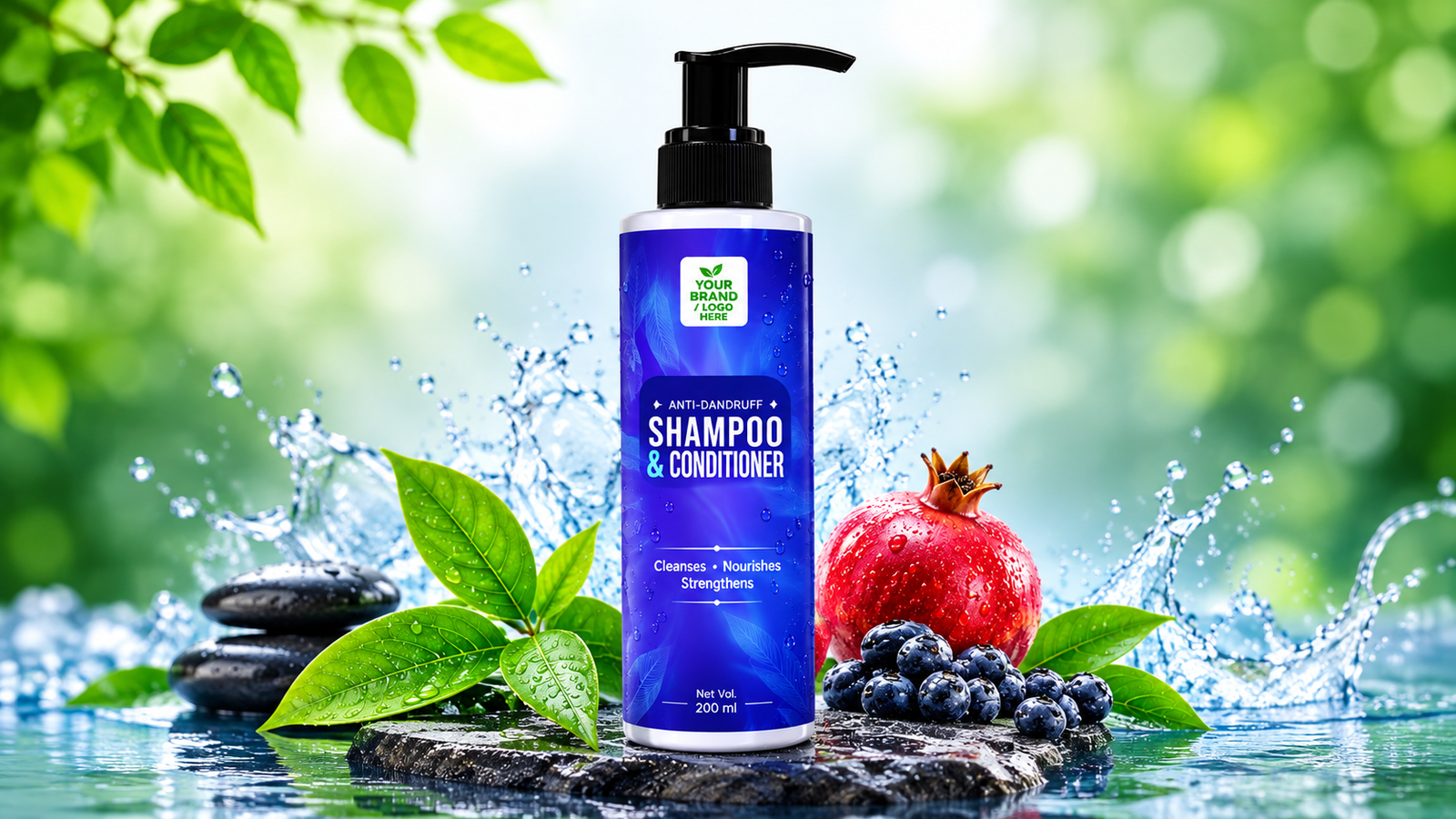
Anti-dandruff shampoo and conditioner product presentation for a complete hair care routine.
Dandruff can affect people with different hair types and scalp conditions. Visible flakes, excess oil and itching may make everyday hair care uncomfortable. A suitable shampoo can help cleanse the scalp and manage dandruff-related concerns according to its ingredients and directions for use.
For consumers, understanding the difference between shampoo and conditioner makes product selection easier. For entrepreneurs, retailers and established personal care brands, the demand for scalp-care products also creates opportunities to explore private label shampoo manufacturing and customised hair care ranges.
Quick Answer: Anti dandruff shampoo is formulated to cleanse the scalp and help manage visible dandruff. Its performance depends on the ingredients and formulation. Conditioner performs a complementary role by improving hair softness and manageability. Select both products according to your scalp and hair requirements and follow the product instructions.
1. Understanding Dandruff and Scalp Care
Dandruff is a common scalp concern characterised by visible flakes of skin. It can occur in people of different ages and with different hair types. Some people notice occasional flakes, while others experience recurring flaking, itching or scalp discomfort.
The scalp naturally sheds dead skin cells. When this shedding becomes more noticeable, flakes may collect in the hair or fall onto clothing. Scalp oiliness, skin sensitivity and other factors can influence how dandruff appears.
A good hair care routine starts with understanding your scalp requirements. A shampoo selected for an oily scalp may not provide the same experience as a product designed for a dry or sensitive-feeling scalp. Product selection should therefore consider both scalp condition and hair type.
What Is the Difference Between Dandruff and a Dry Scalp?
Dandruff and dry scalp can both involve visible flakes, but they are not necessarily the same condition. Dry scalp is generally associated with reduced skin moisture, while dandruff may be linked to oiliness, skin-cell turnover and naturally occurring scalp microorganisms.
Flakes associated with dry scalp may appear small and dry, whereas dandruff flakes can sometimes be larger or more noticeable. Appearance alone cannot confirm the cause of a scalp concern.
Hair Care Tip: Choose products according to your scalp requirements instead of relying only on the appearance of flakes. Persistent itching, redness, irritation or severe flaking should be evaluated by a qualified healthcare professional.
2. Common Causes of Dandruff
Dandruff can have several contributing factors. Understanding these factors helps consumers make informed decisions when selecting a dandruff shampoo and building a suitable scalp care routine.
1. Excess Scalp Oil
The scalp naturally produces sebum, an oily substance that helps maintain skin condition. Excess oil can contribute to scalp concerns in some individuals and may influence how flakes accumulate.
2. Malassezia Yeast
Malassezia is a type of yeast naturally present on human skin. In some individuals, the scalp's response to this microorganism and related skin processes may contribute to dandruff. Certain specialised formulations are designed to address dandruff-associated factors.
3. Dry Scalp
A dry scalp may produce small flakes and a feeling of tightness. Environmental conditions, hot water and unsuitable hair washing habits may contribute to dryness. Products for dry scalp may have different formulation priorities from products for oily, dandruff-prone scalps.
4. Sensitivity to Hair Care Products
Some people may experience irritation after using certain shampoos, conditioners, fragrances or styling products. If a product causes persistent itching, redness or discomfort, discontinue use and consider professional advice.
5. Irregular Hair Washing
Infrequent cleansing may allow oil, sweat and product residue to accumulate. However, washing too frequently with a harsh or unsuitable shampoo may also cause discomfort. The appropriate frequency depends on individual scalp and hair requirements.
3. What Is Anti-Dandruff Shampoo?
Anti dandruff shampoo is a hair cleansing product formulated to help manage visible dandruff and related scalp concerns. Depending on its formulation, it may contain ingredients intended to address dandruff-associated scalp processes while helping remove excess oil, loose flakes and product residue.
Unlike a regular cleansing shampoo, an anti dandruff shampoo is developed with a specific scalp-care purpose. Different products may use different active ingredients and formulation approaches, so not every dandruff shampoo works in exactly the same way.
How Is It Different from Regular Shampoo?
A regular shampoo is generally designed to remove dirt, oil, sweat and product residue from the scalp and hair. An anti dandruff shampoo combines cleansing with ingredients selected for dandruff management.
Some products are formulated for oily scalps, while others may be designed for dry or sensitive-feeling scalps. Reading the product label is important because ingredients, recommended usage and intended benefits can differ.
| Feature | Regular Shampoo | Anti-Dandruff Shampoo |
|---|---|---|
| Main purpose | General hair and scalp cleansing. | Cleansing with dandruff management. |
| Formulation | Designed around cleansing and hair care. | May include specialised dandruff-care ingredients. |
| Product selection | Based on hair type and cleansing needs. | Based on scalp concerns and formulation. |
| Usage | According to product instructions. | According to specific label directions. |
| Conditioner pairing | Can be paired with a suitable conditioner. | Can also be paired with a suitable conditioner. |
4. How Does Anti-Dandruff Shampoo Work?
How does anti dandruff shampoo work? Its action depends on the formulation and the ingredients selected. Some products contain ingredients intended to address dandruff-associated microorganisms, while others focus on cleansing and removing excess oil, flakes and accumulated residue.
The formulation combines cleansing agents with selected supporting ingredients to create a product that can be applied to wet hair and scalp according to its directions. The exact function and recommended contact time can vary between products.
1. Cleansing the Scalp
Shampoo contains cleansing ingredients that help loosen and remove oil, dirt, sweat and product residue. This cleansing action helps keep the scalp and hair feeling fresh.
2. Addressing Dandruff-Associated Factors
Depending on the active ingredients, certain anti dandruff shampoos are designed to address factors associated with dandruff. The selected ingredient, its concentration and the complete formulation influence the product's intended function.
3. Helping Remove Visible Flakes
Washing helps remove loose flakes and accumulated residue from the scalp and hair. The extent of visible flake management depends on the underlying scalp concern and the suitability of the product.
4. Supporting a Consistent Scalp Care Routine
Using a suitable product according to its label can support a consistent hair care routine. The recommended frequency should not be assumed to be the same for every anti dandruff shampoo.
5. Benefits of Anti-Dandruff Shampoo
The benefits of anti dandruff shampoo depend on its formulation, ingredients and the individual's scalp requirements. A suitable product can become an important part of a regular scalp care routine.
1. Helps Manage Visible Dandruff
One of the main purposes of anti dandruff shampoo is to help manage visible flakes. Specialised formulations are developed for this concern and may be suitable for people who regularly experience dandruff.
2. Cleanses Excess Oil and Residue
Oil, sweat and styling product residue can accumulate on the scalp. Shampoo helps remove these materials during washing, leaving the scalp and hair feeling clean.
3. Supports Scalp Hygiene
Regular cleansing is an important part of personal hygiene. Choosing a suitable shampoo can help maintain a comfortable scalp environment and support everyday hair care.
4. Helps Remove Loose Flakes
Washing can remove loose flakes from the hair and scalp. When combined with a suitable dandruff-care formulation, it can support the management of visible flaking.
5. Complements a Complete Hair Care Routine
An anti dandruff shampoo can be paired with a suitable conditioner to address different hair care needs. Shampoo focuses primarily on scalp cleansing, while conditioner helps improve the feel and manageability of the hair.
6. Offers Options for Different Scalp Requirements
The market offers different dandruff-care products for different consumer preferences. Some products are positioned for oily scalps, while others focus on particular ingredients, textures or hair care experiences.
Important: Anti dandruff shampoo should not be presented as a guaranteed cure for every scalp condition. Product performance depends on its formulation and individual circumstances. Follow label directions and seek professional advice for persistent or severe symptoms.
6. Why Use Shampoo and Conditioner Together?
Anti dandruff shampoo and conditioner perform different but complementary functions. Shampoo is mainly used to cleanse the scalp and hair, while conditioner is generally designed to improve the softness, smoothness and manageability of the hair lengths.
What Does Shampoo Do?
Shampoo helps remove oil, dirt, sweat and product residue from the scalp and hair. An anti dandruff shampoo may also contain selected ingredients intended to help manage dandruff-related concerns.
What Does Conditioner Do?
Conditioner is generally designed to improve the feel and manageability of the hair. It can help reduce roughness, improve softness and make hair easier to comb.
Why Are Both Products Useful?
A dandruff-care shampoo may be selected to address scalp cleansing and visible flakes, while a conditioner can help maintain the softness and appearance of the hair lengths. The products should be compatible with individual hair requirements.
How to Apply Conditioner
- Start with shampoo and rinse according to its instructions.
- Remove excess water from the hair.
- Apply conditioner mainly to the mid-lengths and ends unless the product label says otherwise.
- Distribute the product evenly through the hair.
- Leave it on for the recommended time.
- Rinse thoroughly if it is a rinse-off conditioner.
7. Ingredients Used in Dandruff Care Products
Ingredient selection is an important part of shampoo formulation. Different ingredients perform different functions, and the complete formulation determines the characteristics of the finished product.
1. Cleansing Surfactants
Surfactants are used in shampoo formulations to help remove dirt, oil and other impurities. Different surfactants provide different cleansing characteristics and foam profiles. Their selection depends on the intended product and formulation requirements.
2. Zinc Pyrithione
Zinc pyrithione is a recognised dandruff-care ingredient historically used in certain shampoo formulations. Its permitted uses and regulatory status vary by market. Brands and manufacturers must verify applicable regulations before considering it for a product.
3. Ketoconazole
Ketoconazole is an antifungal ingredient used in certain medicated dandruff products. Products containing this ingredient may be subject to drug or medicinal-product regulations rather than ordinary cosmetic requirements. It should not be treated as a routine cosmetic ingredient.
4. Salicylic Acid
Salicylic acid is used in selected scalp-care formulations for its keratolytic properties. It can help loosen accumulated dead skin cells, depending on the product formulation and applicable requirements.
5. Glycerin
Glycerin is a humectant commonly used in personal care products. It helps attract and retain moisture and may be included in suitable hair care formulations.
6. Conditioning Agents
Conditioning ingredients help improve hair feel, softness and manageability. Their selection depends on the type of shampoo or conditioner being developed and the intended consumer experience.
7. Fragrance and Supporting Ingredients
Fragrance, preservatives, viscosity modifiers and other supporting ingredients may be used according to formulation requirements. Every ingredient should be evaluated for compatibility, quality and suitability for the intended product.
| Ingredient Category | General Formulation Role | Important Consideration |
|---|---|---|
| Surfactants | Hair and scalp cleansing. | Selection and cleansing performance. |
| Salicylic Acid | Selected scalp exfoliation formulations. | Concentration and regulatory compliance. |
| Zinc Pyrithione | Ingredient used in certain dandruff-care products. | Market-specific legal status. |
| Glycerin | Humectant. | Formulation compatibility. |
| Conditioning Agents | Hair softness and manageability. | Hair feel and compatibility. |
| Preservatives | Product preservation. | Preservation efficacy and suitability. |
An ingredient's presence alone does not establish the effectiveness or safety of the finished shampoo. Ingredient grade, concentration, formulation compatibility, manufacturing conditions and appropriate testing all matter.
8. How to Choose a Dandruff Shampoo
Choosing a suitable dandruff shampoo requires more than selecting a product with attractive packaging. Consumers should consider scalp condition, hair type, product ingredients and usage directions.
1. Understand Your Scalp Type
Determine whether your scalp tends to be oily, dry or sensitive. Different products may be developed for different scalp requirements. A product suitable for one individual may not be the best choice for another.
2. Read the Ingredient List
Check the product label to understand its cleansing ingredients, active ingredients where applicable and other formulation components. If you have known sensitivities, review the ingredients carefully.
3. Check the Product Instructions
Some shampoos require a particular contact time before rinsing, while others are intended for ordinary washing. Always follow the manufacturer's directions.
4. Consider Your Hair Length and Texture
People with long, curly, dry or chemically treated hair may have different conditioning needs. A suitable conditioner can complement the cleansing process.
5. Avoid Unsupported Product Claims
Be cautious about products that promise instant dandruff removal or guaranteed results. Scalp conditions vary, and product performance depends on the formulation and individual circumstances.
9. How to Use Anti-Dandruff Shampoo Correctly
Correct usage is important for getting the intended performance from a shampoo. Always follow the instructions printed on the product because different formulations may have different usage requirements.
Step 1: Wet Your Hair
Start by thoroughly wetting the hair and scalp with comfortable water. This helps distribute shampoo more evenly.
Step 2: Apply the Recommended Amount
Take the amount of shampoo recommended on the product label. The quantity may depend on hair length, thickness and product concentration.
Step 3: Massage Gently
Distribute the shampoo over the scalp and massage gently using your fingertips. Avoid scratching with your nails, as this may irritate the skin.
Step 4: Follow the Contact Time
If the product label recommends leaving the shampoo on the scalp for a specified period, follow those instructions. Do not assume that all anti dandruff shampoos require the same contact time.
Step 5: Rinse Thoroughly
Rinse the hair and scalp properly to remove shampoo residue. Incomplete rinsing can leave unwanted product deposits.
Step 6: Apply Conditioner if Needed
Use a suitable conditioner on the hair lengths and ends according to its instructions. Rinse thoroughly when using a rinse-off product.
10. Hair Care Routine for a Dandruff-Prone Scalp
A consistent routine can make everyday hair care easier. The best routine depends on scalp type, hair texture, lifestyle and the products being used.
During Hair Washing
- Choose a shampoo according to your scalp requirements.
- Follow the product's recommended usage frequency.
- Massage gently rather than scratching the scalp.
- Rinse thoroughly after cleansing.
- Use conditioner according to your hair's conditioning needs.
Between Hair Washes
- Avoid excessive use of heavy styling products.
- Keep combs and brushes clean.
- Avoid sharing personal hair care accessories when hygiene is a concern.
- Observe how your scalp responds to the products you use.
Maintain a Consistent Routine
Frequently switching products can make it difficult to understand which products suit your scalp. Use a suitable product according to its directions. If symptoms continue, consult a dermatologist rather than repeatedly experimenting with different products.
11. Common Hair Washing Mistakes
1. Using Excessive Shampoo
Applying more shampoo than required does not necessarily improve cleansing. Follow the recommended quantity and adjust according to hair length and product instructions.
2. Scratching the Scalp
Scratching aggressively can irritate the scalp. Gentle fingertip massage is a better approach during washing.
3. Applying Conditioner Incorrectly
Some conditioners are intended mainly for the hair lengths and ends. Applying a product directly to the scalp when it is not designed for that purpose may leave unwanted residue.
4. Not Rinsing Properly
Leftover shampoo or conditioner may affect the hair's feel. Thorough rinsing is an important part of the washing process.
5. Ignoring Product Instructions
Different products may have different directions and recommended frequencies. Always read the label rather than following a universal routine.
6. Expecting Instant Results
Scalp concerns can have different causes and may require an appropriate approach. Avoid relying on products that guarantee immediate or permanent results.
12. Different Types of Shampoo and Conditioner
The hair care market includes different shampoo and conditioner categories designed around consumer needs. Brands planning to develop a hair care collection should understand these categories before selecting their product range.
Anti-Dandruff Shampoo
Designed for consumers looking for products that help manage visible dandruff and support scalp cleansing. The formulation depends on its intended use and applicable product requirements.
Moisturising Shampoo
Moisturising shampoo concepts are developed for consumers looking for a cleansing experience that also supports the feel of dry hair. Formulation choices influence the final performance and texture.
Herbal Shampoo
Herbal-inspired shampoos are positioned around selected botanical ingredients and product concepts. Brands should ensure that ingredient and natural-product claims accurately reflect the formulation.
Daily Use Shampoo
Daily-use shampoo concepts are generally developed around regular cleansing preferences. Their suitability depends on the formulation and individual hair requirements.
2-in-1 Shampoo and Conditioner
A 2-in-1 shampoo and conditioner combines cleansing and conditioning functions in a single product. It may appeal to customers looking for convenience and a simplified hair washing routine.
| Product Type | Main Positioning | Target Consumer Interest |
|---|---|---|
| Anti-Dandruff Shampoo | Dandruff-focused scalp care. | Consumers concerned about visible flakes. |
| Moisturising Shampoo | Cleansing with a moisturising focus. | Dry-feeling hair. |
| Herbal Shampoo | Botanical-inspired hair care. | Consumers interested in herbal concepts. |
| Daily Use Shampoo | Regular cleansing. | Everyday hair care. |
| 2-in-1 Shampoo and Conditioner | Combined cleansing and conditioning. | Convenient hair care routines. |
13. Shampoo Manufacturing and Private Label Opportunities
The growing variety of hair care products creates opportunities for entrepreneurs, distributors, retailers and established personal care brands. Businesses interested in introducing their own shampoo range can explore third-party shampoo manufacturing and private label production arrangements.
Instead of establishing an independent production facility, a business can discuss its product requirements with a suitable shampoo manufacturing company. Depending on the manufacturer's capabilities, the project may involve formulation discussions, product selection, packaging, labelling and bulk production.
What Is Third-Party Shampoo Manufacturing?
Third-party shampoo manufacturing is a business arrangement in which a brand works with an external manufacturer to produce shampoo products. The brand can focus on marketing, distribution, sales and product positioning while production is handled according to an agreed manufacturing arrangement.
What Is Private Label Shampoo Manufacturing?
Private label shampoo manufacturing allows a business to introduce shampoo products under its own brand identity. Depending on the manufacturer's services, businesses may discuss product selection, customisation, labels, packaging and other branding requirements.
Who Can Consider Private Label Shampoo Manufacturing?
- New entrepreneurs planning to launch a hair care brand.
- Existing cosmetic brands expanding into shampoo products.
- Retailers interested in developing their own product range.
- Distributors exploring branded hair care products.
- Beauty and personal care businesses expanding their catalogue.
- Companies interested in bulk shampoo procurement.
Why Work with a Shampoo Manufacturing Company?
Setting up an independent shampoo manufacturing facility requires investment in equipment, infrastructure, production personnel, raw materials and quality procedures. Working with an established manufacturer may provide access to selected production capabilities without independently building the complete facility.
Businesses should carefully evaluate the manufacturer's actual capabilities, applicable licences, documentation, quality procedures and commercial terms before entering into an agreement.
B2B Business Insight: Businesses searching for a private label shampoo manufacturer should evaluate formulation options, production capabilities, packaging, minimum order quantities, quality documentation and commercial terms. A clear product brief makes manufacturing discussions more productive.
14. How Shampoo Manufacturing Works
Shampoo manufacturing involves multiple stages, from product planning and formulation to processing, filling and packaging. The exact production process depends on the product type, formulation, equipment and manufacturer's operating procedures.
Step 1: Product Concept Selection
The brand identifies the type of shampoo it wants to introduce. This may include anti dandruff shampoo, herbal shampoo, moisturising shampoo, daily-use shampoo or a shampoo and conditioner combination.
Step 2: Formulation Discussion
The brand and manufacturer discuss the desired cleansing characteristics, texture, fragrance, appearance, ingredient preferences and intended product positioning.
Step 3: Ingredient Selection
The ingredients are evaluated according to formulation requirements, compatibility, quality specifications and applicable regulatory conditions.
Step 4: Sample Development
Where offered, sample development allows the business to review the proposed shampoo before bulk production. The sample can be evaluated for appearance, viscosity, fragrance, cleansing experience and other agreed characteristics.
Step 5: Packaging Selection
The brand selects suitable shampoo bottles, caps, closures, labels and outer packaging. Packaging must be compatible with the formulation and intended product size.
Step 6: Artwork and Branding Approval
The product name, logo, label design, product information and packaging artwork are finalised. All declarations and product claims should be reviewed for applicable compliance.
Step 7: Bulk Manufacturing
After the required approvals, the manufacturer proceeds with production according to the agreed formulation and specifications. Manufacturing may involve raw material preparation, mixing, processing and other relevant operations.
Step 8: Filling and Packaging
The shampoo is filled into the selected containers using suitable filling equipment. The containers are closed, labelled and packed according to the approved packaging requirements.
Step 9: Quality Checks and Dispatch
Applicable quality checks and documentation are completed before the finished products are released. The order is then prepared for dispatch according to the agreed commercial and logistics arrangements.
15. Private Label Shampoo Manufacturing for Brands
A private label shampoo manufacturer can be an important business partner for companies looking to establish or expand their own hair care product range. The objective is to develop a product that aligns with the brand's identity, customer expectations and commercial requirements.
1. Product Selection
Start by deciding which shampoo category best fits your brand. You may explore anti dandruff shampoo, herbal shampoo, moisturising shampoo or a 2-in-1 shampoo and conditioner concept.
2. Customisation Requirements
Discuss the available formulation options, fragrance preferences, texture, appearance and other product characteristics. Customisation depends on the manufacturer's technical capabilities and the commercial arrangement.
3. Branding and Packaging
Select your brand name, logo, bottle design, label style and packaging presentation. Consistent packaging can help create a recognisable identity across the hair care range.
4. Bulk Production Planning
Discuss minimum order quantity, production schedules, raw material availability, packaging procurement and other commercial requirements before confirming the order.
5. Building a Complete Hair Care Range
Businesses may explore expanding beyond one shampoo product. Depending on manufacturing capabilities, a brand may consider conditioners, hair masks, hair serums and other complementary personal care products.
Important Questions to Ask a Manufacturer
- Which shampoo categories can you manufacture?
- What formulation and customisation options are available?
- Can product samples be provided?
- What is the minimum order quantity?
- Which bottle and packaging options are available?
- What quality documentation can be provided?
- What are the expected production timelines?
- Which branding and labelling services are included?
- What are the payment and delivery terms?
16. Quality Considerations in Shampoo Manufacturing
Quality is an important consideration when developing any hair care product. A shampoo should be manufactured according to its approved specifications and applicable cosmetic or other regulatory requirements.
Raw Material Evaluation
Ingredients should be sourced and evaluated according to appropriate quality specifications. Their identity, quality and compatibility with the formulation are important considerations.
Formulation Consistency
The finished shampoo should be evaluated against the approved product specifications. Characteristics such as appearance, fragrance, viscosity and other relevant parameters may be checked.
Microbiological Quality
Water-based cosmetic products require appropriate microbiological quality considerations. Relevant testing and preservation evaluation should be considered according to the formulation and applicable requirements.
Packaging Compatibility
The packaging material should be suitable for the finished formulation. Bottle material, closures, sealing arrangements and storage conditions should be evaluated as appropriate.
Labelling and Documentation
Product labels should contain the required information and comply with applicable regulations. Product claims, ingredient declarations and other label details should be reviewed before commercial distribution.
17. Explore Hair Care Manufacturing with UNICO Pharmaceuticals
UNICO Pharmaceuticals works in the personal care and cosmetic manufacturing space, supporting businesses interested in developing their own product collections. For companies exploring hair care products, private label and manufacturing discussions can be an important starting point for planning a product launch.
Whether you are an entrepreneur planning your first hair care product or an established business looking to expand your catalogue, it is important to define your product requirements before selecting a manufacturing partner.
Build Your Own Hair Care Product Range
A well-planned hair care range starts with a clear product concept. Businesses can explore suitable product categories, packaging preferences, branding requirements and manufacturing arrangements according to their objectives.
Discuss Your Shampoo Manufacturing Requirements
If you are looking for a shampoo manufacturer, private label shampoo manufacturer or third-party shampoo manufacturing partner in India, prepare your product brief with the following information:
- Type of shampoo you want to launch.
- Preferred formulation or product concept.
- Expected bottle size and packaging style.
- Brand name and logo requirements.
- Estimated order quantity.
- Target market and business requirements.
Sharing these details helps initiate a more focused manufacturing discussion and makes it easier to evaluate suitable production options.
Planning to Launch Your Own Hair Care Brand?
Explore private label and third-party cosmetic manufacturing opportunities with UNICO Pharmaceuticals. Discuss your shampoo, conditioner and hair care product requirements with our team.
Discuss Your Requirements18. Frequently Asked Questions
1. What is anti dandruff shampoo?
Anti dandruff shampoo is a hair cleansing product formulated to help manage visible dandruff and related scalp concerns. Its ingredients and intended use depend on the specific formulation.
2. How does anti dandruff shampoo work?
It works through a combination of cleansing agents and, depending on the formulation, specialised ingredients intended to address dandruff-associated factors. Different products may work in different ways.
3. What are the benefits of anti dandruff shampoo?
A suitable product can help manage visible flakes, cleanse excess scalp oil and support a consistent scalp care routine. Results depend on the formulation and individual scalp requirements.
4. Can I use anti dandruff shampoo and conditioner together?
Yes. Shampoo is primarily used for scalp cleansing, while conditioner helps improve hair softness and manageability. Choose suitable products and follow their individual instructions.
5. How often should I use anti dandruff shampoo?
The recommended frequency depends on the specific formulation and product instructions. Follow the directions printed on the label instead of assuming that every product should be used daily.
6. Is dandruff the same as a dry scalp?
No. Both can involve visible flakes, but they may have different causes. Dandruff can be associated with oiliness and scalp microorganisms, whereas dry scalp is generally related to reduced skin moisture.
7. What is a 2-in-1 shampoo and conditioner?
A 2-in-1 shampoo and conditioner combines cleansing and conditioning functions in one product. It is designed for consumers who prefer a simplified hair washing routine.
8. What ingredients are used in anti dandruff shampoo?
Ingredients vary by product. Depending on the formulation and regulations, products may contain specialised dandruff-care ingredients, cleansing surfactants, conditioning agents and supporting ingredients.
9. How can I choose a suitable dandruff shampoo?
Consider your scalp type, hair requirements, ingredients, product instructions and any known sensitivities. If dandruff is persistent or severe, consult a dermatologist.
10. What is private label shampoo manufacturing?
Private label shampoo manufacturing is an arrangement in which a business sells shampoo under its own brand identity while working with a manufacturer for agreed production services.
11. How do I find a shampoo manufacturer in India?
Research manufacturers that handle the required shampoo category. Compare their capabilities, product options, quality practices, applicable licences, packaging services, MOQ and commercial terms.
12. What is third-party shampoo manufacturing?
It is a manufacturing arrangement in which a brand works with an external manufacturer to produce shampoo products instead of independently operating its own complete production facility.
13. Can I launch my own anti dandruff shampoo brand?
Businesses can explore this opportunity through suitable manufacturing arrangements. Product formulation, regulatory classification, packaging, labelling, quality evaluation and commercial requirements should be considered before launch.
14. What determines the cost of private label shampoo manufacturing?
The cost can depend on formulation, ingredients, product size, order quantity, packaging, branding, testing and other project requirements. A quotation should be requested based on the actual product brief.
15. Can a brand manufacture shampoo and conditioner together?
Businesses can discuss developing both products as part of a coordinated hair care range. Availability depends on the manufacturer's product categories and manufacturing capabilities.
Final Thoughts
Anti dandruff shampoo and conditioner serve complementary roles in a hair care routine. Shampoo helps cleanse the scalp and manage dandruff-related concerns according to its formulation, while conditioner supports the softness and manageability of the hair.
Understanding ingredients, scalp requirements and correct product usage helps consumers make informed hair care decisions. At the same time, the hair care category offers opportunities for businesses interested in developing their own branded products through private label shampoo manufacturing and third-party production arrangements.
For brands planning a new hair care collection, the right starting point is a clear product concept, suitable formulation requirements, appropriate packaging and a manufacturing partner whose capabilities match the project.
Disclaimer: This article is intended for general hair care and business information. Product ingredients, regulatory classifications and permitted claims vary by market. Always follow the product label. Persistent scalp irritation, severe dandruff or other scalp symptoms should be evaluated by a qualified healthcare professional.