
How to Choose the Best Face Mask for Your Skin Type
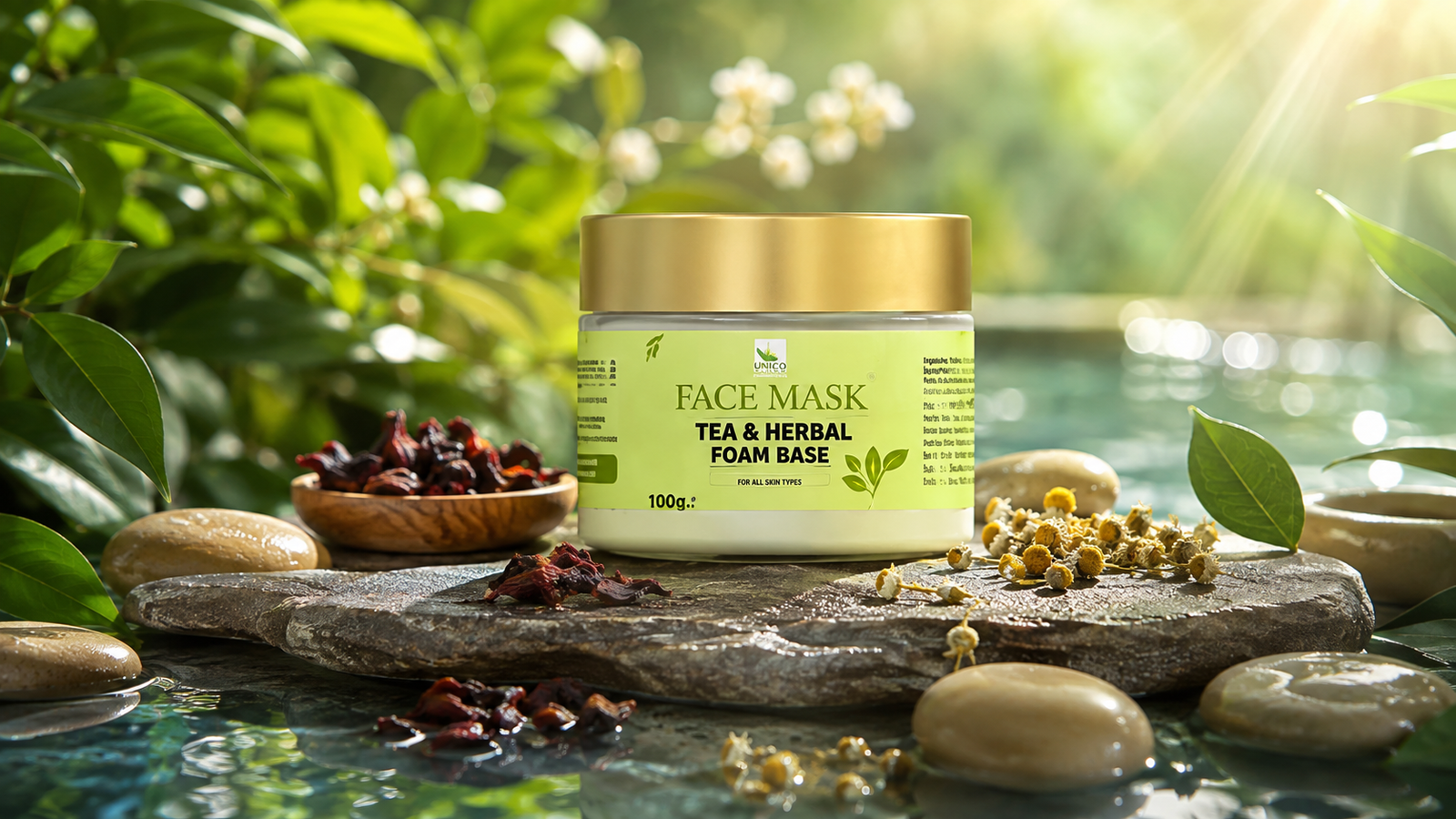
Choosing the right face mask can make an important difference to a skincare routine. Different skin types have different needs, so a formulation designed for oily skin may not be suitable for dry or sensitive skin.
At the same time, businesses entering the skincare market need more than just a good formulation. They need a reliable Face Mask Manufacturer in India that can support product development, formulation, manufacturing, packaging, private labeling, and consistent production.
Whether you are a skincare startup, beauty brand, retailer, distributor, salon, e-commerce business, or an established personal-care company, selecting the right manufacturing partner can help you develop products that match your target market.
In this guide, we will discuss different types of face masks, ingredients to consider, how to choose a face mask for different skin types, how face masks fit into a skincare routine, and what businesses should consider when choosing a Face Mask Manufacturer in India.
What Is a Face Mask?
A face mask is a skincare product designed to provide targeted care based on the formulation and the skin’s needs.
Face masks can be developed for different purposes, including:
Oil-absorbing and purifying care
Hydrating and moisturizing care
Skin-conditioning
Refreshing the skin
Supporting a radiant-looking complexion
Targeted skincare concerns
Different formats and formulations can be developed depending on the intended use, target customers, and brand requirements.
Why Is Choosing the Right Face Mask Important?
Every skin type has different requirements.
Oily skin may benefit from formulations that help absorb excess surface oil, while dry skin generally requires more moisturizing and conditioning ingredients. Sensitive skin may require a gentler formulation.
Before choosing or developing a face mask, consider:
| Factor | Why It Matters |
|---|---|
| Skin Type | Helps determine the suitable formulation |
| Skincare Concern | Defines the intended product purpose |
| Ingredients | Determines formulation characteristics |
| Texture | Influences application and user experience |
| Usage Frequency | Should match product directions |
| Target Customer | Helps define positioning and formulation |
| Packaging | Supports convenience and brand presentation |
Understanding these factors can help businesses and consumers make more informed skincare choices.
How to Choose the Best Face Mask for Your Skin Type
1. Face Mask for Oily Skin
Oily skin tends to produce more sebum, which can make the skin appear shiny and may contribute to clogged pores.
A face mask for oily skin can be formulated with ingredients commonly used for oil-absorbing and purifying skincare.
Clay-based formulations are frequently used in skincare routines for oily skin because clay can help absorb excess surface oil.
Tips for Oily Skin
Choose lightweight formulations.
Look for oil-absorbing ingredients.
Avoid excessively heavy formulations.
Do not overuse purifying masks.
Follow the mask with an appropriate moisturizer.
2. Face Mask for Dry Skin
Dry skin can feel tight, rough, or uncomfortable, especially after cleansing.
A face mask for dry skin should generally focus on moisturizing and conditioning the skin.
Ingredients commonly used in hydrating formulations include aloe vera, glycerin, botanical extracts, nourishing butters, and plant-based ingredients.
Tips for Dry Skin
Choose hydrating formulations.
Look for moisturizing ingredients.
Avoid excessively drying products.
Apply moisturizer after using the mask.
Follow the recommended application time.
3. Face Mask for Sensitive Skin
Sensitive skin may react more easily to certain ingredients or strongly fragranced formulations.
When choosing a face mask for sensitive skin, it is important to check the complete ingredient list and select a formulation that your skin tolerates well.
A patch test can be considered before applying a new product to the entire face.
Tips for Sensitive Skin
Choose gentle formulations.
Check the ingredient list carefully.
Avoid ingredients you already know irritate your skin.
Consider a patch test before regular use.
Stop using the product if irritation occurs.
4. Face Mask for Combination Skin
Combination skin usually has both oily and dry areas.
The T-zone may be more oily, while the cheeks can feel normal or dry.
A balanced approach can be useful for combination skin. Some users may also consider targeted masking, using different formulations on different areas according to their individual needs.
For example, a purifying formulation may be used on oily areas, while a hydrating formulation can be considered for areas that feel dry.
5. Face Mask for Normal Skin
Normal skin generally has a relatively balanced oil and moisture level.
People with normal skin can select a face mask according to their skincare goals.
For a fresh and radiant-looking complexion, a face mask for glowing skin can be developed with moisturizing, conditioning, and skin-refreshing ingredients.
What Ingredients Should You Look for in a Face Mask?
The ideal ingredients depend on the skin type, product concept, formulation, and intended use.
Ingredients Commonly Used for Oily Skin
Clay
Kaolin
Charcoal
Botanical extracts
Ingredients Commonly Used for Dry Skin
Aloe vera
Glycerin
Shea butter
Botanical oils
Hydrating plant extracts
Ingredients for Gentle Skincare Formulations
For sensitive-skin products, formulation selection should focus on ingredients that the intended customer base is likely to tolerate well.
The complete ingredient list should always be reviewed before purchasing or developing a skincare product.
Face Mask for Glowing Skin: What Should You Consider?
A face mask for glowing skin can be designed around moisturizing, conditioning, and skin-refreshing ingredients.
However, a face mask should not be viewed as the only part of a skincare routine.
A balanced routine may also include:
Cleansing
Moisturizing
Sun protection
Adequate hydration
Consistent skincare habits
For brands, the formulation should be developed according to the intended product concept, target audience, packaging format, and usage instructions.
How Often Should You Use a Face Mask?
The recommended frequency depends on the type of face mask and its formulation.
Some masks may be suitable for regular weekly use, while others may require less frequent application.
Always follow the manufacturer’s recommended directions.
Using a face mask more frequently than recommended does not necessarily provide better results. Certain formulations may cause dryness or discomfort when overused.
How to Use a Face Mask Correctly
Step 1: Cleanse Your Face
Start with a suitable cleanser to remove dirt, excess oil, makeup, and surface impurities.
Step 2: Apply the Face Mask
Apply an even layer according to the product instructions. Avoid the immediate eye and lip areas unless the product specifically states otherwise.
Step 3: Follow the Recommended Time
Leave the product on only for the duration specified on the packaging.
Step 4: Rinse or Remove
Remove the mask according to the product instructions.
Step 5: Moisturize
Follow with a suitable moisturizer to support the skin’s moisture balance.
Step 6: Apply Sunscreen During the Day
For a daytime skincare routine, sunscreen can be applied as the final step.
Why Businesses Are Launching Their Own Face Mask Products
Face masks can be added to a broader skincare range and offered under a brand’s own identity.
Businesses may develop face masks to:
Expand their existing skincare range
Launch a new personal-care brand
Offer targeted skincare products
Create customized formulations
Develop private-label products
Build a wider beauty product portfolio
The right manufacturing partner can help coordinate product development, manufacturing, packaging, and private-label requirements.
What Is Private Label Face Mask Manufacturing?
Private label face mask manufacturing allows a business to sell a face mask under its own brand name while working with a manufacturer for production.
Depending on the manufacturer’s capabilities, private-label support may include:
Product development
Formulation support
Ingredient selection
Fragrance or texture options where applicable
Packaging selection
Label requirements
Bulk manufacturing
Product filling
Packaging
Final dispatch
This model can be suitable for startups as well as established brands looking to expand their skincare portfolio.
Custom Face Mask Manufacturing
Custom manufacturing allows brands to develop a product around specific requirements.
Customization may include:
Product concept
Formulation requirements
Texture
Ingredient selection
Product size
Packaging format
Label design
Brand identity
Outer packaging
A detailed discussion with the manufacturer is important before production so that product requirements can be clearly defined.
Face Mask Manufacturer in India: What Should Businesses Look For?
Selecting a manufacturing partner is an important part of developing a skincare product.
Businesses should consider:
1. Manufacturing Experience
An experienced manufacturer can help businesses understand the product-development and manufacturing process.
2. Formulation Support
Discuss whether the manufacturer can support formulation or product development according to the required product concept.
3. Quality-Focused Manufacturing
Ask about manufacturing practices, quality checks, documentation, and applicable certifications.
4. Packaging Options
Packaging should be suitable for the product format, target market, storage requirements, and brand identity.
5. Private Label Support
If you want to sell the product under your own brand, confirm whether private-label services are available.
6. Production Capacity
For growing brands, manufacturing capacity and production planning can become important when demand increases.
7. Communication
Clear communication about formulation, packaging, quantities, timelines, and product requirements helps keep the manufacturing process organized.
Face Mask Manufacturing Process
A typical manufacturing workflow may include the following stages:
1. Product Requirement Discussion
The brand shares its product concept, target audience, requirements, and packaging preferences.
2. Product Development
The formulation and product specifications are discussed according to the intended product.
3. Ingredient & Formulation Selection
Ingredients and formulation requirements are finalized based on the product concept.
4. Packaging Selection
The business selects suitable packaging and shares branding requirements.
5. Manufacturing
The approved formulation moves into the production stage.
6. Quality Checks
Relevant quality checks are carried out during the manufacturing process.
7. Filling & Packaging
The finished product is filled and packed according to the finalized packaging requirements.
8. Final Dispatch
Products are prepared for delivery according to the agreed manufacturing and packaging requirements.
Why Packaging Matters for Face Masks
Packaging is an important part of a skincare product because it affects product presentation, convenience, and brand identity.
Depending on the product format, businesses may consider:
Jars
Tubes
Sachets
Boxes
Custom labels
Printed packaging
The final packaging should be selected according to the product, target audience, storage requirements, and brand positioning.
Quality Considerations for Face Mask Manufacturing
Before selecting a manufacturer, businesses should discuss the quality-related aspects of production.
Important areas may include:
Raw material selection
Manufacturing practices
Formulation consistency
Product specifications
Quality checks
Packaging quality
Batch consistency
Documentation
Applicable certifications
A clear quality process can help businesses maintain consistency as they expand their product range.
Why Choose UNICO Pharmaceuticals for Face Mask Manufacturing?
For businesses looking for a Face Mask Manufacturer in India, choosing an experienced manufacturing partner can simplify product development and production.
UNICO Pharmaceuticals brings 35+ years of manufacturing expertise and provides manufacturing solutions for brands looking to develop skincare and personal-care products.
UNICO’s GMP-certified manufacturing facility supports quality-focused production.
Businesses can discuss requirements related to:
Face mask manufacturing
Private-label skincare products
Product development
Formulation requirements
Packaging
Branding
Bulk production
With an end-to-end manufacturing approach, brands can coordinate product development, manufacturing, packaging, and private-label requirements through an experienced manufacturing partner.
Who Can Start a Face Mask Brand?
Face mask manufacturing can be considered by different types of businesses, including:
Skincare startups
Beauty brands
Cosmetic retailers
Distributors
Wholesalers
Salons and beauty businesses
E-commerce businesses
Personal-care companies
Existing cosmetic brands
The appropriate product concept and manufacturing model will depend on the business’s target customers and requirements.
How to Start Your Own Face Mask Brand
If you are planning to launch a face mask under your own brand, the process can be organized into several steps:
Define your target customers.
Decide the type of face mask.
Identify your product requirements.
Discuss formulation and ingredients.
Select packaging.
Finalize branding and labeling.
Confirm manufacturing requirements.
Complete production.
Package the finished products.
Prepare the product for market launch.
Working with an experienced manufacturer can make it easier to coordinate these stages.
Face Mask Manufacturer for Startups and Established Brands
Both startups and established businesses may require flexible manufacturing support.
For Startups
A manufacturer can help new brands understand product development, formulation, packaging, and private-label requirements.
For Established Brands
Existing businesses may use contract or private-label manufacturing to expand their skincare range without developing every manufacturing facility or process internally.
The manufacturing approach should be selected according to the brand’s product requirements and business model.
Face Mask vs Face Scrub: What’s the Difference?
| Feature | Face Mask | Face Scrub |
|---|---|---|
| Main Purpose | Targeted skincare care | Exfoliation-focused care |
| Application | Applied and left for a specific time | Applied with product-specific instructions |
| Formulation | Can be clay, cream, gel or other formats | Usually contains exfoliating components |
| Usage | Depends on formulation | Depends on formulation |
| Suitable For | Different skin types and concerns | Different exfoliation needs |
Both products can be included in a broader skincare range, depending on the brand concept.
What Should You Discuss With a Face Mask Manufacturer?
Before starting production, businesses should clearly discuss:
Product type
Target skin type
Formulation requirements
Ingredients
Texture
Packaging
Label requirements
Branding
Private-label requirements
Manufacturing quantity
Quality requirements
Documentation
Delivery requirements
Having these details ready can help make communication with the manufacturer more efficient.
Frequently Asked Questions
1. How do I choose the best face mask for my skin type?
Start by identifying whether your skin is oily, dry, combination, normal, or sensitive. Then select a formulation and ingredients that match your skin’s needs.
2. Which face mask is best for oily skin?
Face masks for oily skin commonly use ingredients such as clay or kaolin that are used in oil-absorbing and purifying formulations.
3. Can I use a face mask if I have dry skin?
Yes. A hydrating face mask formulated with moisturizing and conditioning ingredients may be suitable for dry skin.
4. What is the best face mask for sensitive skin?
Choose a gentle formulation containing ingredients your skin tolerates well. Always check the ingredient list and consider a patch test before regular use.
5. How often should I use a face mask?
It depends on the specific formulation and your skin type. Always follow the product’s recommended directions.
6. Can a face mask help skin look glowing?
A suitable face mask can complement a skincare routine and help the skin look refreshed and radiant. Results vary depending on the formulation and individual skin.
7. Can face masks be customized for a private-label brand?
Yes. Private-label face mask manufacturing can involve customization of product requirements, formulation, packaging, labeling, and brand identity.
8. Does UNICO Pharmaceuticals manufacture private-label face masks?
Yes. UNICO Pharmaceuticals provides manufacturing and private-label solutions for skincare products, including support related to product development, manufacturing, packaging, and branding requirements.
9. Why choose UNICO Pharmaceuticals for face mask manufacturing?
UNICO Pharmaceuticals brings 35+ years of manufacturing expertise and has GMP-certified manufacturing capabilities for quality-focused production.
10. Can startups launch their own face mask brand?
Yes. Startups can work with a suitable private-label or contract manufacturing partner to develop and manufacture skincare products according to their requirements.
11. Can established cosmetic brands use face mask contract manufacturing?
Yes. Contract manufacturing can help established brands expand their skincare portfolio while working with an external manufacturing partner.
12. What packaging options are available for face masks?
Packaging options depend on the product format and manufacturer capabilities. Options may include jars, tubes, sachets, boxes, and customized labels.
13. Can the face mask formulation be customized?
Customization depends on the manufacturer’s formulation capabilities and the product requirements. Businesses should discuss their desired ingredients, texture, product concept, and target customers before development.
14. What information should I provide to a face mask manufacturer?
You should provide the product concept, target skin type, preferred ingredients, packaging requirements, brand details, quantity requirements, and any specific formulation preferences.
15. How can I start a private-label face mask business in India?
Start by defining your target market and product concept, then identify a suitable manufacturer, discuss formulation and packaging, finalize branding, complete production, and prepare the finished product for launch.
16. What makes a reliable face mask manufacturing partner?
Businesses should evaluate manufacturing experience, formulation support, quality practices, packaging capabilities, private-label services, production capacity, communication, and documentation before making a decision.
Start Your Own Face Mask Brand with UNICO Pharmaceuticals
If you are looking for a Face Mask Manufacturer in India for your skincare brand, UNICO Pharmaceuticals can support your manufacturing requirements with 35+ years of manufacturing expertise and GMP-certified manufacturing capabilities.
From product development and formulation to packaging and private-label manufacturing, discuss your requirements with the UNICO Pharmaceuticals team.