
Lip Scrub Manufacturer in India: Quality, Formulation & Private Label Manufacturing
Looking for a lip scrub manufacturer in India for your cosmetic brand? Learn about lip scrub formulations, exfoliating ingredients, product quality, packaging options, private label manufacturing and the important factors to consider when developing a lip care product for your target market.
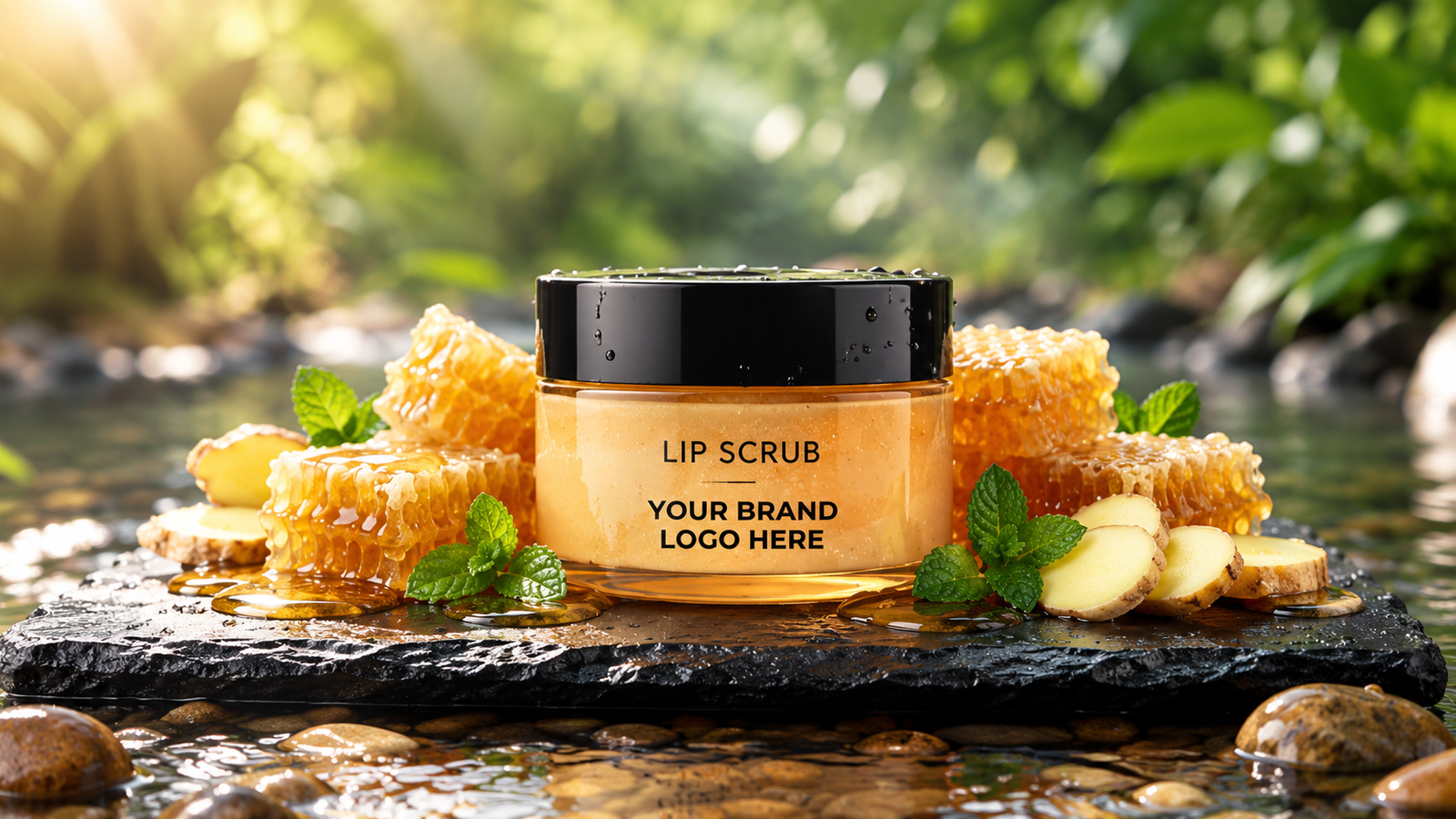
Lip care has become an important category for cosmetic brands developing products for everyday beauty routines. Alongside lip balms, lip masks and other moisturising products, lip scrubs are used to help remove loose, flaky surface skin from the lips. Their texture, exfoliating particles, application experience and packaging all contribute to the overall product experience.
For businesses planning to introduce a lip care range, finding the right lip scrub manufacturer in India involves more than selecting a product from a catalogue. Brands need to understand formulation options, ingredient suitability, product consistency, packaging, labelling and the commercial terms of manufacturing.
Private label manufacturing can be an option for businesses that want to develop lip care products under their own brand identity. The available services differ between manufacturers, so buyers should confirm whether formulation development, ready-formula selection, filling, packaging, labelling and other requirements are supported by their chosen supplier.
This guide explains the main considerations for businesses looking for a lip scrub manufacturing partner, including formulation types, sugar-based exfoliants, quality checks, customisation, packaging, minimum order quantities and ways to prepare for a manufacturing enquiry.
1. Understanding Lip Scrub Manufacturing
Lip scrub manufacturing involves developing or producing an exfoliating cosmetic product intended for use on the lips. Depending on the product design, a formulation may combine exfoliating particles with emollients, oils, waxes or other suitable cosmetic ingredients. The precise combination determines the product's texture, spreadability, stability and overall application experience.
A lip scrub is different from a conventional facial scrub because the intended application area and consumer expectations are different. The lips require particular attention to particle characteristics, formula suitability, application instructions and the risk of irritation from excessive friction.
Businesses entering the lip care category should establish a clear product brief before contacting manufacturers. This brief helps the supplier understand the intended positioning, preferred ingredients, texture, packaging and target selling price.
Who can benefit from private label manufacturing?
- Cosmetic startups: Businesses launching their first lip care product or beauty range.
- Established beauty brands: Companies expanding their existing portfolio with exfoliating lip care.
- Private label businesses: Companies planning to sell products under their own brand names.
- Online cosmetic sellers: Businesses developing products for their e-commerce stores.
- Retail and distribution companies: Businesses exploring lip scrubs alongside lip balms and other personal care products.
- Beauty entrepreneurs: Brand owners who need to understand formulation, packaging and manufacturing requirements before launch.
Not every manufacturer offers the same services. Some may specialise in established formulations, while others may support selected customisation or product development. Confirm the exact scope of services, ingredient options, testing arrangements and packaging support before making a commercial commitment.
2. What Is a Lip Scrub?
A lip scrub is an exfoliating cosmetic product designed to help loosen and remove loose surface flakes from the lips through gentle application. Depending on the formula, it may contain sugar or other suitable exfoliating particles suspended in an emollient base.
Consumers may use a lip scrub as part of a lip care routine before applying a lip balm or other lip product. However, exfoliation is not necessary for everyone, and overly frequent or aggressive scrubbing can worsen dryness and irritation. Product instructions should encourage gentle application and explain when the product should not be used.
Common product characteristics
- Exfoliating texture: Particles help provide the physical exfoliation associated with the product.
- Emollient base: Suitable oils, butters or other ingredients may help the scrub spread across the lips.
- Application feel: Particle size, concentration and the base formulation influence how the product feels.
- Packaging convenience: The container should suit the texture and intended method of application.
- Product appearance: Colour, texture and presentation should be consistent with the brand's identity.
Lip scrub versus lip balm
A lip scrub primarily focuses on exfoliation, while a lip balm is generally formulated to condition the lips and help reduce moisture loss. These products can complement one another in a lip care range, but they serve different purposes and should have distinct product instructions.
Brands interested in developing a coordinated range should consider how the lip scrub and lip balm will be presented together. Consistent packaging and visual identity can help create a recognisable product collection without suggesting that the two products have identical functions.
3. Lip Scrub Formulation and Ingredients
Formulation is one of the most important considerations when selecting a lip scrub manufacturer. The ingredient combination influences exfoliation, spreadability, texture, product stability and consumer experience. A suitable formula should be developed for its intended cosmetic use rather than chosen solely because the ingredients sound appealing in marketing material.
Exfoliating ingredients
Sugar is commonly associated with lip scrub products because its particles can provide physical exfoliation. Other exfoliating materials may be considered depending on the product brief, particle characteristics and formulation requirements.
Particle size, shape, concentration and distribution should be assessed carefully. An excessively abrasive formula may cause discomfort, particularly when the lips are already dry, cracked or irritated. The finished product should be evaluated as a complete formulation rather than judged only by the ingredient list.
Emollients and conditioning ingredients
The base helps hold the exfoliating particles and influences how the product spreads. Depending on the formulation, suitable emollients, oils, butters or waxes may be used to achieve the desired consistency and skin feel.
Ingredient selection should account for the formula's stability, sensory characteristics and intended application. Claims about moisturising, conditioning or other benefits should be supported by the relevant formulation information and evidence.
Flavour, fragrance and colour
Some lip scrub concepts include a flavour profile, fragrance or colour. These choices need careful evaluation because products are applied to the lips and may be unintentionally ingested in small amounts during normal use. Only suitable ingredients intended for the relevant application should be considered.
Brands should not assume that an ingredient suitable for a general body cosmetic is automatically appropriate for a lip product. Discuss the intended use with the formulation team and verify applicable ingredient restrictions, labelling requirements and market-specific regulations.
Preservation and product stability
Preservation requirements depend on the formulation, water content, manufacturing conditions and packaging. Products containing water may have different preservation needs from anhydrous formulations, but an apparently simple formula should not be assumed to be microbiologically safe without appropriate evaluation.
Ask the manufacturer what stability, microbiological or other testing is appropriate for the proposed formula. Testing should be determined by the product's actual composition, manufacturing process, packaging and intended shelf life.
4. Sugar Lip Scrub: Formulation Considerations
A sugar lip scrub is a product concept worth evaluating for brands that want to introduce an exfoliating lip care product. Sugar particles can provide the physical exfoliation associated with scrubs, while the surrounding base affects how the product spreads and feels during use.
Businesses looking specifically for this type of formulation can review the Unico Sugar Lip Scrub page for product-related information. Confirm the available formulation, packaging, manufacturing scope and customisation options directly with the company before making plans for a commercial launch.
What should brands evaluate?
- Particle characteristics: Assess particle size, shape and concentration to help avoid an excessively harsh texture.
- Base consistency: Check whether the scrub is easy to pick up, spread and remove according to the intended directions.
- Uniform distribution: Evaluate whether exfoliating particles remain suitably distributed throughout the product.
- Moisture exposure: Consider how storage and use may affect the formulation, particularly when water can enter the container.
- Packaging compatibility: Ensure the container and closure are suitable for the formula's consistency.
- Application instructions: Provide clear directions that encourage gentle use and discourage aggressive scrubbing.
Why consistency matters
Consumers expect the product they purchase to have a consistent texture and appearance. Significant differences between batches can affect the user experience and create avoidable customer complaints.
Manufacturing specifications should define relevant characteristics such as appearance, texture and other measurable quality parameters appropriate to the formulation. Sample approval and agreed specifications can help the brand and manufacturer establish a common quality reference for production.
Do not select a sugar lip scrub based on exfoliation strength alone. The formulation should balance the intended cosmetic function with an appropriate application experience and suitable quality controls.
5. Types of Lip Scrub Products
Lip scrubs can be developed in different formats to suit a brand's product strategy. Available formats depend on the formulation, packaging and manufacturing capabilities of the selected supplier.
Choosing the right product concept
Begin with the intended customer and selling proposition. A brand focused on simple daily lip care may prefer a straightforward formulation, while a premium collection may place greater emphasis on texture, presentation and coordinated packaging.
Keep the product concept practical. Every additional fragrance, colour, ingredient variation or packaging component may affect sourcing, production planning, testing and cost. Launching with a clearly defined product brief can make the development process easier to manage.
6. Quality and Safety Considerations
Quality assurance should be considered from formulation selection through finished-product release. A suitable manufacturing arrangement should identify relevant specifications, production controls, inspection procedures and documentation for the product being supplied.
Important quality checks
- Appearance: Check colour, visible uniformity and any unexpected changes in the finished product.
- Texture: Evaluate consistency, spreadability and the intended exfoliating feel.
- Particle distribution: Assess whether exfoliating ingredients are distributed as specified.
- Stability: Evaluate relevant changes during the intended storage period under appropriate conditions.
- Microbiological quality: Determine the testing and controls appropriate to the formulation.
- Packaging integrity: Inspect the container and closure for suitable fit and protection.
- Batch consistency: Establish specifications and procedures for evaluating production batches.
- Labelling: Verify product identity, ingredient declarations, directions and other required information.
Documentation and regulatory requirements
Cosmetic requirements can differ according to the product, intended claims and market where it will be sold. Businesses should confirm the applicable requirements for ingredients, labelling, manufacturing, testing and product documentation before launch.
Ask the manufacturer which documents and quality records are available for the proposed product. Verify the scope and validity of any certificates or compliance claims rather than assuming that a general facility certificate covers every product, ingredient or service.
Marketing statements should also be reviewed carefully. Avoid unsupported claims such as guaranteed results, permanent changes to lip colour or medical treatment benefits. Use descriptions that accurately reflect the product's intended cosmetic function and the evidence available.
7. Texture, Fragrance and User Experience
The texture of a lip scrub is central to how customers experience the product. A formulation that is too hard, too runny or excessively abrasive may not deliver the intended experience. The target texture should therefore be described clearly in the product brief and assessed using actual samples.
Texture and spreadability
Evaluate how easily the product can be picked up and spread in the intended quantity. Consider whether the exfoliating particles feel appropriate for the intended use and whether the base remains consistent during storage.
Fragrance and flavour choices
Some brands prefer a neutral lip care product, while others explore selected flavour profiles. Any flavour or fragrance must be suitable for the intended application and used in accordance with applicable requirements. Consumer preferences should not override ingredient safety or formulation compatibility.
Colour and appearance
Colour can help distinguish different product variants, but it should remain consistent with the product brief. Evaluate whether the colour is stable and compatible with the rest of the formula and packaging.
Clear directions for consumers
Provide directions that explain how much product to use, how to apply it gently and how to remove it. The label should also include suitable precautions, including avoiding use on irritated or broken lips and stopping use if irritation occurs.
For a product intended for the lips, clear instructions and appropriate ingredient selection are important parts of responsible product development.
8. Lip Scrub Packaging Options
Packaging affects product protection, convenience, appearance and brand identity. Lip scrubs may be considered for jars, tubs or other suitable cosmetic containers, depending on the formula's viscosity, intended application method and available packaging options.
Jars and tubs
Jars can provide convenient access to thicker scrub formulations and offer a broad surface for labels or decorative finishes. However, the opening and closure should be suitable for the product, and consumer instructions should address hygienic handling where the product is removed by hand.
Container size and usability
The selected container should accommodate the intended fill quantity and allow practical access to the product. Confirm the container's usable capacity, dimensions and closure compatibility rather than relying only on its external appearance.
Labels and brand identity
Packaging design can help a lip scrub fit into a broader cosmetic range. Consistent colours, typography and label placement may create a coordinated look alongside lip balms and other lip care products.
Labels must remain legible and suitable for the container surface. Include the required declarations for the intended market, and check that the final artwork matches the approved product and packaging specifications.
Packaging checks before approval
- Confirm container dimensions and usable capacity.
- Check that the closure fits securely.
- Evaluate compatibility with the actual formulation.
- Inspect the container and label for defects.
- Confirm the printed artwork and required product declarations.
- Check transport protection and storage requirements.
- Ask whether customised packaging requires a different MOQ or additional charges.
Always assess the finished, filled package before approving a bulk order. Empty-container samples cannot establish how the complete product will perform during storage and normal use.
9. Private Label Lip Scrub Manufacturing
Private label lip scrub manufacturing allows a business to sell a product under its own brand identity, subject to the manufacturing services and commercial arrangement available from the supplier. Depending on the agreement, a project may involve selecting an existing formulation, agreeing on packaging, applying brand artwork and coordinating production.
Custom formulation development, ingredient changes, special colours and unique packaging may not be available from every manufacturer. Ask for a clear explanation of what can be customised and what must remain within the supplier's existing product specifications.
What to decide before starting
- Brand positioning: Define the intended customer, price point and product concept.
- Formula preferences: Identify the desired texture, exfoliating ingredients and any relevant restrictions.
- Packaging: Select a suitable container size, closure and visual style.
- Brand artwork: Prepare the logo, label design and required product information.
- Order quantity: Estimate realistic initial demand and possible repeat orders.
- Quality expectations: Agree on relevant product specifications and sample approval.
- Commercial terms: Confirm pricing, payment terms, production timelines and delivery responsibilities.
Benefits of a well-planned private label project
A clear brief can reduce unnecessary revisions and make supplier discussions more productive. It also helps a business compare quotations on an equivalent basis instead of comparing different formulas, packaging configurations or service scopes.
Businesses should confirm ownership and permitted use of artwork, formula-related arrangements, product documentation and branding materials in the written agreement where relevant. The final agreement should clearly define the responsibilities of both parties.
10. The Lip Scrub Manufacturing Process
The exact production process depends on the formulation and manufacturing setup. The following stages provide a general overview of how a cosmetic lip scrub project may be organised.
Step 1: Product brief and requirements
The brand defines its intended product, target customer, preferred texture, ingredient preferences, packaging and expected order quantity. This information helps determine which available manufacturing options are appropriate.
Step 2: Formulation selection
The manufacturer and brand discuss available formulations and any permitted customisation. The proposed formula should be reviewed for intended use, ingredient suitability, product performance and relevant quality requirements.
Step 3: Sample evaluation
Samples allow the brand to assess appearance, texture, spreadability, exfoliating feel and overall suitability. Any agreed revisions should be documented, and the final sample should be approved before production proceeds.
Step 4: Packaging selection
The container, closure, label and other components are selected according to the product brief. Compatibility and practical usability should be assessed using the actual formula and packaging system.
Step 5: Production planning
Before production, confirm the approved specifications, quantity, raw material requirements, packaging availability and agreed production schedule. The manufacturer's quality procedures should define the relevant checks for the product.
Step 6: Filling, packing and inspection
Depending on the agreed services, the product may be filled into the approved containers, labelled and packed. Relevant in-process and finished-product checks should be completed according to the established specifications and procedures.
Step 7: Finished-product release and delivery
Confirm the applicable release documentation, quantity, packaging condition and delivery arrangements. Retain approved specifications and relevant batch records as appropriate for future repeat orders and quality reviews.
11. How to Choose a Lip Scrub Manufacturer in India
Choosing a suitable lip scrub manufacturer in India requires evaluating the supplier's product capabilities, communication, quality procedures and commercial terms. A professional website or attractive sample can be useful starting points, but neither replaces verification of the actual service and product requirements.
Questions to ask before selecting a supplier
- Which lip scrub formulations are currently available?
- Can the supplier provide samples for evaluation?
- Which ingredients and packaging options are available?
- Is private label filling and packaging offered?
- What is the minimum order quantity for the selected product?
- Which quality checks and product documents are available?
- What are the expected production and delivery timelines?
- Are there additional charges for labels, artwork or customised packaging?
- How are quality issues and non-conforming products handled?
- What information is needed to prepare a detailed quotation?
Compare suppliers using the same product brief. Differences in formulation, ingredient quality, container specifications and included services can explain why quotations vary. A lower quoted price should not be the only basis for a manufacturing decision.
For company information, you can visit the About Unico Pharmaceuticals page. To review the company's published quality documentation, see the Certificates page. Verify the specific manufacturing services, product availability and applicable documentation directly before proceeding.
12. MOQ, Cost and Bulk Order Planning
The cost of a lip scrub project depends on the formulation, ingredients, packaging, order quantity, customisation and agreed manufacturing services. There is no single price or minimum order quantity that applies to every product or supplier.
Factors that influence cost
- Formula: The ingredient combination and product specifications.
- Raw materials: The type, quality and availability of the selected ingredients.
- Packaging: Container size, material, closure and decoration.
- Customisation: Special colours, labels, artwork or other approved changes.
- Order quantity: The production quantity and supplier's minimum requirements.
- Testing and documentation: Any applicable evaluation, testing or documentation costs.
- Logistics: Packing, transport, delivery destination and storage arrangements.
What is MOQ?
MOQ means minimum order quantity. It is the smallest order quantity a supplier is willing to accept for a particular product or arrangement. MOQ can differ between existing formulations, customised products and packaging configurations.
Before committing to a large quantity, consider expected demand, storage space, cash flow and the possibility of changing the product or artwork. A smaller initial order, where available, may help a brand evaluate demand before planning repeat production.
What to include in a quotation request
- Product type and preferred formulation.
- Required quantity and expected repeat-order frequency.
- Packaging type, size and preferred appearance.
- Branding and labelling requirements.
- Sample requirements and any relevant testing expectations.
- Delivery destination and expected schedule.
- Any required product documents or market-specific information.
Request a written quotation that identifies what is included and which costs are additional. This helps you calculate the expected cost per finished unit and compare manufacturing arrangements more accurately.
13. Building a Lip Care Brand
Manufacturing is only one part of launching a lip scrub. Brands also need a clear product proposition, suitable packaging, accurate product information and a marketing plan that reaches the intended audience.
Build a focused product range
A business can begin with a clearly defined lip scrub and expand into complementary products when there is sufficient demand. A coordinated lip care range may include a sugar lip scrub and other suitable products, provided each item has its own appropriate formulation, specifications and product claims.
For example, businesses exploring a sugar-based exfoliating product can link their product planning to the Sugar Lip Scrub product page. This is a relevant internal destination for visitors who want to explore the related lip scrub offering.
Use accurate product descriptions
Product pages should explain the product's intended cosmetic function, relevant ingredients, directions, packaging and any verified product characteristics. Avoid exaggerated promises or claims that have not been substantiated.
Develop useful SEO content
Search engine optimisation can help a manufacturer or cosmetic brand attract relevant visitors. B2B content should address commercial questions such as private label availability, manufacturing requirements, packaging choices, minimum quantities and quotation requests.
Potential keyword themes for a lip scrub manufacturing page include:
- Lip scrub manufacturer in India
- Lip scrub manufacturers
- Private label lip scrub manufacturer
- Lip scrub manufacturing company
- Sugar lip scrub manufacturer
- Lip scrub private label manufacturing
- Bulk lip scrub supplier
- Cosmetic product manufacturer in India
- Lip care product manufacturer
- Custom lip scrub formulation
These are topic-relevant keyword ideas, not verified search-volume figures. Use your keyword research data to decide which terms should be primary and secondary targets. Do not force every phrase into the article; prioritise natural wording and useful information.
Connect related pages with internal links
Internal links help visitors move between relevant pages and understand the services or products available on a website. Use descriptive anchor text where the destination genuinely supports the reader's next step.
- Sugar Lip Scrub — Explore the related lip scrub product page.
- About Unico Pharmaceuticals — Learn about the company.
- Certificates and Quality Information — Review published certificate information.
- Contact Unico Pharmaceuticals — Discuss business requirements.
- Unico Pharmaceuticals Homepage — Explore the company website.
Ensure each link points to the correct destination and that the linked page provides relevant information. Review the published page after uploading to confirm that the links, headings, image and mobile layout work correctly.
14. Explore Unico Pharmaceuticals
Unico Pharmaceuticals is a company businesses can contact to discuss cosmetic product and manufacturing requirements. Companies exploring a lip scrub project should prepare details about their product concept, preferred formulation, packaging, target market and expected order quantity before making an enquiry.
Unico Pharmaceuticals has more than 35 years of manufacturing experience and a GMP-certified facility, according to the company's stated information. Businesses should review the company's published documentation and verify the applicable scope of any certification for their particular requirements.
If you are exploring a sugar lip scrub, begin with the Sugar Lip Scrub page for related product information. Confirm current product availability, formulation details, private label services, packaging options, MOQ and commercial terms directly with the company.
Useful Unico Pharmaceuticals pages
- Unico Pharmaceuticals Homepage — Explore the company website.
- About Unico Pharmaceuticals — Read the company information.
- Certificates and Quality Information — Review published certificate details.
- Sugar Lip Scrub — Visit the related product page.
- Contact Unico Pharmaceuticals — Discuss your product requirements.
Planning Your Own Lip Scrub Brand?
Discuss your lip care product brief, preferred formulation, packaging requirements and manufacturing questions with Unico Pharmaceuticals.
Enquire Now15. Frequently Asked Questions
1. What does a lip scrub manufacturer in India do?
A lip scrub manufacturer may provide formulation selection, product manufacturing, filling and packaging services depending on its capabilities. Confirm the available services, quality procedures, minimum quantities and commercial terms directly with the supplier.
2. What is private label lip scrub manufacturing?
Private label manufacturing allows a business to sell a product under its own brand identity through an agreed manufacturing arrangement. Available formulation, filling, packaging and customisation services vary by supplier.
3. What is a sugar lip scrub?
A sugar lip scrub is an exfoliating cosmetic product that uses sugar particles to help remove loose surface flakes through gentle physical exfoliation. The complete formulation should be assessed for particle characteristics, texture and suitability for the intended use.
4. How do I choose a suitable lip scrub formulation?
Consider the intended customer, exfoliating ingredients, particle characteristics, texture, packaging and product instructions. Request samples and evaluate the complete formulation before approving a commercial order.
5. Can I customise the ingredients and texture?
Customisation depends on the manufacturer's capabilities and the agreed product specifications. Discuss ingredient preferences, texture, colour and fragrance requirements before confirming which changes are available.
6. What ingredients are used in lip scrubs?
Depending on the formulation, lip scrubs may contain sugar or other suitable exfoliating materials, emollients and selected cosmetic ingredients. Every ingredient should be suitable for the intended lip application and comply with applicable requirements.
7. What packaging is suitable for a lip scrub?
Suitable packaging depends on the product's texture, filling requirements, intended application method and compatibility with the formulation. Jars, tubs or other suitable cosmetic containers may be considered after evaluating the complete product.
8. What is the MOQ for lip scrub manufacturing?
The minimum order quantity depends on the supplier, formulation, packaging and level of customisation. Request a quotation for your exact requirements to confirm the applicable MOQ.
9. What affects the cost of manufacturing a lip scrub?
Cost can depend on ingredients, formulation specifications, packaging, order quantity, customisation, testing and delivery. Request an itemised quotation to compare suppliers on an equivalent basis.
10. How can I check the quality of a lip scrub?
Review appearance, texture, particle distribution, packaging integrity and consistency against agreed specifications. Testing requirements should be determined by the actual formulation, manufacturing process and intended shelf life.
11. Is lip scrub suitable for daily use?
Exfoliation frequency depends on the formulation and individual tolerance. Overuse or aggressive scrubbing can irritate the lips, so consumers should follow the product directions and avoid applying it to broken or irritated skin.
12. Can a startup launch a private label lip scrub?
A startup can explore private label options by preparing a product brief, evaluating available formulations and confirming MOQ, packaging, pricing and manufacturing requirements. Actual feasibility depends on the supplier's available services and commercial terms.
13. What should I include in a manufacturing enquiry?
Include the desired product type, formulation preferences, packaging requirements, expected quantity, target market and preferred delivery timeline. This information helps the supplier assess the project and prepare a more relevant quotation.
14. Can I explore a sugar lip scrub through Unico Pharmaceuticals?
You can review the Unico Sugar Lip Scrub page for related product information. Confirm current availability, specifications and the scope of manufacturing services directly with the company.
15. How do I choose a reliable lip scrub manufacturer in India?
Compare formulation options, sample quality, product specifications, quality documentation, packaging support, MOQ, written quotations and delivery arrangements. Confirm the manufacturer's responsibilities before entering into a commercial agreement.
16. How can I contact Unico Pharmaceuticals about my product?
Visit the Unico Pharmaceuticals Contact Us page and share your lip care product concept, preferred packaging and expected order quantity. Confirm the specific services and options available with the team.
Disclaimer: This article provides general information about lip scrub formulation, packaging and private label manufacturing. Actual ingredients, product availability, manufacturing services, testing requirements, MOQ, pricing and delivery timelines vary by supplier and product. Verify the formulation, applicable regulatory requirements, product specifications and service scope directly before commercial production.