
How to Choose the Right Car Perfume Manufacturer in India for Your Brand
Planning to launch your own car perfume brand? Choosing the right manufacturing partner is one of the most important decisions before introducing your products to the market. A suitable car perfume manufacturer should understand your product requirements, fragrance preferences, packaging expectations, branding needs and order quantity. Whether you are a new entrepreneur, an existing perfume company, an automotive accessories distributor or a business exploring wholesale opportunities, the right manufacturing arrangement can help you develop products under your own brand identity. In this guide, we explain how to evaluate car perfume manufacturers in India, compare suppliers and understand the key points involved in private label and third-party car perfume manufacturing.
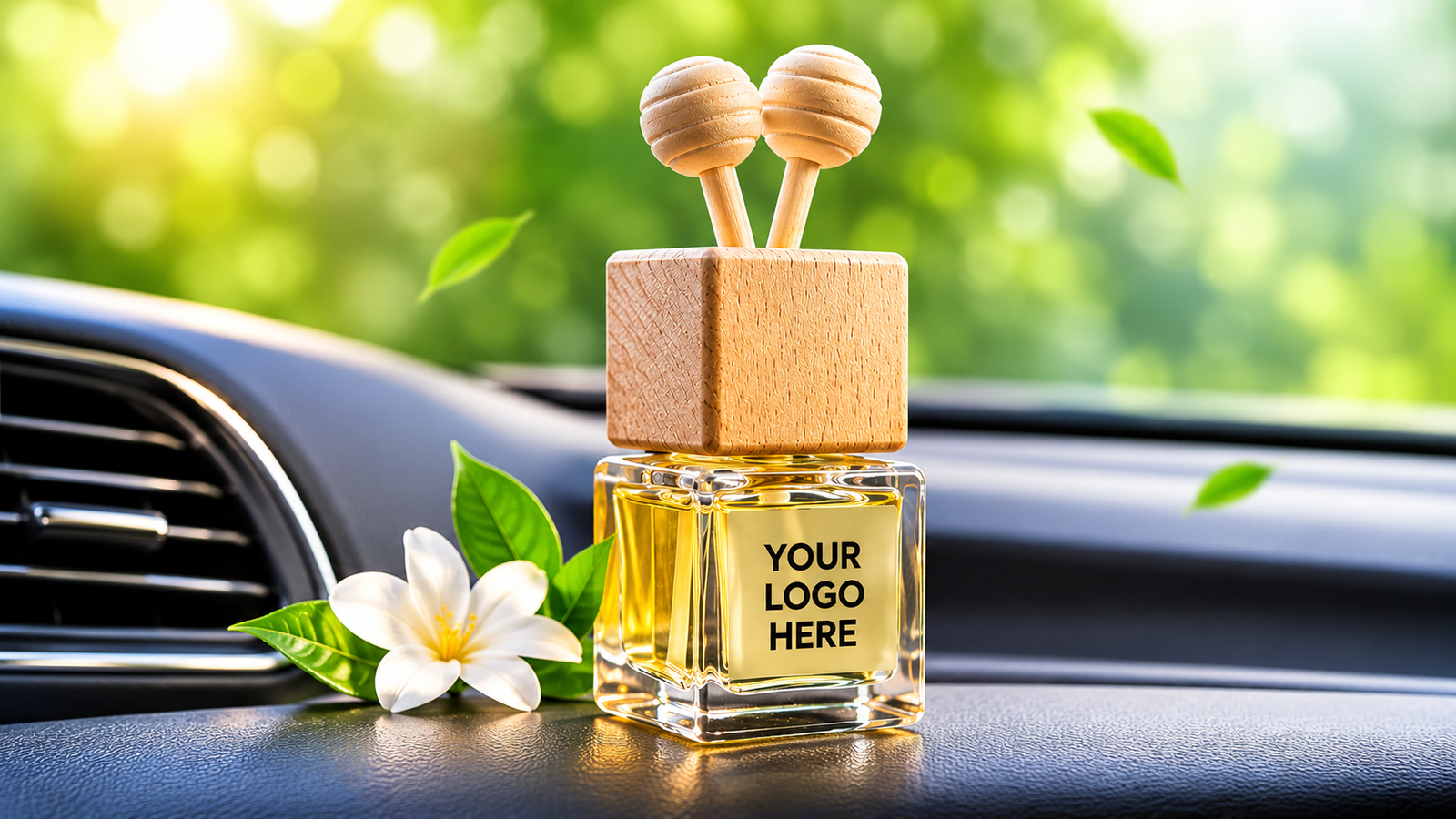
Car perfume product presentation for businesses planning a private label fragrance range.
Starting a car fragrance business involves more than selecting an attractive fragrance. You also need to consider the product format, formulation requirements, container design, packaging compatibility, labelling, production quantity and overall cost. These decisions affect the final product and how customers recognise your brand.
When comparing car perfume manufacturers, focus on their actual manufacturing capabilities rather than relying only on promotional claims. Ask about available product formats, fragrance options, quality procedures, customisation, minimum order quantity and commercial terms. A clear product brief will also help suppliers understand your requirements and provide more relevant quotations.
Quick Answer: Choose a car perfume manufacturer in India by evaluating relevant manufacturing experience, available product formats, fragrance and formulation options, private label services, packaging compatibility, quality procedures, MOQ, pricing and production timelines. Always confirm which services the manufacturer can actually provide before placing a bulk order.
1. Understanding the Car Perfume Manufacturing Business
Car perfumes and automotive air fresheners are fragrance products developed for use inside vehicles. They are available in different formats, fragrance profiles and packaging styles. Common options include hanging car perfumes, vent-mounted fresheners, dashboard products, spray formats and gel-based fresheners.
For businesses, this category offers an opportunity to introduce a new product range or expand an existing fragrance portfolio. A company may focus on premium car fragrance products, everyday car fresheners, branded products for retail stores or customised collections for its customers.
A car perfume manufacturer works with businesses to produce products according to agreed requirements. Depending on the manufacturer's facilities and services, discussions may cover product selection, fragrance options, formulation, packaging, labelling and bulk production.
Before contacting car perfume suppliers, define your target customers, preferred product type, brand positioning and estimated order quantity. This preparation makes it easier to compare manufacturers and understand which production arrangement is suitable for your business.
2. Why Businesses Are Exploring Car Fragrance Products
Car perfume and car air freshener products are sold through different channels, including automotive accessory stores, supermarkets, online marketplaces, gift shops and fragrance retailers. This gives businesses different ways to position and distribute their own products.
The category also offers branding opportunities through fragrance selection, product design, bottle presentation, labels and packaging. Businesses can develop a recognisable product range instead of relying only on generic products sourced from the market.
Business Opportunities in the Car Perfume Category
- New entrepreneurs: Businesses planning to launch their first car perfume brand.
- Existing perfume brands: Companies looking to expand their fragrance portfolio with automotive products.
- Automotive accessory distributors: Businesses exploring additional products for their existing customers.
- Retail businesses: Stores interested in selling branded car perfume and car freshener products.
- Wholesale buyers: Buyers looking for bulk car air freshener procurement options.
- Corporate gifting businesses: Companies exploring branded automotive fragrance products for gifting.
The right product strategy depends on your target market, distribution channel, price positioning and available manufacturing options. Before choosing a product range, discuss the formats and quantities that can be practically produced.
3. What Does a Car Perfume Manufacturer Do?
A car perfume manufacturer produces automotive fragrance products according to defined product specifications and manufacturing requirements. Depending on its actual capabilities, a manufacturer may support product selection, fragrance discussions, formulation, packaging, labelling, production and finished-product evaluation.
Businesses searching for car perfume manufacturers in India should understand the difference between manufacturing, supplying and distributing. A supplier may sell products made by another company, while a manufacturer is directly involved in production. Some businesses may perform both roles.
Manufacturing Services to Discuss
- Product selection: Identifying suitable car perfume and air freshener formats.
- Fragrance selection: Reviewing available fragrance profiles and product preferences.
- Formulation: Discussing composition and product requirements.
- Packaging: Evaluating suitable bottles, containers, closures and labels.
- Branding: Discussing the application of your brand name and product artwork.
- Production: Manufacturing according to approved product specifications.
- Quality procedures: Carrying out relevant checks according to the product and agreed requirements.
Not every manufacturer offers all these services. Ask for a clear explanation of available facilities, production processes, customisation options and commercial arrangements before finalising a car perfume supplier.
4. Check Manufacturing Experience and Capabilities
Manufacturing experience is an important factor when choosing a car perfume manufacturer. Your business should understand whether the company has the relevant infrastructure, technical knowledge and production capabilities required for your proposed product.
Do not rely only on website claims or marketing statements. Ask specific questions about the manufacturer's product categories, production processes, equipment, quality procedures and experience with similar requirements.
What Should You Evaluate?
Review the manufacturer's background and experience in fragrance, cosmetic or related product manufacturing. Confirm whether its current capabilities match the product format you want to introduce. If you need private label car perfume manufacturing, ask which parts of the product can be customised and which options are standard.
You should also understand how production is managed, whether product specifications are documented and what checks are performed during manufacturing. This information helps you assess whether a potential manufacturing partner can support your project.
Why Manufacturing Experience Matters
A product launch involves several connected decisions. Fragrance, formulation, packaging and production requirements must work together. A manufacturer that understands these requirements can help make discussions more organised and reduce avoidable confusion during product planning.
Business Tip: Do not select a car perfume manufacturer only because it offers the lowest quotation. Compare relevant experience, actual production capabilities, available customisation, documentation and its ability to meet your agreed specifications.
5. Evaluate Fragrance Selection and Formulation
Fragrance selection is an important part of developing a car perfume brand. The fragrance profile contributes to product identity and influences how customers perceive your collection. Your selection should reflect your intended market, brand positioning and customer preferences.
Fragrance Profiles to Consider
- Fresh fragrances: For brands exploring clean and refreshing fragrance concepts.
- Citrus fragrances: A direction for bright, zesty and lively fragrance collections.
- Woody fragrances: Often considered for warm and sophisticated fragrance concepts.
- Floral fragrances: An option for collections built around soft floral profiles.
- Fruity fragrances: Suitable for brands exploring fruit-inspired fragrance directions.
- Premium fragrance concepts: Developed around the desired positioning and identity of the brand.
Why Formulation Discussions Matter
A fragrance is only one part of the finished product. Formulation, fragrance concentration, carrier system and compatibility with the selected container can influence product characteristics. These factors should be discussed with the manufacturer instead of making decisions based only on a fragrance name.
Ask whether samples or suitable product evaluation options are available before placing a bulk order. Sampling can help your team review the fragrance profile, product appearance and other agreed characteristics.
Also confirm whether the manufacturer can work with your preferred product concept and fragrance requirements. Any performance-related claims should be supported by appropriate product evaluation.
6. Understand Different Car Perfume Product Types
Before choosing a car perfume supplier, decide which product formats are suitable for your brand. Different car fragrance products have different packaging, formulation and usage considerations. Confirm that your selected manufacturer can produce the format you want.
1. Hanging Car Perfume
Hanging car perfumes are designed to be suspended from a suitable location inside a vehicle, commonly around the rear-view mirror area. Businesses may explore different container shapes, decorative designs and label presentations for their branded products.
2. Car Vent Air Fresheners
Car vent air fresheners are designed to attach to suitable vehicle air vents. Their design and compatibility with the intended vent structure are important considerations when developing this product category. Businesses looking for car vent air freshener manufacturers should confirm the available product designs and fitting requirements.
3. Dashboard Car Perfumes
Dashboard car perfumes are designed for placement on a suitable flat surface inside a vehicle. Container stability, closure design, product handling and packaging compatibility should be considered during development.
4. Car Perfume Spray
Spray-format car fragrance products are designed for application according to their specific product directions. The bottle, spray mechanism, formulation and product labelling should be selected according to the intended application.
5. Gel-Based Car Fresheners
Gel-based car fresheners use a gel format for fragrance delivery. The container design, gel consistency, fragrance characteristics and product storage requirements are important parts of product development.
6. Car Diffuser Products
Car diffuser products are another format businesses may consider when planning an automotive fragrance collection. The diffuser design, container, fragrance formulation and method of use should be reviewed together. If you are exploring car diffuser bottles, confirm material suitability and packaging availability before finalising the product.
| Product Type | Product Design | Key Considerations |
|---|---|---|
| Hanging Car Perfume | Suspended fragrance container | Container, closure and hanging design |
| Car Vent Freshener | Vent-mounted format | Vent compatibility and product fit |
| Dashboard Car Perfume | Dashboard placement | Stability and packaging compatibility |
| Car Perfume Spray | Spray application | Spray mechanism and formulation |
| Gel Car Freshener | Gel-based fragrance format | Gel consistency and container design |
| Car Diffuser | Diffuser-style fragrance product | Diffuser design and material suitability |
Not every car perfume manufacturer produces all product types. Confirm the available formats, packaging options and production requirements before deciding on your range. Starting with a product category that matches your target customers and business plan can make the launch easier to manage.
7. Check Customisation and Private Label Options
Private label manufacturing allows a business to introduce products under its own brand identity while working with a manufacturer for production. This approach can be useful for entrepreneurs, retailers, distributors and established companies that want to build their own car fragrance collection.
When evaluating a private label car perfume manufacturer, understand which parts of the product can actually be customised. Options vary by manufacturer, product type, packaging availability and order quantity. Confirm the scope before making a commercial commitment.
Branding Options to Discuss
- Brand name and logo: Discuss how your brand identity can be applied to the product.
- Label design: Review label sizes, artwork layouts and printing requirements.
- Fragrance options: Select from available profiles or discuss suitable customisation.
- Product presentation: Choose a design that reflects your brand positioning.
- Packaging: Explore suitable packaging materials and presentation options.
- Product range: Discuss whether multiple fragrance variants can be planned for your collection.
Why Private Label Car Perfume Can Be Useful
Developing products under your own brand gives your business greater control over product positioning, branding and market presentation. Instead of selling only generic products, you can work towards building a recognisable car perfume brand.
However, private label manufacturing requires proper planning. Product requirements, artwork approval, packaging quantities, minimum order quantity and commercial terms should be discussed before bulk production begins.
8. Evaluate Packaging and Bottle Options
Packaging is an important part of car perfume product development. The bottle or container protects the product and contributes to its overall appearance. It can also help customers distinguish one brand from another.
A suitable packaging decision should balance appearance, functionality, product compatibility and commercial requirements. A premium-looking container is useful only when it also works appropriately with the intended formulation and application.
Important Packaging Factors
Material selection: Discuss bottle or container materials that are suitable for the formulation. Material compatibility should be evaluated before approving packaging.
Shape and capacity: The size and shape should suit the product category, intended use and target price positioning.
Closure and dispensing: Caps, stoppers, spray pumps and other closures should be suitable for the selected format and application.
Leakage considerations: Packaging should be evaluated for appropriate closure performance and product handling during transport and storage.
Label presentation: The label should provide required product information while maintaining a consistent visual identity.
Outer packaging: Cartons and other outer packaging may be considered for retail presentation, protection and bulk distribution.
Why Packaging Compatibility Matters
Car perfume formulations may interact differently with different packaging materials. The manufacturer and packaging supplier should evaluate material suitability, storage requirements and relevant compatibility factors before production.
Businesses searching for car perfume bottle manufacturers should also confirm whether their preferred bottle design, label printing and packaging quantities are commercially practical for the planned order size. Do not assume that every manufacturer offers every bottle or packaging option.
9. Understand Quality Checks and Manufacturing Standards
Quality evaluation is an essential consideration when selecting car perfume manufacturers. A finished product should match its approved specifications and be appropriate for its intended use.
Ask how the manufacturer manages raw material selection, formulation consistency, packaging suitability and finished-product checks. Exact testing requirements depend on the formulation, packaging, product category and applicable regulations.
1. Raw Material Evaluation
Fragrance materials and other formulation ingredients should be evaluated against relevant quality specifications. Ask about sourcing practices and the documentation available for relevant materials.
2. Formulation Consistency
The finished product should be evaluated according to approved specifications. Relevant characteristics may include appearance, fragrance profile, colour and other formulation-specific properties.
3. Packaging Compatibility
Bottle materials, closures and dispensing components should be suitable for the product. Packaging evaluation may include checks relevant to leakage, handling, storage and compatibility.
4. Stability and Storage Considerations
The product should be assessed for appropriate storage conditions and relevant stability characteristics. Fragrance products may be affected by storage conditions, temperature and packaging, so these factors should be considered during product development.
5. Documentation and Product Information
Ask the manufacturer which quality documents, product specifications and relevant manufacturing records can be provided for the project. Product labels and claims should also be reviewed according to applicable market requirements.
Quality Tip: A manufacturer should be able to explain its actual quality procedures and provide relevant documentation according to the product and manufacturing arrangement. Do not rely on unsupported claims or assume that every facility follows the same testing process.
10. Compare MOQ, Pricing and Wholesale Requirements
Minimum order quantity and manufacturing cost are important factors for businesses planning to launch their own car fragrance range. Different car perfume manufacturers may have different production requirements depending on the formulation, packaging, raw materials and order size.
Before finalising a supplier, understand what is included in the quotation. A low initial price does not necessarily represent the lowest overall project cost if packaging, labelling, sampling or other services are charged separately.
Factors That Can Affect Manufacturing Cost
- Selected product format and formulation requirements.
- Fragrance type and material specifications.
- Product size and filling quantity.
- Bottle, cap and closure selection.
- Label printing and branding requirements.
- Outer packaging and carton specifications.
- Minimum order quantity and total production volume.
- Testing, documentation and other agreed services.
Understanding Car Perfume Wholesale Requirements
Businesses looking for car perfume wholesale options should discuss expected purchase volume, product variants, packaging preferences and supply requirements. Wholesale procurement may involve standard products, while customised bulk orders can require additional planning and approvals.
If you are comparing car air freshener wholesale suppliers, request quotations based on the same product specifications. Ask each supplier to explain the product type, quantity, packaging inclusions, payment terms, expected production schedule and delivery arrangements.
For a new business, understand whether the manufacturer can accommodate your planned order quantity and whether future orders can follow the same approved specifications, subject to material availability and agreed terms.
11. How Does Car Perfume Manufacturing Work?
Car perfume manufacturing involves a series of activities, from product planning and formulation discussions to packaging, production and dispatch. The exact process depends on the product category and the capabilities of the selected manufacturer.
Step 1: Product Requirement Discussion
The business identifies the product type, target customers, preferred fragrance direction, product size and branding objectives. This information forms the starting point for the manufacturing discussion.
Step 2: Product and Fragrance Selection
The manufacturer and business discuss available fragrance profiles, product formats and other technical requirements. Customisation requests should be evaluated according to actual production capabilities.
Step 3: Formulation Development
The formulation is discussed and developed according to the approved product brief. Factors such as fragrance compatibility, composition, intended application and packaging suitability are considered.
Step 4: Sample Evaluation
Where sampling is available, the business can evaluate the proposed product before proceeding with bulk production. The review may cover fragrance, appearance, packaging and other agreed product characteristics.
Step 5: Packaging and Branding Approval
The bottle, cap, label, artwork and outer packaging are finalised. Product information and labelling should be reviewed for applicable requirements before approval.
Step 6: Bulk Manufacturing
After the required approvals and commercial arrangements, production is carried out according to the agreed specifications and manufacturing procedures.
Step 7: Filling and Packaging
The product is filled into the selected containers using suitable processes. Containers are closed, labelled and packed according to approved product and packaging requirements.
Step 8: Quality Evaluation and Dispatch
Applicable finished-product checks and documentation are completed according to agreed requirements. Once the order is approved for release, finished products are prepared for dispatch.
12. Private Label vs Third-Party Car Perfume Manufacturing
Private label and third-party manufacturing are commonly discussed when businesses want to introduce their own products without independently operating a complete manufacturing facility. Although the terms can overlap in commercial practice, specific services and responsibilities depend on the agreement with the manufacturer.
Private Label Car Perfume Manufacturing
Private label car perfume manufacturing generally focuses on producing products that a business can sell under its own brand identity. Depending on the arrangement, the brand may discuss fragrance selection, product format, packaging, labelling and other customisation requirements.
Third-Party Car Perfume Manufacturing
Third-party car perfume manufacturing refers to an arrangement in which a brand or business works with an external manufacturer to produce its required products. The manufacturer manages the agreed production activities while the business focuses on branding, sales, distribution and marketing.
| Comparison Factor | Private Label Manufacturing | Third-Party Manufacturing |
|---|---|---|
| Brand Identity | Products are sold under the business's brand. | Can also be produced for the business's brand. |
| Product Selection | Depends on available product and customisation options. | Depends on the agreed manufacturing requirements. |
| Packaging | Brand-specific packaging may be discussed. | Packaging is agreed as part of the production arrangement. |
| Customisation | Subject to manufacturer capabilities. | Subject to the agreed scope of work. |
| Best Starting Point | Businesses building their own product identity. | Businesses outsourcing product manufacturing. |
Both approaches can be relevant for entrepreneurs, established brands and distributors. The best arrangement depends on the level of customisation required, production capabilities, order quantity and commercial terms.
13. Important Questions to Ask a Car Perfume Supplier
Before finalising a car perfume supplier, prepare questions that cover product development, production and commercial requirements. This helps you understand whether the manufacturer is suitable for your proposed project.
- Which types of car perfumes and car air fresheners can you manufacture?
- Do you offer car perfume private label or third-party manufacturing?
- What fragrance options are available?
- Can you discuss custom fragrance or formulation requirements?
- Which bottle, container and packaging options are available?
- Can products be labelled with our company logo and brand name?
- Can product samples be provided for evaluation?
- What is the minimum order quantity for each product?
- What quality checks are performed during manufacturing?
- Which product and quality documents are available?
- What are the production and dispatch timelines?
- What are the payment, delivery and repeat-order terms?
A professional supplier should explain its available services clearly and distinguish standard offerings from custom requirements. Written product specifications and agreed commercial terms are useful for avoiding confusion later.
14. Common Mistakes to Avoid When Choosing a Manufacturer
Selecting a manufacturer only on the basis of price or product appearance can create problems during product development and supply. Businesses should evaluate the complete manufacturing arrangement before making a decision.
1. Choosing Only the Lowest Quotation
A lower quotation may not include the same formulation, packaging or services as another manufacturer's quotation. Compare the complete scope of supply rather than looking only at the unit price.
2. Ignoring Fragrance Evaluation
Do not finalise a fragrance only by its name or description. Where possible, evaluate samples and confirm the agreed fragrance specifications before production.
3. Not Checking Packaging Compatibility
An attractive bottle may not be suitable for every formulation. Discuss material compatibility, closure performance and product handling with the manufacturer.
4. Overlooking Minimum Order Quantity
Understand the MOQ for the selected product and its packaging components. Check whether the required quantity matches your launch budget and distribution plans.
5. Ignoring Quality Documentation
Ask about manufacturing procedures, quality checks and relevant product documents. Do not rely only on verbal claims regarding manufacturing standards.
6. Not Reviewing Label Information
Incorrect or incomplete product labelling can create avoidable issues. Review brand artwork, required declarations and product claims before approving packaging.
7. Not Discussing Repeat Orders
For a business planning to sell products regularly, repeat-order requirements are important. Discuss production planning, formulation specifications, material availability and supply arrangements in advance.
15. How to Start Your Own Car Perfume Brand in India
Starting a car perfume brand requires a clear product concept and an understanding of your target customers. You do not need to begin with a large product collection. A focused launch plan can help you organise product selection, branding and manufacturing requirements.
Step 1: Identify Your Target Market
Decide whether you want to focus on premium automotive fragrance products, everyday car fresheners, gifting collections or wholesale distribution. Understanding the intended customer helps guide product and packaging decisions.
Step 2: Select Your Product Category
Choose the car perfume format you want to introduce. Consider hanging perfumes, vent fresheners, dashboard products, sprays, gel-based fresheners or diffuser-style formats according to available manufacturing options.
Step 3: Develop Your Fragrance Collection
Select fragrance profiles that complement your brand identity. Review available options and discuss sampling or formulation requirements with the manufacturer.
Step 4: Build Your Brand Identity
Choose a brand name, logo, label design and packaging style. Your visual identity should remain consistent across different fragrance variants and product sizes.
Step 5: Select a Suitable Manufacturer
Compare car perfume manufacturers in India based on experience, actual capabilities, fragrance options, packaging, quality procedures, MOQ and commercial terms. Shortlist manufacturers that can meet your specific requirements.
Step 6: Confirm Production and Commercial Details
Finalise product specifications, approved samples where applicable, order quantity, packaging details, pricing, production schedule and delivery terms.
Step 7: Plan Your Sales and Distribution
Once the product is ready, develop a sales strategy for your intended channels. These may include distributors, retailers, automotive accessory stores, online platforms or direct business customers.
Business Insight: Before starting production, prepare a product brief with your preferred car perfume format, fragrance direction, packaging expectations, brand details and estimated quantity. Sharing these requirements with potential manufacturers makes comparison and quotation discussions more productive.
16. Explore Manufacturing with UNICO Pharmaceuticals
UNICO Pharmaceuticals is based in Ludhiana, Punjab, and brings more than 35 years of manufacturing experience. The company operates a GMP-certified facility and works in the cosmetic and personal care manufacturing space.
For businesses exploring fragrance and personal care product development, choosing a manufacturing partner involves understanding available product categories, production capabilities, packaging requirements and commercial arrangements.
Companies planning to introduce a car perfume range should begin by defining their product requirements. This includes the desired fragrance profile, product format, packaging presentation, brand identity and estimated order quantity.
Plan Your Car Perfume Product Requirements
Whether you are an entrepreneur developing a new product concept or an existing business exploring an additional fragrance category, a clear product brief can help start a focused manufacturing discussion.
Discuss Your Manufacturing Requirements
Businesses interested in car perfume manufacturing, private label products or bulk production can contact UNICO Pharmaceuticals to discuss their project requirements and confirm the available manufacturing options.
Before initiating a discussion, keep the following details ready:
- Your company or proposed brand name.
- Preferred car perfume product format.
- Desired fragrance profiles or variants.
- Preferred bottle and packaging style.
- Branding and label requirements.
- Estimated order quantity.
- Target market and distribution plans.
Providing this information helps create a more organised discussion about product selection, manufacturing capabilities and commercial requirements.
You can also learn more about UNICO Pharmaceuticals and its manufacturing experience or review the company's certification information.
Looking for a Car Perfume Manufacturer in India?
Planning to launch your own car fragrance brand? Connect with UNICO Pharmaceuticals to discuss your product concept, packaging preferences and manufacturing requirements.
Discuss Your Requirements →17. Frequently Asked Questions
1. How do I choose the right car perfume manufacturer in India?
Compare the manufacturer's experience, product categories, fragrance options, formulation capabilities, packaging services, quality procedures, documentation, minimum order quantity and commercial terms. Select a manufacturer whose actual capabilities match your business requirements.
2. What does a car perfume manufacturer do?
A car perfume manufacturer produces automotive fragrance products according to agreed specifications. Depending on its capabilities, services may include product selection, formulation discussions, fragrance options, packaging, labelling, manufacturing and quality evaluation.
3. What is private label car perfume manufacturing?
Private label car perfume manufacturing is an arrangement in which a business works with a manufacturer to produce car fragrance products that are sold under its own brand name. Available branding and customisation options depend on the manufacturer.
4. What is third-party car perfume manufacturing?
Third-party car perfume manufacturing involves outsourcing the production of car fragrance products to an external manufacturer. The business manages its branding, sales and distribution while the manufacturer handles the agreed production responsibilities.
5. Can I start my own car perfume brand in India?
Yes, businesses can explore launching their own car perfume brand through suitable manufacturing arrangements. Start by selecting your product category, fragrance preferences, packaging, brand identity and target order quantity. Also review applicable product and labelling requirements.
6. What types of car perfumes can manufacturers produce?
Depending on their capabilities, manufacturers may produce hanging car perfumes, dashboard fragrances, car vent fresheners, spray-format products, gel-based car fresheners and diffuser-style products. Always confirm available product formats before placing an order.
7. Can I customise the fragrance for my car perfume brand?
Customisation may be possible depending on the manufacturer's formulation capabilities and available fragrance options. Discuss your preferred fragrance profile, product concept and sampling requirements before approving production.
8. What packaging options are available for private label car perfumes?
Packaging may include different bottle styles, containers, closures, labels and outer cartons. Available options depend on the product format, material compatibility, order quantity and manufacturer's packaging arrangements.
9. What determines the cost of car perfume manufacturing?
Manufacturing cost depends on factors such as formulation, fragrance materials, product size, bottle selection, packaging, branding, order quantity and other agreed services. Request a quotation based on your actual product specifications.
10. What is the minimum order quantity for car perfume manufacturing?
The minimum order quantity varies by manufacturer, product format, packaging and formulation requirements. Contact the manufacturer with your preferred product details and estimated quantity to understand the applicable MOQ.
11. How can I find reliable car perfume suppliers for wholesale?
Evaluate suppliers based on product specifications, manufacturing capabilities, pricing, quality procedures, packaging, supply capacity and delivery terms. Request relevant product information and compare quotations on the basis of the same requirements.
12. What is the difference between a car perfume supplier and a manufacturer?
A car perfume manufacturer is involved in producing the product, while a supplier may source and distribute products manufactured by another company. Some businesses may perform both roles. Confirm whether your selected supplier owns or operates the relevant manufacturing capabilities.
13. Can car perfume manufacturers provide bulk orders?
Many manufacturers and wholesale suppliers handle bulk orders, but their production capacity and MOQ vary. Discuss the order quantity, product variants, packaging and delivery requirements before confirming the purchase.
14. What should I check before finalising a car perfume manufacturer?
Check product experience, available fragrance options, formulation capabilities, packaging compatibility, quality procedures, relevant documentation, MOQ, quotation details and production timelines. Approve product specifications and commercial terms before bulk manufacturing.
15. How long does car perfume manufacturing take?
Production timelines depend on the formulation, product format, raw material availability, packaging procurement, artwork approval, order quantity and manufacturing schedule. Ask the manufacturer for an estimated timeline based on your specific requirements.
Final Thoughts
Choosing the right car perfume manufacturer in India is an important step for businesses planning to introduce their own automotive fragrance products. The decision should be based on more than product appearance or price. Manufacturing experience, fragrance options, packaging compatibility, customisation, quality procedures and commercial terms all deserve careful consideration.
For entrepreneurs and established brands, private label car perfume manufacturing and third-party production can provide opportunities to develop products under their own brand identity. A clear understanding of product formats, customer requirements and production quantities can help businesses plan their launch more effectively.
Before selecting a car perfume supplier, compare available capabilities, review product samples where possible and confirm the complete manufacturing arrangement. A well-prepared product brief makes it easier to discuss specifications, quotations and future production requirements.
For businesses exploring car perfume manufacturing, the right starting point is a clear brand concept, suitable fragrance selection, practical packaging and a manufacturing partner whose capabilities match the project.
Disclaimer: This article is intended for general business and product information. Manufacturing capabilities, product formats, formulation options, packaging and commercial terms vary by manufacturer. Businesses should verify applicable regulatory requirements, product specifications and documentation before placing manufacturing orders.