
Natural Face Scrub vs Chemical Exfoliation: Understanding the Difference
Exfoliation is a common part of skincare, but choosing the right method can be confusing. Should you use a natural face scrub with small exfoliating particles, or choose a chemical exfoliant containing ingredients such as salicylic acid or glycolic acid? Understanding the difference between a physical vs chemical exfoliant can help you make a more informed choice based on your skin type, preferences and skincare goals.
Both physical and chemical exfoliation are used to remove dead skin cells from the skin's surface, but they work in different ways. A physical exfoliant uses particles or a textured tool to loosen surface buildup through gentle movement. Chemical exfoliation uses specific ingredients to help loosen the bonds between dead skin cells or support their removal.
Neither method is automatically better for everyone. The right option depends on the formulation, how frequently it is used, your skin's sensitivity and whether the product is suitable for your particular needs.
If you are exploring a physical exfoliation product, discover Unico Pharmaceuticals' Papaya Face Scrub page for product-related information.
Table of Contents
- What Is Exfoliation?
- What Is a Physical Exfoliant?
- What Is Chemical Exfoliation?
- Physical vs Chemical Exfoliant: Key Differences
- Potential Benefits of Exfoliation
- Which Method Suits Different Skin Types?
- What Makes a Natural Face Scrub Different?
- Common Chemical Exfoliating Ingredients
- How to Choose the Right Exfoliant
- How to Exfoliate Your Face Carefully
- Common Exfoliation Mistakes
- Physical vs Chemical Exfoliation Comparison
- Face Scrub Product Development for Businesses
- Frequently Asked Questions
1. What Is Exfoliation?
Exfoliation is the process of removing dead skin cells from the outermost layer of the skin. Skin naturally sheds dead cells as part of its renewal process. However, surface buildup, excess oil and other factors can sometimes leave skin feeling rough or looking less smooth.
Exfoliating products are designed to help remove some of this surface buildup. They are available in different forms, including face scrubs, exfoliating cleansers, masks, toners, serums and peeling products. Each product has a different formulation and intended use, so the instructions should always be checked before application.
The two broad categories are physical exfoliation and chemical exfoliation. A physical exfoliant uses friction or particles to loosen dead cells from the surface. A chemical exfoliant uses ingredients that help loosen the connections between surface cells or support their shedding.
Does everyone need an exfoliant?
No. Exfoliation is not an essential step for every person. Some people maintain comfortable, smooth-looking skin with a gentle cleanser, moisturiser and sunscreen. Others may prefer an exfoliating product as part of their routine.
If your skin is already irritated, peeling, very dry or sensitive, adding an exfoliant may make discomfort worse. It is better to focus on gentle skincare first and seek professional advice if the problem continues.
2. What Is a Physical Exfoliant?
A physical exfoliant is a product or tool that removes surface dead skin cells through gentle mechanical action. When you massage a suitable scrub over the skin, its particles help loosen surface buildup. The effect depends on the particles, their shape and size, the formula and the pressure used during application.
Physical exfoliants include facial scrubs, polishing products and certain cleansing tools. Face scrubs may use different types of exfoliating particles, depending on the product. Some formulations are designed for occasional use, while others may have specific directions based on their intended purpose.
How does a physical exfoliant for face work?
When a face scrub is gently massaged over damp skin according to its directions, the exfoliating particles create friction that helps dislodge dead cells from the surface. Rinsing removes the product along with loosened residue.
The amount of friction matters. Pressing too hard, scrubbing for too long or using a rough product can irritate the skin. A face scrub should not leave your skin feeling raw, painfully tight or persistently red.
Examples of physical exfoliants
- Facial scrubs: Products containing particles intended to exfoliate the skin during gentle massage.
- Natural-ingredient scrubs: Formulations that may include plant-derived or other exfoliating ingredients.
- Polishing products: Products designed to improve the feel of the skin through surface exfoliation.
- Exfoliating tools: Certain brushes or cloths that mechanically remove surface buildup when used appropriately.
What should you know about a natural face scrub?
A natural face scrub may appeal to people who prefer skincare products containing plant-derived ingredients. However, the word "natural" does not automatically mean that a scrub is gentle, safer or suitable for every skin type.
The texture of the exfoliating particles, the complete formula and the way the product is used are all important. Choose a product specifically intended for facial use rather than assuming a body scrub is appropriate for delicate facial skin.
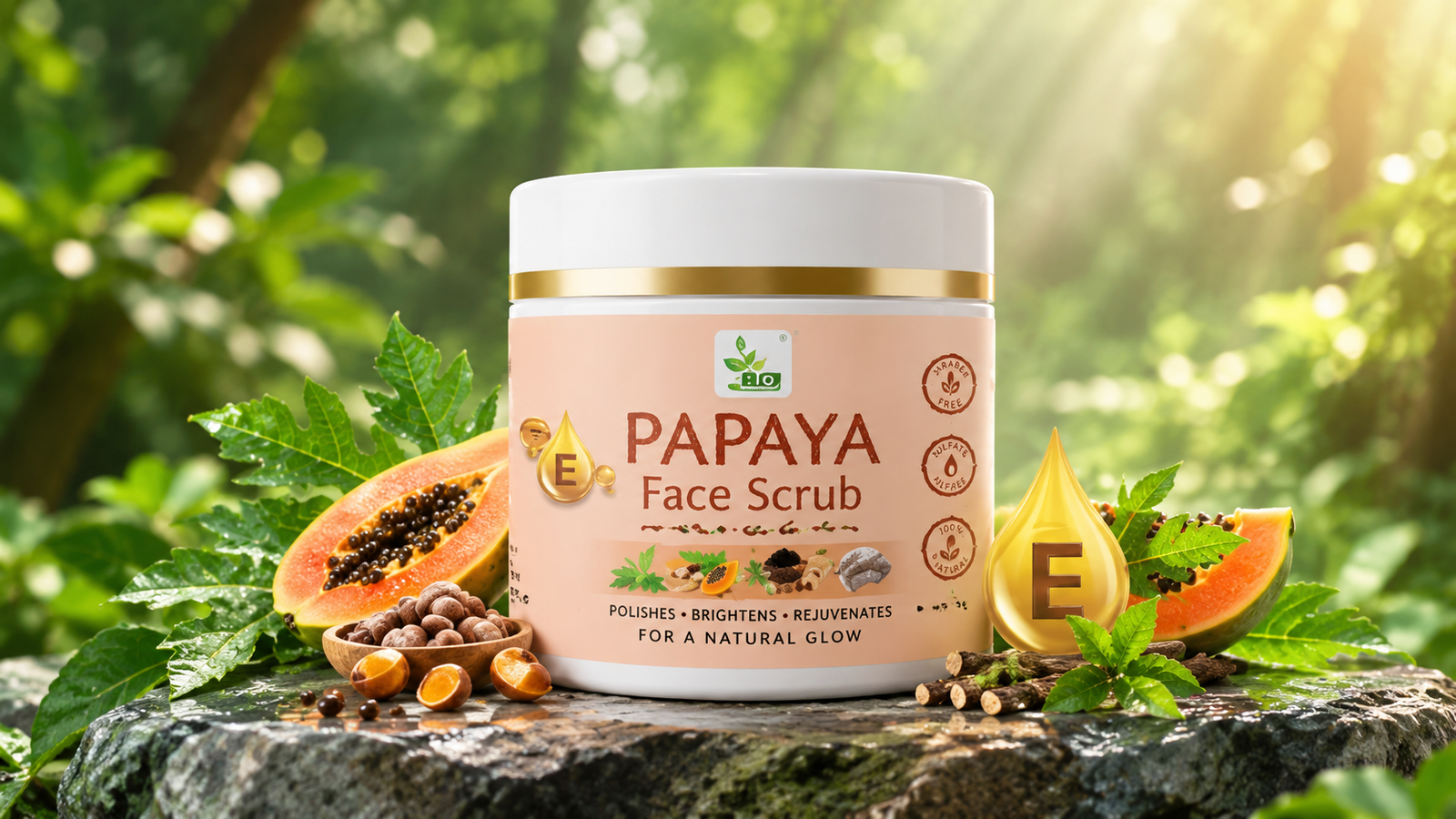
For an example of a product in this category, visit the Papaya Face Scrub product page.
3. What Is Chemical Exfoliation?
Chemical exfoliation uses selected ingredients to help loosen the bonds between dead skin cells or encourage their removal from the surface. Common ingredients include alpha hydroxy acids (AHAs) and beta hydroxy acids (BHAs). Depending on the formula, chemical exfoliants may be found in cleansers, toners, serums, masks and other skincare products.
The word "chemical" does not mean that a product is automatically harsh. Likewise, a product described as natural is not necessarily mild. The ingredient concentration, pH, formulation, contact time and directions all influence how a product behaves on the skin.
How does chemical exfoliation work?
Different exfoliating acids work in different ways. AHAs are generally water-soluble and are commonly used to exfoliate the skin's surface. BHAs, including salicylic acid, are oil-soluble and are often used in products designed for oily or blemish-prone skin.
However, the result depends on the complete formulation and the individual product. Not every acid-containing product is an exfoliant, and not every exfoliating product has the same strength or intended use.
Common forms of chemical exfoliants
- Exfoliating cleansers: Products designed to cleanse the skin and containing exfoliating ingredients. Contact time and label directions matter.
- Exfoliating toners: Leave-on products that may contain exfoliating acids.
- Exfoliating serums: Concentrated skincare products with directions specific to the formula.
- Exfoliating masks and peels: Products that may require limited contact time and careful use according to the label.
Some chemical exfoliants are intended for home use, while stronger peels may require professional supervision. Do not assume that a professional-strength peel is suitable for home application.
4. Physical vs Chemical Exfoliant: What Is the Difference?
The main difference between a physical vs chemical exfoliant is how the product helps remove surface dead skin cells. Physical exfoliation relies on mechanical movement, while chemical exfoliation relies on specific ingredients. Both approaches can be useful when appropriately formulated and used, but both can also cause irritation if they are unsuitable for the skin or used too frequently.
| Feature | Physical Exfoliant | Chemical Exfoliant |
|---|---|---|
| How it works | Uses particles or a tool to loosen surface buildup through gentle friction. | Uses ingredients that help loosen connections between dead skin cells or support shedding. |
| Common product types | Face scrubs and certain exfoliating tools. | Exfoliating cleansers, toners, serums and selected masks. |
| How use is controlled | Depends on particle texture, pressure, massage time and product directions. | Depends on ingredients, concentration, formula, contact time and directions. |
| Potential concern | Excessive rubbing or rough particles may cause irritation. | An unsuitable formula or excessive use may cause dryness, stinging or irritation. |
| Suitable for sensitive skin? | Some people may find scrubbing irritating, particularly during a flare-up. | Some formulas may be tolerated, but acids can also irritate sensitive skin. |
| Product selection | Look for a facial-use product with an appropriate texture. | Choose an ingredient and strength suitable for your needs and experience. |
| Key precaution | Use gentle pressure and follow the label. | Follow the directions and avoid combining multiple strong exfoliating products without guidance. |
Is physical or chemical exfoliation better?
There is no single answer that applies to everyone. A person who prefers a rinse-off product may find a face scrub more convenient. Someone looking for a particular type of exfoliating ingredient may prefer a chemical exfoliant. Skin sensitivity, existing skincare products and individual concerns should guide the decision.
Neither method should be selected solely because it is trending. Consider the product's intended use, ingredients, directions and how your skin responds after use.
5. Potential Benefits of Exfoliation
When a suitable product is used correctly, exfoliation may help improve the feel and appearance of the skin's surface. Benefits vary with the product and individual, and exfoliation should not be expected to solve every skin concern.
Helps remove surface buildup
Both physical and chemical exfoliation are designed to help remove dead skin cells from the surface. A suitable product may leave the skin feeling cleaner or smoother. This does not mean that more exfoliation will produce better results.
May improve the feel of rough skin
Surface buildup can contribute to a rough skin texture. A well-suited exfoliating product may help make the skin feel smoother. Persistent roughness, scaling or irritation may have other causes and may need professional assessment.
Can support a consistent skincare routine
Some people prefer using an exfoliating product as one step in a broader skincare routine. The most useful routine is one that suits the person's skin and can be followed without causing repeated irritation.
May help products feel more comfortable on the skin
After appropriate exfoliation, some people find that the skin feels smoother when applying moisturiser. However, exfoliation is not necessary for moisturiser to work, and a moisturiser should not be replaced by a scrub or exfoliating acid.
What exfoliation cannot guarantee
Exfoliating products cannot guarantee the removal of acne scars, permanent dark spots, deep wrinkles or every form of uneven skin tone. These concerns may have different causes and may require targeted treatment.
Avoid products that promise instant or permanent changes to your natural skin colour. For persistent acne, pigmentation or irritation, consult a qualified dermatologist instead of increasing exfoliation frequency.
6. Which Exfoliation Method Suits Different Skin Types?
Your skin type can help guide product selection, but it should not be the only factor. The product formula, skin condition, sensitivity and other products in your routine are equally important.
| Skin Type or Concern | What to Consider | Important Precaution |
|---|---|---|
| Oily skin | A suitable facial scrub or a well-formulated BHA product may be considered, depending on individual needs. | Avoid harsh scrubbing and excessive use of acids. |
| Dry skin | Prioritise gentle cleansing and moisturising before adding an exfoliant. | Exfoliation may worsen dryness or tightness. |
| Sensitive skin | Keep the routine simple and review ingredients carefully. | Both physical and chemical exfoliants can trigger irritation. |
| Combination skin | Choose products based on how different areas of the face respond. | Avoid over-treating oily areas while irritating drier areas. |
| Blemish-prone skin | A suitable salicylic acid product may be an option for some people. | It is not a guaranteed acne treatment; seek professional advice for persistent concerns. |
| Already irritated skin | Focus on gentle cleansing and moisturising while avoiding likely triggers. | Do not exfoliate skin that is raw, burning or visibly inflamed. |
Is a gentle physical exfoliator suitable for sensitive skin?
Not necessarily. Even a product described as a gentle physical exfoliator may irritate sensitive skin because of the particles, rubbing action or other ingredients. If your skin reacts easily, avoid exfoliating during periods of redness, burning or irritation.
Can you use a chemical exfoliant for oily skin?
Some people with oily skin choose products containing salicylic acid because it is oil-soluble. However, the suitability of a chemical exfoliant for oily skin depends on its complete formulation, intended use and the user's tolerance. Start according to the label and avoid adding several exfoliating products at once.
Skin type alone cannot determine which product will work best. If you experience recurring breakouts or persistent skin problems, a dermatologist can help you choose an appropriate routine.
7. What Makes a Natural Face Scrub Different?
A natural face scrub is generally marketed around plant-derived or naturally sourced ingredients, although the exact meaning depends on the product and its formulation. Some scrubs contain fruit-derived ingredients or other cosmetic components alongside exfoliating particles.
The finished formula matters more than a single ingredient claim. A natural ingredient can still irritate the skin, and a product can contain both natural and synthetic ingredients while being designed for cosmetic use.
Understanding papaya face scrub
Papaya is a familiar ingredient in skincare products. A papaya face scrub combines its product-specific formulation with the physical exfoliating action of the scrub particles, where present. The exact experience depends on the finished product rather than the ingredient name alone.
People interested in a papaya-based scrub should check that the product is intended for facial use and read its directions carefully. Do not assume that every papaya product has the same ingredients, strength or benefits.
Explore Papaya Face Scrub by Unico Pharmaceuticals for details about the relevant product. Use the information on the product page and packaging to understand its intended application.
Are natural scrubs always better than chemical exfoliants?
No. Natural and chemical are not direct measures of safety or performance. A scrub with rough particles may be too abrasive for some people, while a chemical exfoliant may cause stinging or dryness if it is unsuitable or used incorrectly.
Instead of choosing based on the word "natural" alone, review the full ingredient list, product directions and suitability for facial skin. Avoid homemade mixtures that contain harsh particles or ingredients that can irritate the face.
8. Common Chemical Exfoliating Ingredients
Understanding common exfoliating ingredients can make product labels easier to interpret. The following ingredients have different properties and are used in different types of skincare formulations. Their presence alone does not tell you how strong a product is or whether it is suitable for you.
Alpha hydroxy acids (AHAs)
AHAs are a group of water-soluble acids used in various skincare products. Glycolic acid and lactic acid are familiar examples. They are often included in products designed to exfoliate the skin's surface.
Formula strength, pH, contact time and frequency influence how an AHA product should be used. Some products are rinse-off formulations, while others are leave-on products. Always follow the directions for the specific product.
Beta hydroxy acid (BHA)
Salicylic acid is a commonly used BHA in skincare. Because it is oil-soluble, it is often included in products intended for oily or blemish-prone skin. However, it may not suit everyone and can cause dryness or irritation.
If you are considering a salicylic acid product, check its intended use and warnings. Avoid combining it with other strong exfoliants unless the product directions or a qualified professional indicate that the combination is appropriate.
Enzyme-based exfoliating products
Some facial exfoliating products use enzymes as part of their formulation. These products differ from conventional scrubs and acid-based exfoliants, and their performance depends on the ingredients and product design. Follow the label rather than assuming that an enzyme-based product is automatically gentle.
How should you choose between acids?
Choose based on the product's intended purpose, your skin's tolerance and any guidance from a dermatologist. A higher concentration is not automatically better, and combining multiple exfoliating ingredients may increase the risk of irritation.
If you are new to exfoliating acids, consider getting professional advice if you have sensitive skin, a diagnosed skin condition or a routine that already includes prescription treatments.
9. How to Choose the Right Exfoliant
Selecting the right exfoliant starts with understanding your skin and the product you are considering. Marketing terms such as "natural," "gentle," "deep cleansing" or "professional" should not replace careful label reading.
Check whether the product is designed for the face
Facial skin may respond differently from skin on the body. Do not use a body scrub on your face unless the manufacturer specifically indicates that it is suitable for facial application.
Review the ingredients
Read the ingredient list and identify ingredients you already know your skin does not tolerate. If you have previously reacted to fragrance, certain preservatives or specific active ingredients, look carefully for them before using a new product.
Consider your existing routine
If your routine already includes an exfoliating cleanser, acid serum, retinoid or acne treatment, adding another exfoliant may increase irritation. Introduce products one at a time and follow the instructions provided with each product.
Choose a manageable product format
A rinse-off scrub, cleanser or leave-on serum may fit differently into your routine. Consider whether you prefer a product that is washed off or one that remains on the skin, and make sure you understand the required contact time and frequency.
Do not choose only by price or trends
Price and popularity do not guarantee suitability. Review the product information, packaging directions and seller reliability. Avoid products with unclear ingredients or unrealistic claims about guaranteed skin transformation.
When should you seek professional advice?
Consult a dermatologist if you have persistent redness, recurring irritation, severe acne, a diagnosed skin condition or uncertainty about combining exfoliants with prescription skincare. Professional guidance is particularly useful when an over-the-counter routine repeatedly causes discomfort.
10. How to Exfoliate Your Face Carefully
Safe use depends on the product and your skin's response. Different exfoliants have different directions, so the steps below are general guidance rather than a replacement for the label.
- Start with clean skin: Use a suitable cleanser to remove everyday dirt, oil and other residue.
- Read the directions: Confirm whether the product should be applied to damp or dry skin and whether it must be rinsed off.
- Use the recommended amount: Do not apply extra product in the hope of getting faster results.
- Be gentle with scrubs: Use light pressure and avoid vigorous rubbing, particularly around delicate areas.
- Follow chemical exfoliant instructions: Respect the recommended contact time and application frequency.
- Moisturise afterwards if needed: Use a suitable moisturiser to support skin comfort.
- Use daytime sun protection: Apply a suitable broad-spectrum sunscreen and follow its label instructions.
- Monitor your skin: Stop using the product if it causes persistent burning, redness, itching or excessive dryness.
How often should you exfoliate?
There is no universal frequency that works for every product and every skin type. Some products are intended for occasional use, while others may permit more frequent application. Follow the instructions for the specific formula and do not use it more frequently than recommended.
If your skin becomes tight, flaky, sore or irritated, pause exfoliation and simplify your routine. Repeated irritation is a reason to reconsider the product and seek professional advice when needed.
11. Common Exfoliation Mistakes to Avoid
Scrubbing too hard
More pressure does not mean better exfoliation. Vigorous rubbing can irritate the skin and make it feel sore. Use only the pressure and application method recommended for the product.
Using too many exfoliating products
Combining a face scrub, acid toner, exfoliating cleanser and peel in the same routine may be too much for your skin. Avoid stacking multiple exfoliants without clear directions or professional guidance.
Ignoring irritation
Persistent redness, burning, itching or peeling should not be treated as proof that a product is working. Stop using the suspected product if irritation occurs and seek medical advice if symptoms persist or worsen.
Assuming natural ingredients cannot cause reactions
Plant-derived ingredients can still cause sensitivity. A natural face scrub should be evaluated in the same way as any other skincare product: check the ingredients, directions and suitability for your skin.
Using products outside their intended purpose
Do not assume a product for the body, a professional peel or a concentrated acid is suitable for home facial use. Use products only as directed and keep them away from the eyes unless specifically designed for that area.
Skipping sunscreen
Some exfoliating products can increase sensitivity to sunlight. Use appropriate daytime sun protection and follow product-specific precautions. Sunscreen is an important part of a balanced skincare routine, whether or not you exfoliate.
12. Physical vs Chemical Exfoliation: Which Should You Choose?
Choosing between physical and chemical exfoliation is easier when you focus on your routine rather than trying to find one universally superior method. A physical scrub may be convenient for someone who prefers a rinse-off product. A chemical exfoliant may be more suitable for someone looking for a product with a particular acid ingredient. Neither option is necessary for every person.
| Your Preference or Concern | What You Could Consider | What to Remember |
|---|---|---|
| You prefer a rinse-off product | A facial scrub or exfoliating cleanser designed for that purpose. | Follow the label and avoid vigorous rubbing. |
| You want to explore acid-based skincare | A suitable AHA or BHA product. | Check the formulation, warnings and directions. |
| Your skin is easily irritated | A simple, non-exfoliating routine may be a better starting point. | Both physical and chemical products may aggravate irritation. |
| You have oily or blemish-prone skin | A suitable salicylic acid product may be worth discussing with a professional. | Persistent acne may require specific treatment. |
| You prefer plant-derived skincare ingredients | A natural-ingredient face scrub formulated for facial use. | Natural does not automatically mean non-irritating. |
| You already use active skincare | Review whether another exfoliant is necessary before adding it. | Multiple active products can increase irritation risk. |
You do not need to use physical and chemical exfoliants together to maintain healthy-looking skin. If you decide to use an exfoliant, choose one that suits your needs, follow its instructions and allow your skin to guide whether it is appropriate for continued use.
13. Face Scrub Product Development for Businesses
Face scrubs are part of the broader skincare and personal-care market. Businesses exploring this category may need to consider product positioning, target customers, ingredient preferences, texture, packaging, product claims and applicable regulatory requirements before launching a product.
Understand the intended customer
Before developing a face scrub, brands should define their intended audience and product positioning. For example, a brand may be interested in a fruit-inspired scrub, a daily cleansing product or an exfoliating product designed for a particular consumer preference. The final formulation and claims must match the product's actual characteristics and intended use.
Consider formulation and packaging
Texture, spreadability, rinse-off performance and packaging can influence the consumer experience. Businesses should discuss the desired product format, ingredient requirements, pack size and packaging preferences with their manufacturing partner. Product feasibility and availability depend on technical evaluation and the specific project.
Review quality and compliance information
Cosmetic products need appropriate product information, labelling and compliance processes for their intended market. Brands should ensure that product claims are supportable and that packaging details follow applicable requirements. Manufacturing and quality documentation should be reviewed with the relevant team before a product is launched.
Unico Pharmaceuticals works with businesses exploring cosmetic and personal-care product categories. To learn more about the company, visit the About Us page and review the available information on the Certificates page.
Businesses interested in face scrub products can also explore the Papaya Face Scrub page to understand the relevant product category. For manufacturing discussions, share your intended market, product requirements, expected quantities and packaging preferences with the team.
Exploring Face Scrub Manufacturing?
Discuss your cosmetic product requirements, preferred product format and packaging expectations with Unico Pharmaceuticals.
Enquire About ManufacturingFrequently Asked Questions
1. What is the difference between a physical vs chemical exfoliant?
A physical exfoliant uses particles or a tool to loosen dead skin cells through gentle friction. A chemical exfoliant uses ingredients such as AHAs or BHAs to help loosen the connections between surface cells or support their removal. Both should be selected and used according to their directions.
2. Is physical or chemical exfoliation better for the face?
Neither method is universally better. The right option depends on your skin type, sensitivity, skincare routine and the product's formulation. Some people prefer a rinse-off scrub, while others choose an acid-based product.
3. What is a physical exfoliant for face?
A physical exfoliant for face is a product designed to remove surface buildup through mechanical action. Facial scrubs are one example. Choose a product specifically intended for facial use and avoid vigorous rubbing.
4. Is a natural face scrub always gentle?
No. Natural ingredients can still irritate the skin, and exfoliating particles can be too rough for some people. Check the complete ingredient list, product directions and suitability for facial use.
5. What is a gentle physical exfoliator?
A gentle physical exfoliator is a product formulated for mechanical exfoliation with directions intended to limit unnecessary friction. However, the word gentle does not guarantee suitability for everyone. Stop using a product if it causes irritation.
6. Can I use a chemical exfoliant for oily skin?
Some people with oily skin use products containing salicylic acid, a BHA. Suitability depends on the product and your skin's tolerance. Follow the label and seek professional advice if you have persistent acne or irritation.
7. What are common chemical exfoliating ingredients?
Common ingredients include alpha hydroxy acids such as glycolic acid and lactic acid, and beta hydroxy acid such as salicylic acid. Their suitability depends on the complete formulation, concentration, intended use and individual tolerance.
8. Can sensitive skin use a physical exfoliant?
Physical exfoliation may irritate sensitive skin, particularly when the skin is already red, dry or inflamed. Consider keeping your routine simple and consult a dermatologist if sensitivity or irritation persists.
9. Can I use physical and chemical exfoliants together?
Combining them may increase the risk of dryness and irritation. It is not necessary to use both methods. Follow product instructions and seek professional advice before combining exfoliating products, especially if you already use active skincare treatments.
10. How often should I exfoliate my face?
Frequency depends on the specific product and your skin's response. Follow the label rather than using a universal schedule. If you notice persistent tightness, burning, redness or peeling, stop exfoliating and reassess your routine.
11. Is papaya face scrub a physical exfoliant?
A papaya face scrub that contains exfoliating particles uses physical exfoliation through gentle rubbing. The exact formulation varies by product, so check the product information and directions to understand how it is intended to be used.
12. Can exfoliation remove dark spots and acne scars?
Exfoliation cannot guarantee the removal of dark spots or acne scars. These concerns may have different causes and may require targeted treatment. Consult a dermatologist for persistent pigmentation or scarring.
13. Should I moisturise after exfoliating?
A suitable moisturiser can help maintain skin comfort after exfoliation. Choose a product that suits your skin and follow the exfoliant's instructions. Use sunscreen during the day, particularly when your exfoliating product includes sun-sensitivity precautions.
14. Where can I find Unico Pharmaceuticals' Papaya Face Scrub information?
Visit the Papaya Face Scrub product page for product-related information. You can also explore the Unico Pharmaceuticals website or use the Contact Us page for enquiries.
Conclusion
Understanding the difference between a physical vs chemical exfoliant can help you choose skincare products more thoughtfully. Physical exfoliation uses mechanical action, while chemical exfoliation relies on ingredients that help loosen or remove surface dead skin cells. Both approaches have specific uses, but neither is suitable for everyone.
Choose products according to your skin's needs, check the complete formulation and follow the directions. Avoid harsh scrubbing, excessive use and unnecessary combinations of exfoliating products. If your skin is persistently irritated or you have a specific skin concern, consult a dermatologist before changing your routine.
If you are exploring a face scrub product, you can learn more about Unico Pharmaceuticals' Papaya Face Scrub. Businesses interested in cosmetic product development can also visit the About Us page or contact the team through the Contact Us page.
Disclaimer: This article is for general skincare education and is not a substitute for professional medical advice. Product suitability and results vary by individual and formulation. Always follow the product label and consult a qualified professional for persistent skin concerns.