
Private Label Lip Scrub Manufacturer in India: Complete Guide
Private label lip scrub manufacturing gives cosmetics brands, retailers, distributors and entrepreneurs an opportunity to launch lip care products under their own brand without setting up an independent manufacturing facility. From selecting the product concept and discussing formulation options to choosing packaging, approving labels and planning bulk production, each step needs careful consideration. This guide explains the private label lip scrub process, product development, packaging, cost factors and how to evaluate a suitable manufacturing partner in India.
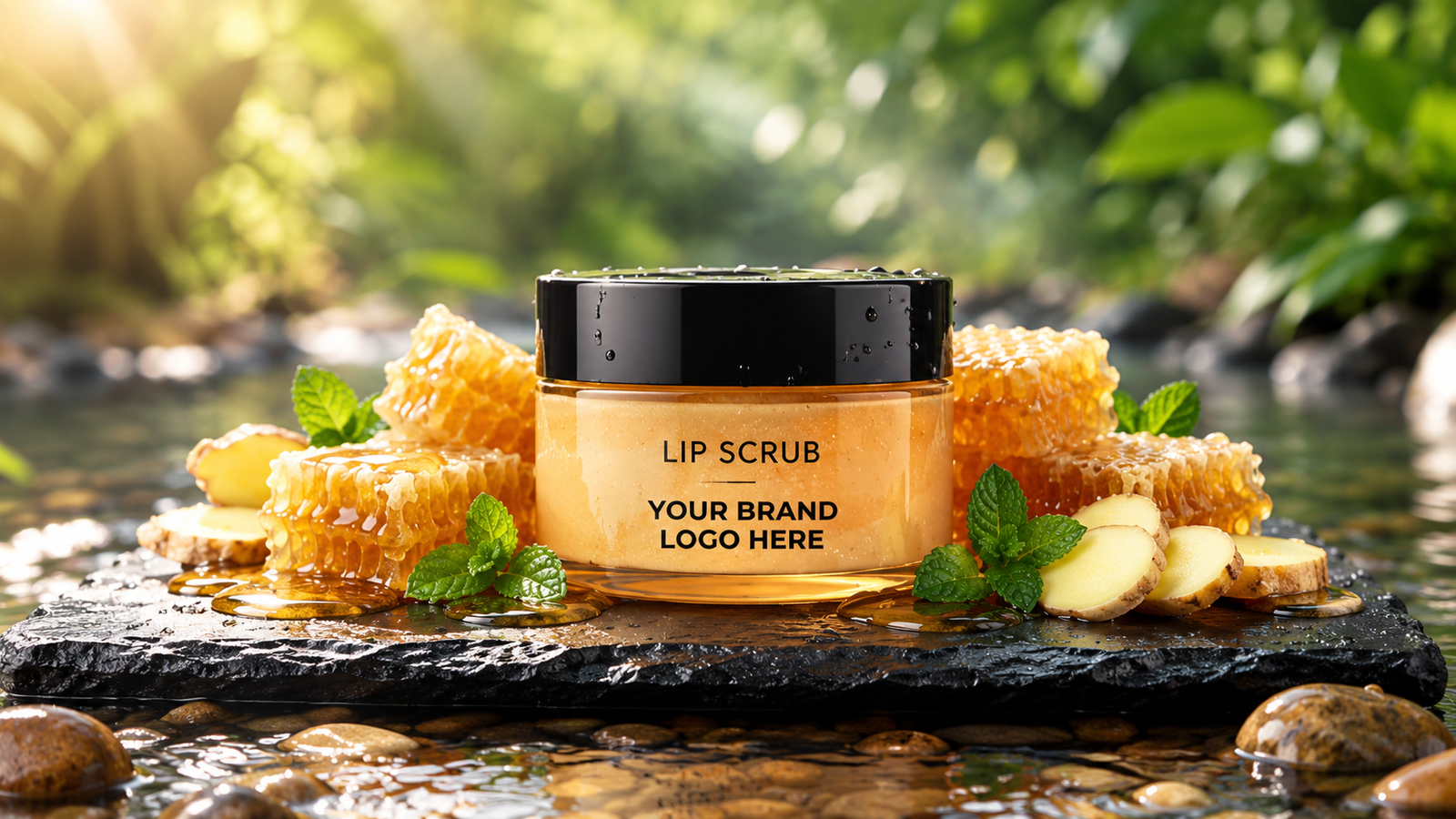
Lip scrub product concept for private label branding, lip care product development and cosmetics manufacturing.
Lip care is a product category that businesses may explore when expanding a cosmetics range. A lip scrub is generally designed to help loosen and remove dead surface skin through gentle exfoliation, depending on its formulation and directions for use. Buyers may evaluate texture, ingredient information, packaging, fragrance or flavour profile, price and the overall brand concept before choosing a product.
Working with a private label manufacturer can help a business explore product options and concentrate on branding, marketing and distribution. The available services vary by manufacturer, so product specifications, customisation options, minimum order quantity (MOQ), quality checks and commercial terms should be confirmed before production begins.
Quick answer: A private label lip scrub manufacturer produces lip scrub products for businesses to sell under their own brand, according to agreed specifications and services. Before placing an order, confirm the formulation, ingredient list, packaging, MOQ, pricing, applicable quality documentation and production timeline.
1. What Is Private Label Lip Scrub Manufacturing?
Private label lip scrub manufacturing is an arrangement in which a business works with an external manufacturer to produce a lip scrub that will be marketed under the business's own brand. Depending on the agreement, the manufacturer may offer existing product options, filling, packaging coordination and other agreed manufacturing services.
This model can be relevant to businesses that want to add lip care products to an existing cosmetics catalogue or develop a new beauty brand. Rather than establishing their own production facility, businesses can discuss production requirements with a suitable manufacturing partner and focus on their commercial strategy.
Who Can Consider Private Label Lip Scrub?
- Established cosmetics brands expanding into lip care.
- Beauty and skincare start-ups developing their own product range.
- Retailers and distributors interested in branded lip care products.
- E-commerce businesses building a cosmetics catalogue.
- Businesses looking to add complementary products to an existing beauty collection.
- Entrepreneurs researching private label cosmetic manufacturing in India.
Not every supplier offers the same services. Some may provide existing formulations, while others may support selected customisation requests. Before choosing a partner, clarify whether formulation changes, packaging selection, label printing and other services are included.
Businesses researching the third party manufacturing of cosmetics in India should compare suppliers based on product suitability, manufacturing capabilities, communication, quality procedures and commercial terms. The right partner should be able to explain the services actually available for the proposed project.
2. Why Consider Adding Lip Scrub to Your Product Range?
A lip scrub may complement a wider lip care or personal care collection. Whether it is suitable for your brand depends on your target audience, product positioning, price range, distribution strategy and the availability of a suitable formulation.
Build a More Complete Lip Care Collection
Brands may consider pairing a lip scrub with other relevant products, such as lip balms or moisturising lip care products. A coordinated range can help customers understand how different products fit into a routine. Product combinations should be based on their intended use and accurate product information rather than unsupported performance claims.
Explore Different Product Concepts
Depending on the manufacturer's available options, businesses may explore differences in texture, exfoliating particles, fragrance or flavour profile, colour and packaging. These are possible areas for discussion, not a guarantee that every variation is available. Confirm the actual formulation and product options directly with the manufacturer.
Develop a Distinct Brand Identity
Packaging, product naming and visual presentation help communicate a brand's identity. A lip scrub can be positioned as part of a simple daily lip care collection, a gift-oriented range or another suitable cosmetics concept. The final positioning should reflect the product's actual formulation, directions and intended use.
Expand an Existing Cosmetics Catalogue
Businesses already selling cosmetics may evaluate lip scrub as a related product category. Before adding it, consider customer demand, pricing, competing products, distribution costs and the resources needed for marketing. Explore the UNICO cosmetics category for related product information.
3. Benefits of Private Label Cosmetics Manufacturing
Launch Under Your Own Brand
Private label manufacturing provides a route for businesses to market a product under their own brand, subject to the agreement and applicable requirements. The business can work on its brand identity, product presentation, sales and distribution while the manufacturer handles the production services agreed for the project.
Focus on Marketing and Distribution
Establishing a manufacturing operation may require investment in premises, equipment, personnel and production systems. Working with an external manufacturer may allow a business to concentrate more resources on product positioning, customer acquisition and distribution. Supplier evaluation, product approvals and commercial planning are still important responsibilities.
Discuss Available Product Options
Depending on the supplier's capabilities, buyers may be able to discuss formulation options, packaging formats and product specifications. Ask which options are currently available and whether a requested change affects the quotation, sample approval, MOQ or production schedule.
Plan Orders Around Business Demand
A larger order may change the unit cost, but it can also increase inventory and working-capital requirements. Consider the expected sales rate, storage arrangements, marketing budget and product shelf life before committing to bulk production. A realistic order plan is often more useful than selecting a quantity based only on the quoted unit price.
Build the Product Range Gradually
Once the initial product is available in the market, customer feedback and sales performance can help guide future decisions. Additional variants, packaging formats or formula changes may require separate approvals, quantities and pricing. Confirm these requirements before planning a wider launch.
Business tip: Request a written quotation that lists the product specification, quantity, packaging, included services, extra charges, taxes, payment terms and estimated lead time. Compare suppliers using the same requirements.
4. How the Lip Scrub Manufacturing Process Works
A clearly defined process helps the brand owner and manufacturer agree on the finished product before bulk production. The exact steps depend on the supplier, the formulation and the services included in the project.
Step 1: Prepare a Product Brief
Start by outlining your business requirements. Include your target audience, intended sales market, preferred product concept, target price range, expected quantity and packaging preferences. If you have specific ingredient requirements or exclusions, mention them at the beginning.
A clear brief helps the manufacturer understand what you want to achieve and makes it easier to discuss available options. It also provides a reference for evaluating samples, quotations and the final product.
Step 2: Discuss the Available Formulation
Ask the manufacturer about available lip scrub formulations and request the relevant product information. Discuss texture, exfoliating ingredients, base ingredients, fragrance or flavour profile, colour and intended use where applicable. Obtain the ingredient list and specification for the selected product before preparing labels or marketing materials.
Step 3: Review Samples Where Available
If samples can be provided, evaluate them against your original brief. Consider the texture, application experience, appearance, packaging and suitability for your target audience. Share feedback clearly and request confirmation of any agreed changes.
Ask whether sampling, revisions or special requests involve additional charges. Confirm the final approved version in writing before moving to bulk production.
Step 4: Select Packaging and Approve Artwork
Discuss suitable packaging formats, container capacity, closure, label area and outer packaging. The selected container should be appropriate for the actual product and convenient for its intended use. Review the final label artwork carefully, including spelling, product identity, ingredient information, net quantity and other applicable declarations.
Step 5: Confirm the Quotation and MOQ
Review the minimum order quantity, unit price, taxes, packaging charges, payment schedule and delivery arrangements. Make sure the quotation refers to the same product specification and packaging you have approved. Ask how changes to quantity, artwork or formulation may affect the total cost.
Step 6: Review Applicable Quality Checks
Ask which quality procedures and documents apply to the selected product. Depending on the formulation and manufacturing process, checks may relate to raw materials, batch records, product appearance, consistency, packaging compatibility and finished-product requirements. Confirm the actual checks and available documents directly with the supplier.
Step 7: Confirm Production and Dispatch
Once the necessary approvals and commercial terms are complete, confirm the estimated production schedule. Before dispatch, verify the agreed quantity, packaging, labels and accompanying documents. Arrange storage and transport according to the product's handling guidance and maintain inventory records after receiving the order.
| Manufacturing Stage | What to Confirm |
|---|---|
| Product brief | Target market, product concept, quantity and price range |
| Formulation | Product specification, ingredient list and intended use |
| Sampling | Sample availability, review process and revision charges |
| Packaging | Container format, capacity, closure and artwork |
| Quotation | MOQ, unit price, taxes, payment and delivery terms |
| Quality review | Applicable checks, records and documentation |
| Dispatch | Order quantity, transport, storage and receiving checks |
5. Lip Scrub Formulation and Ingredients
The formulation determines the characteristics of the finished lip scrub. Ingredients and their proportions vary between products, so buyers should request the actual product specification instead of relying on general descriptions or photographs. Product claims should match the finished formulation and be supported by appropriate information.
Exfoliating Ingredients and Texture
Lip scrubs may use exfoliating particles in a suitable base to help loosen dead surface skin. The type, size and feel of these particles can affect the product's texture and application experience. Ask for the ingredient information and intended directions for use, and review a sample where available.
Because the lips are delicate, a product should be used only as directed. Avoid promoting aggressive scrubbing or implying that frequent exfoliation is suitable for everyone. Product descriptions should provide clear, responsible usage information.
Base Ingredients and Product Feel
The base can influence how the product spreads, feels and is removed after use. Depending on the formulation, a lip scrub may contain ingredients selected to provide a particular texture or skin-conditioning experience. Confirm the actual ingredients rather than assuming that all lip scrubs contain the same materials.
Fragrance, Flavour and Appearance
Some product concepts may include a particular fragrance, flavour profile or colour. Availability depends on the formulation and manufacturer. Any flavour-related or fragrance-related claims should be accurate and appropriate for the intended product use. Ask whether a requested option is available and whether it changes the cost or production schedule.
Ingredient Transparency
Request the ingredient list and product information required for accurate packaging and online descriptions. If your brand needs to exclude a particular ingredient or prefers a specific formulation feature, communicate that requirement early. The manufacturer must confirm whether it can be accommodated.
Use Responsible Product Claims
Avoid unsupported claims about guaranteed results, medical benefits or universal suitability. Terms such as “natural,” “organic,” “dermatologically tested” or similar claims should only be used when appropriate and supported by the relevant evidence and applicable requirements. Product labels and marketing materials should accurately describe the finished product.
6. Packaging and Private Label Branding
Packaging protects the product, supports convenient use and communicates brand identity. The best format depends on the formulation, target price, distribution channel and options available from the supplier. Review the actual packaging and final artwork before approving bulk production.
Choose a Practical Container
Ask about available container types, sizes, materials and closures. Consider ease of use, product access, closure security and suitability for storage and transport. Confirm that the selected packaging is appropriate for the actual formulation and intended use.
Create a Consistent Brand Presentation
Use a product name, logo, typography and colour palette that fit your wider cosmetics range. A clear design helps customers identify the product and understand its purpose. Keep the label readable at its actual printed size and avoid using design elements that obscure essential information.
Review Label Details Before Printing
Depending on the product and market, the label may need the product identity, net quantity, ingredient information, directions, warnings where applicable, batch or date details and manufacturer or marketer information. Confirm the specific requirements with the appropriate compliance professional and establish who is responsible for preparing and approving the artwork.
Consider Online Sales and Shipping
If you plan to sell through an e-commerce store or marketplace, ensure that the packaging is suitable for handling and shipping. Consider outer packaging and protection against damage or leakage where relevant. Use accurate product photographs and make sure the displayed packaging matches the product customers will receive.
7. How to Choose Lip Scrub Manufacturers in India
Choosing a supplier involves more than comparing prices. Businesses researching lip scrub manufacturers should evaluate relevant manufacturing capabilities, product specifications, quality procedures, packaging options, communication and commercial terms. Request clear answers and keep important decisions in writing.
Check Relevant Product Capabilities
Confirm that the supplier can support the lip scrub product and packaging you require. Ask about available formulations, customisation limits, sampling and the services included in the arrangement. Do not assume that every supplier offers all product types or can accommodate every requested change.
Review Quality Systems and Documentation
Ask which quality procedures and product documents are relevant to your project. If a supplier mentions certifications, review the actual certificate, its scope, issuing body and validity. You can visit the UNICO certificates page and confirm directly which documents apply to the facility or service relevant to your enquiry.
Compare Complete Quotations
Request quotations based on the same product specification, quantity, packaging and delivery requirements. Check whether sampling, artwork, packaging, applicable testing, taxes and freight are included or charged separately. Comparing the total project cost gives a more useful picture than comparing a single unit-price figure.
Evaluate Communication and Timelines
Clear communication is important during product selection, sample review, artwork approval and production. Ask who will coordinate your project, how changes will be recorded and when you can expect updates. Request a realistic timeline after the requirements and material availability are known.
Clarify Responsibilities Before Ordering
Confirm which party supplies packaging, approves artwork, maintains records, arranges transport and handles applicable compliance responsibilities. These obligations depend on the product, agreement and sales market. A written understanding helps avoid confusion after the order is placed.
Manufacturer evaluation checklist
- Relevant capability for the requested lip scrub product.
- Clear product specifications and sample approval procedures.
- Transparent MOQ, quotation, payment terms and lead time.
- Suitable packaging options and artwork review.
- Relevant quality documentation and ingredient information.
- Written agreement on responsibilities and dispatch.
- Responsive communication and a clear process for changes.
8. Lip Scrub Wholesale, MOQ and Cost Factors
The cost of private label lip scrub manufacturing varies according to the product specification, quantity, packaging, customisation, applicable quality requirements, taxes and logistics. There is no single price or MOQ that applies to every supplier or project. Request a quotation based on your actual requirements before finalising the budget.
| Cost Factor | Why It Matters |
|---|---|
| Formulation | Available product, requested specifications and development needs |
| Packaging | Container, closure, label, printing and outer packaging |
| Order quantity | MOQ, production batch size and inventory commitment |
| Customisation | Requested changes to formulation, fragrance, texture or presentation |
| Quality requirements | Applicable checks, documents and project-specific needs |
| Logistics | Taxes, transport, delivery and handling expenses |
Understand Lip Scrub Wholesale Requirements
Businesses looking for lip scrub wholesale options should confirm the minimum order quantity, available packaging and pricing structure with the supplier. Ask whether the quoted price applies to one formulation and pack size or whether multiple variants have separate minimum quantities.
Wholesale purchasing should also account for storage, distribution, marketing and inventory costs. A larger order may reduce the quoted unit cost in some cases, but it can increase the amount of capital tied up in stock. Base your decision on expected sales and realistic business demand.
Plan Your Initial Order Carefully
Estimate how many units you can reasonably sell through your intended channels. Include product photography, website development, advertising, fulfilment, storage and customer support in the overall budget. Avoid committing to a quantity that exceeds your capacity to store or sell the product within its usable period.
Request a Written Quotation
A useful quotation should identify the product specification, quantity, unit price, packaging, included services, additional charges, taxes, payment terms, estimated lead time and delivery arrangements. Ask how changes to the product or artwork would affect the price and schedule. Keep the approved quotation as part of the project record.
9. Preparing to Launch Your Lip Scrub Brand
Manufacturing is only one part of launching a cosmetics product. Businesses also need accurate product information, suitable images, clear packaging and a plan to reach their intended customers. Marketing should reflect the actual formulation and avoid unsupported promises.
Define Your Target Audience
Decide who the product is intended for and why it belongs in your range. Consider your target price, the product's intended use, competing products and the sales channels you plan to use. A clear product brief helps align manufacturing, packaging and marketing decisions.
Create a Useful Product Page
Include the product name, net quantity, ingredient information, directions, storage guidance and other relevant details. Use clear images that accurately represent the packaging and product. For business buyers, provide a straightforward way to enquire about manufacturing services, available options and commercial requirements.
Use SEO to Reach Relevant Buyers
For a B2B cosmetics website, search phrases such as third party manufacturing of cosmetics in India, private label cosmetic manufacturer in India, lip scrub manufacturers and private label lip scrub may help reach people researching manufacturing options. Their search intent and relevance should be evaluated before assigning SEO priorities.
Use the primary supporting keyword naturally in relevant sections, and include secondary phrases only where they fit the content. Avoid repeating exact keywords in every paragraph. Helpful information about formulation, packaging, MOQ and quotations can better serve potential business buyers.
Make Business Enquiries Easy
Buyers should be able to move from an informative article to a relevant manufacturing page or contact page without unnecessary steps. Internal links, useful FAQs and a clear call to action help visitors understand what to do next. Track qualified enquiries and lead quality in addition to traffic and rankings.
Improve the Product Using Feedback
After launch, review customer questions, feedback and returns. These may reveal whether the product information is clear, the packaging is convenient or customers need additional guidance. Discuss any proposed product changes with the manufacturer and confirm their implications before implementing them.
10. Discuss Cosmetics Manufacturing with UNICO Pharmaceuticals
Businesses exploring a lip scrub product can begin by reviewing UNICO Pharmaceuticals' relevant product and manufacturing information. If you are evaluating a private label lip scrub project, prepare a clear brief and ask the team to confirm whether the required product and services are available.
Product options, formulation customisation, packaging, MOQ, pricing, documentation and production timelines must be confirmed directly with the company. Do not assume that a particular lip scrub formulation or packaging format is available until the team confirms it.
Prepare Your Product Requirements
Before making an enquiry, prepare a short brief containing your business or brand name, intended market, preferred product concept, packaging preferences, approximate quantity and target price range. List any specific ingredient requirements separately and explain whether you are considering an existing formulation or requesting customisation.
Review Company Information
Learn more about the company through the UNICO About Us page and review the available documentation on the certificates page. You can also explore the cosmetics category and Skin & Hair Care Products page for related information. Confirm which services and documents are relevant to your proposed project.
Questions to Ask Before Placing an Order
- Is the required lip scrub product currently available?
- What formulation and packaging options can be discussed?
- What MOQ applies to the selected product and packaging?
- Are samples available, and how does approval work?
- What is included in the quotation?
- Which product documents and quality checks can be provided?
- What is the estimated schedule after all approvals?
- Which responsibilities belong to the brand and the manufacturer?
For a direct discussion about your requirements, visit the UNICO Pharmaceuticals contact page. Share your proposed product, target quantity and packaging preferences to help the team understand your enquiry.
11. Final Thoughts: Planning a Private Label Lip Scrub Project
Private label lip scrub manufacturing can provide a route for businesses to introduce a lip care product under their own brand without establishing an independent production facility. The suitability of this arrangement depends on the product specification, manufacturing capabilities, packaging, MOQ, total cost and responsibilities agreed by both parties.
Before placing an order, confirm the formulation, ingredient information, packaging, minimum quantity, complete quotation, applicable quality documentation and production timeline. Review samples where available, approve the final artwork and keep important decisions in writing. These steps help align the finished order with your business requirements.
Businesses researching lip scrub manufacturers or lip scrub wholesale options should compare suppliers using the same requirements rather than relying on price alone. If you are exploring cosmetics manufacturing, you can contact UNICO Pharmaceuticals to discuss your product concept and confirm the services currently available.
Planning to Launch Your Own Lip Scrub Brand?
Discuss your product concept, packaging preferences, target quantity and cosmetics manufacturing requirements with UNICO Pharmaceuticals. Confirm available options and project details directly with the team.
Discuss Your Product Requirement →Frequently Asked Questions About Private Label Lip Scrub Manufacturing
These answers cover common questions about private label lip scrub, third-party cosmetics manufacturing, packaging and production planning.
1. What is private label lip scrub manufacturing?
It is an arrangement in which a business works with an external manufacturer to produce a lip scrub for sale under its own brand. The available services depend on the manufacturer and the agreed project terms.
2. What is the difference between private label and third-party cosmetics manufacturing?
The terms can overlap. Private label generally refers to selling a product under your own brand, while third-party manufacturing describes engaging an external manufacturer to produce it. The exact services depend on the supplier and agreement.
3. Who can work with lip scrub manufacturers in India?
Potential buyers include cosmetics brands, start-ups, retailers, distributors and e-commerce businesses. Suitability depends on the manufacturer's capabilities, order requirements and the services available.
4. Can I launch a lip scrub under my own brand?
Private label arrangements can allow a business to market a product under its own brand, subject to the agreement and applicable requirements. Confirm the available branding, packaging and manufacturing services with the supplier.
5. Can I customise the lip scrub formulation?
Customisation depends on the manufacturer's capabilities and the requested changes. Ask which options are available and whether changes affect sampling, pricing, MOQ, documentation or production time.
6. What is the minimum order quantity for lip scrub?
The MOQ varies according to the manufacturer, formulation, packaging and project requirements. Contact the supplier with your proposed product and quantity to obtain the applicable minimum.
7. How much does private label lip scrub manufacturing cost?
Cost depends on the formulation, order quantity, packaging, customisation, applicable quality requirements, taxes and logistics. Request a written quotation that identifies included and additional charges.
8. Can I request a sample before ordering in bulk?
Sample availability and charges depend on the manufacturer's process. Ask about sample review, revisions and approval before confirming bulk production.
9. What packaging options are available for lip scrub?
Packaging options depend on the supplier and product requirements. Ask about available container formats, sizes, closures and labels, and confirm compatibility with the selected formulation.
10. What ingredients are used in lip scrub?
Ingredients vary by formulation and may include exfoliating components and a suitable product base. Request the exact ingredient list from the manufacturer and use it to prepare accurate product information.
11. How do I choose a reliable private label cosmetic manufacturer in India?
Evaluate relevant manufacturing capabilities, product specifications, quality documentation, sample procedures, packaging options, MOQ, quotation, communication and delivery terms. Confirm important claims and responsibilities in writing.
12. What does lip scrub wholesale mean?
Lip scrub wholesale generally refers to purchasing lip scrub products in quantities intended for resale or business distribution. Confirm minimum quantities, unit pricing, packaging, delivery and other terms directly with the supplier.
13. What information should I provide to get a quotation?
Share your product concept, intended market, preferred packaging, approximate quantity, target price range and any specific ingredient or formulation requirements. Ask for a written quotation with MOQ, charges, terms and estimated timeline.
14. What should I check before approving the product label?
Review the product identity, ingredient information, net quantity, directions, applicable warnings and required manufacturer or marketer details. Confirm the applicable labelling requirements before printing.
15. How long does lip scrub production take?
Timelines depend on product availability, sampling, packaging, artwork approval, material availability and production scheduling. Request an estimate based on your specific project.
16. Where can I enquire about cosmetics manufacturing with UNICO?
Visit the UNICO Pharmaceuticals contact page and share your product concept, preferred packaging, approximate quantity and other requirements. The available product and project terms should be confirmed directly with the team.
Explore Related UNICO Pharmaceuticals Pages
Explore these pages for company information and related cosmetics categories.
UNICO Pharmaceuticals Cosmetics Skin & Hair Care Products About UNICO Pharmaceuticals Certificates and Quality Information Contact UsThis article provides general information about private label lip scrub and third-party cosmetics manufacturing. Formulations, ingredients, packaging, minimum order quantities, prices, documentation and timelines vary by project and must be confirmed directly with the manufacturer. Product claims and labelling should comply with applicable requirements.